
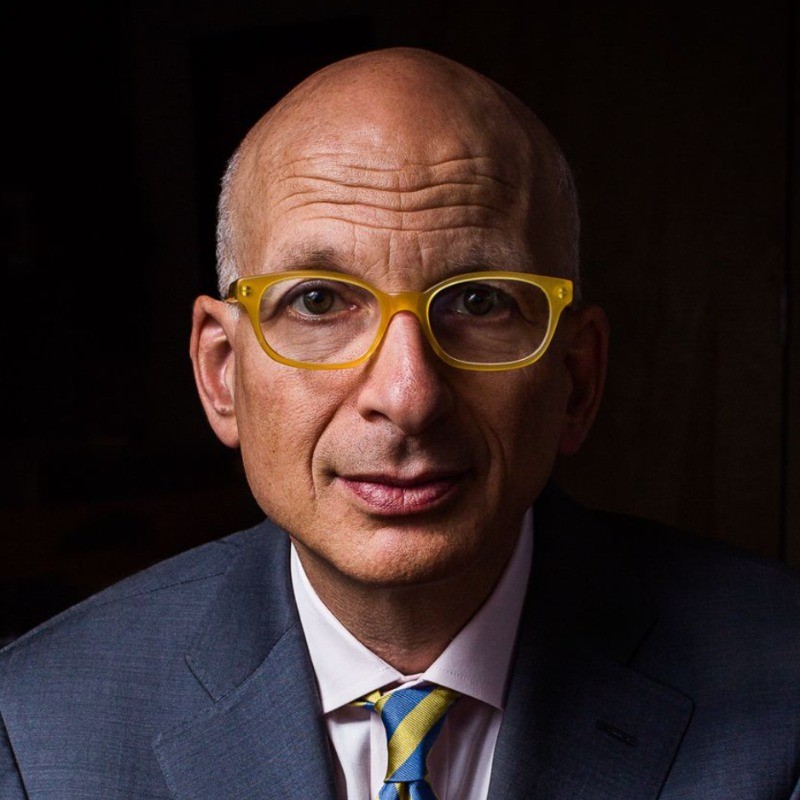
In a recent LinkedIn post, Seth Godin 🌔 discusses the evolving nature of problem-solving and decision-making in an era where answers are plentiful, but the right questions and clarity are increasingly valuable. Godin 🌔 contrasts the utility of ‘maps’ with the deeper guidance offered by a ‘compass,’ a theme that underpins his upcoming book, “The Knot.” He emphasizes that while maps provide step-by-step instructions, a compass offers direction and clarity, prompting individuals to chart their own course.
The Limits of Maps in an AI-Driven World
Godin 🌔 begins by highlighting the ease with which maps can be sold, noting their ability to solve a problem when the starting point and destination are known. These maps, he explains, manifest as how-to guides and step-by-step procedures readily available in today’s information-rich environment. However, he posits that in an age of ubiquitous artificial intelligence, the challenge shifts from finding answers to formulating the most pertinent questions.
“In an age of ubiquitous AI, answers are no longer in short supply. But questions are more valuable than ever.”
This abundance of readily available information, Godin 🌔 suggests, makes the role of a ‘compass’ – something that provides clarity and direction rather than explicit instructions – far more crucial. He draws a parallel to his 2007 book, “The Dip,” which deliberately avoided offering easy answers, instead focusing on provoking thought about difficult decisions, particularly the act of quitting.
Introducing ‘The Knot’ as a Compass for Stuck Situations
Godin 🌔 introduces his new book, “The Knot,” not as a sequel to “The Dip,” but as a complementary work that addresses a different kind of challenge. While “The Dip” dealt with knowing when to quit, “The Knot” tackles situations where a decision to pursue a goal has already been made, yet progress is stalled.
“A knot happens when we want two things that can’t both be true. We want to make a change, but we don’t want to risk disapproval. We want to ship the work, but we want a guarantee it will work. We want to move forward, but we’re carrying a commitment, a scorecard, a fear, or a story from the past.”
According to Godin 🌔, these ‘knots’ arise from conflicting desires – the wish to change without risking judgment, the desire for guaranteed success before shipping work, or being held back by past commitments or fears. He argues that the book functions as a compass, with a central principle: problems are solvable.
Identifying and Untangling Baggage
The core idea behind “The Knot,” as explained by Godin 🌔, is that progress becomes possible when individuals can identify and name the ‘baggage’ – the fears, commitments, or limiting stories – that are obstructing their path. This process of naming the impediments is key to moving forward.
“The book is a compass with a simple north star: Problems can be solved. Our work has a purpose, intent, the change we seek to make. If we can name the baggage that’s holding us back or confusing us, progress is possible.”
Godin 🌔 expresses optimism about the book’s reception, noting that early readers have found it transformative. He believes “The Knot” helps individuals realize that improvement and forward momentum are attainable, even when faced with complex internal conflicts. The publication aims to provide the clarity needed to navigate these challenging situations, reinforcing the idea that even when stuck, a path forward can be found by understanding the underlying issues.
Godin 🌔 concludes by encouraging readers to share the book with those who might benefit, positioning it as a tool for fostering progress and overcoming self-imposed obstacles.
📝 About This Content
This article is based on insights shared by Seth Godin 🌔 on LinkedIn.
📅 Originally posted on September 15, 2026 | View original post on LinkedIn →