
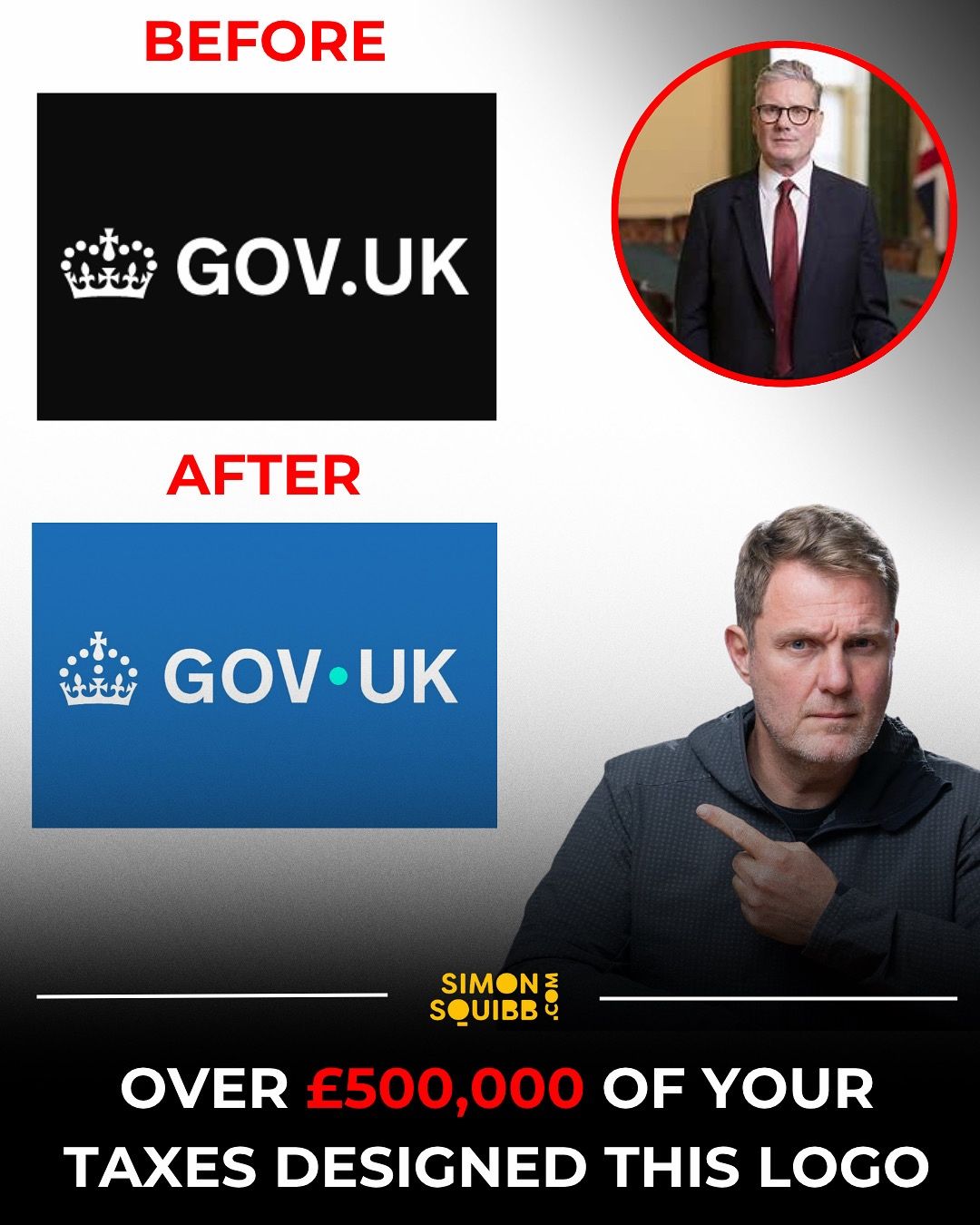
In the world of business, every penny counts. Decisions are scrutinized, resources are allocated with precision, and the focus remains squarely on core operations and delivering value. This principle, fundamental to survival and growth, seems to be starkly absent in a recent government expenditure that has raised serious questions about priorities and fiscal responsibility.
Simon Squibb, a prominent entrepreneur, recently highlighted a staggering £500,000 spent on a new government logo. This figure, he argues, represents a profound disconnect between political decision-making and the everyday struggles of working people and essential public services. Squibb puts this expenditure into sharp perspective, noting that this sum could have funded an entire year’s worth of teachers for a primary school, supported 50 start-ups destined to create jobs and taxes, or provided free school meals for 250,000 children.
Misplaced Priorities Amidst Austerity
This substantial outlay comes at a time when school funding has reportedly been slashed by £630 million. While public services grapple with reduced budgets, the decision to allocate half a million pounds to a visual rebranding – a project seemingly unsolicited by the public – appears tone-deaf. Squibb draws a parallel to business management, stating that no company could afford such a ‘vanity project’ when its core operations are faltering. In business, the rule is clear: fix the fundamentals first.
The Entrepreneurial Approach vs. Political Optics
Squibb contends that politicians often operate on a different plane, driven by headlines and photo opportunities rather than sound business principles. A new logo might be perceived as a way to appear ‘modern’ or ‘forward-thinking,’ but it fails to address the pressing needs of the populace. He contrasts this with the entrepreneurial mindset, where essential needs like paying staff take precedence over cosmetic office renovations. The public, he argues, would not endorse such a transaction if given the chance.
A Call for Transparency and Accountability
The core of Squibb’s critique lies in the lack of transparency surrounding significant government spending. He advocates for a fundamental shift: any government spending decision exceeding £100,000 should be presented to the public in advance. This would necessitate a clear business case and demonstrable return on investment (ROI), much like in the private sector. Without this, public funds risk being treated as inconsequential, akin to ‘Monopoly cash,’ leading to a collective loss for the nation.
The sentiment is clear: Britain, according to Squibb, would be better served by being run by entrepreneurs who understand the value of money and the importance of prioritizing essential services and economic growth over superficial changes. This £500,000 logo expenditure serves as a potent symbol of a system that, in its current form, is failing to meet the needs of its citizens.
This article is based on insights from a LinkedIn post by Simon Squibb.
📝 About This Content
This article is based on insights shared by Simon Squibb on LinkedIn.
📅 Originally posted on October 15, 2025 | View original post on LinkedIn →