
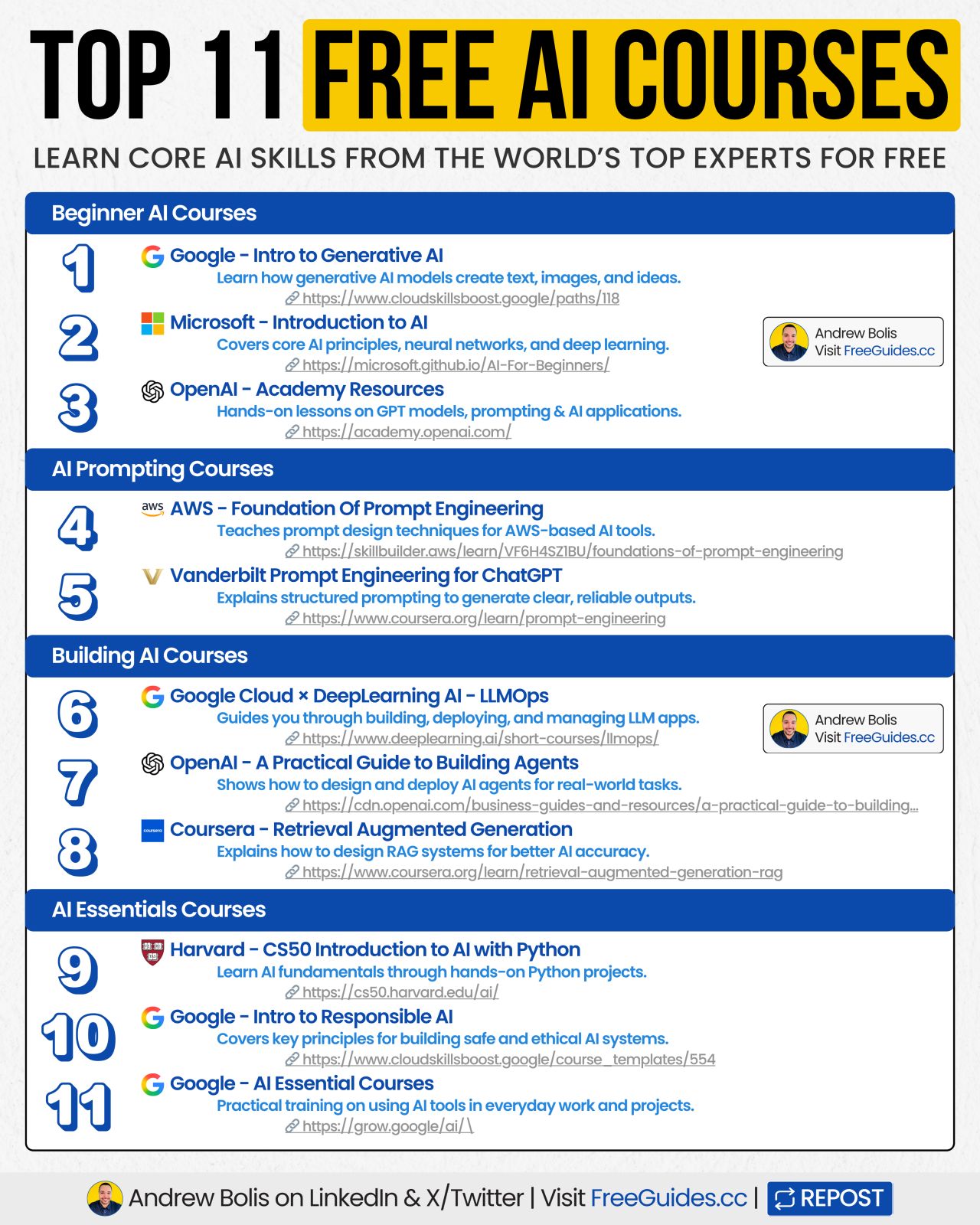
In a recent LinkedIn post, Andrew Bolis addresses the growing conversation around artificial intelligence and its potential impact on employment. Rather than predicting widespread job displacement, Bolis frames AI as a tool that will augment, not replace, human capabilities, emphasizing that those who adopt and learn AI will be the ones driving future innovation.
Bolis directly confronts the fear of AI obsolescence, stating:
AI will not take your job. Someone using it will.
This perspective positions AI proficiency as a critical skill for career advancement in the current technological landscape. He further elaborates on the proactive stance individuals should take:
Those who learn AI now will lead the innovation.
The Imperative of AI Upskilling
Andrew Bolis underscores the urgency for professionals to acquire AI skills, highlighting that the pace of technological advancement necessitates continuous learning. He points to major technology and academic institutions as sources for this essential training, indicating a broad consensus on the importance of AI literacy.
As Bolis notes, leading organizations such as Google, Microsoft, OpenAI, Harvard, AWS, and Vanderbilt are providing resources to facilitate this learning process. This curated list of institutions suggests a strategic approach to understanding AI’s multifaceted applications.
A Curated List of Foundational AI Courses
Bolis provides a comprehensive list of free courses, covering a wide spectrum of AI topics from foundational principles to advanced applications like prompt engineering and LLMOps. This resource aims to equip individuals with practical knowledge and skills.
- Generative AI Fundamentals: Courses from Google and Microsoft offer introductions to how generative AI models work and cover core AI principles.
- Prompt Engineering and Application: Resources from AWS and Vanderbilt focus on the art of crafting effective prompts for AI tools, crucial for eliciting desired outputs.
- Advanced AI Development: Options like OpenAI’s Academy and Google Cloud’s LLMOps guide delve into hands-on lessons with GPT models and the deployment of large language model applications.
- Ethical and Practical AI Use: Bolis also includes courses on responsible AI development from Google and practical guides for building AI agents and RAG systems, emphasizing safety and real-world applicability.
- Introductory Programming for AI: Harvard’s CS50 Introduction to AI with Python offers a project-based approach to learning AI fundamentals.
The inclusion of these diverse courses demonstrates Bolis’s commitment to providing actionable pathways for skill development. He emphasizes the significant return on investment for time spent learning these new technologies:
Every hour you invest in learning AI pays you back tenfold.
Call to Action for Future-Proofing Careers
Concluding his post, Andrew Bolis urges readers to take immediate action. He encourages them to select a course from the provided list and begin their journey toward acquiring AI proficiency. The post serves as both a wake-up call and a practical guide for professionals seeking to remain relevant and competitive in an increasingly AI-driven world.
As Bolis advocates:
Pick one course and begin your next chapter today.
His message is clear: embracing AI education is not just about staying current, but about positioning oneself to lead and innovate in the future.
📝 About This Content
This article is based on insights shared by Andrew Bolis on LinkedIn.
📅 Originally posted on November 1, 2025 | View original post on LinkedIn →