
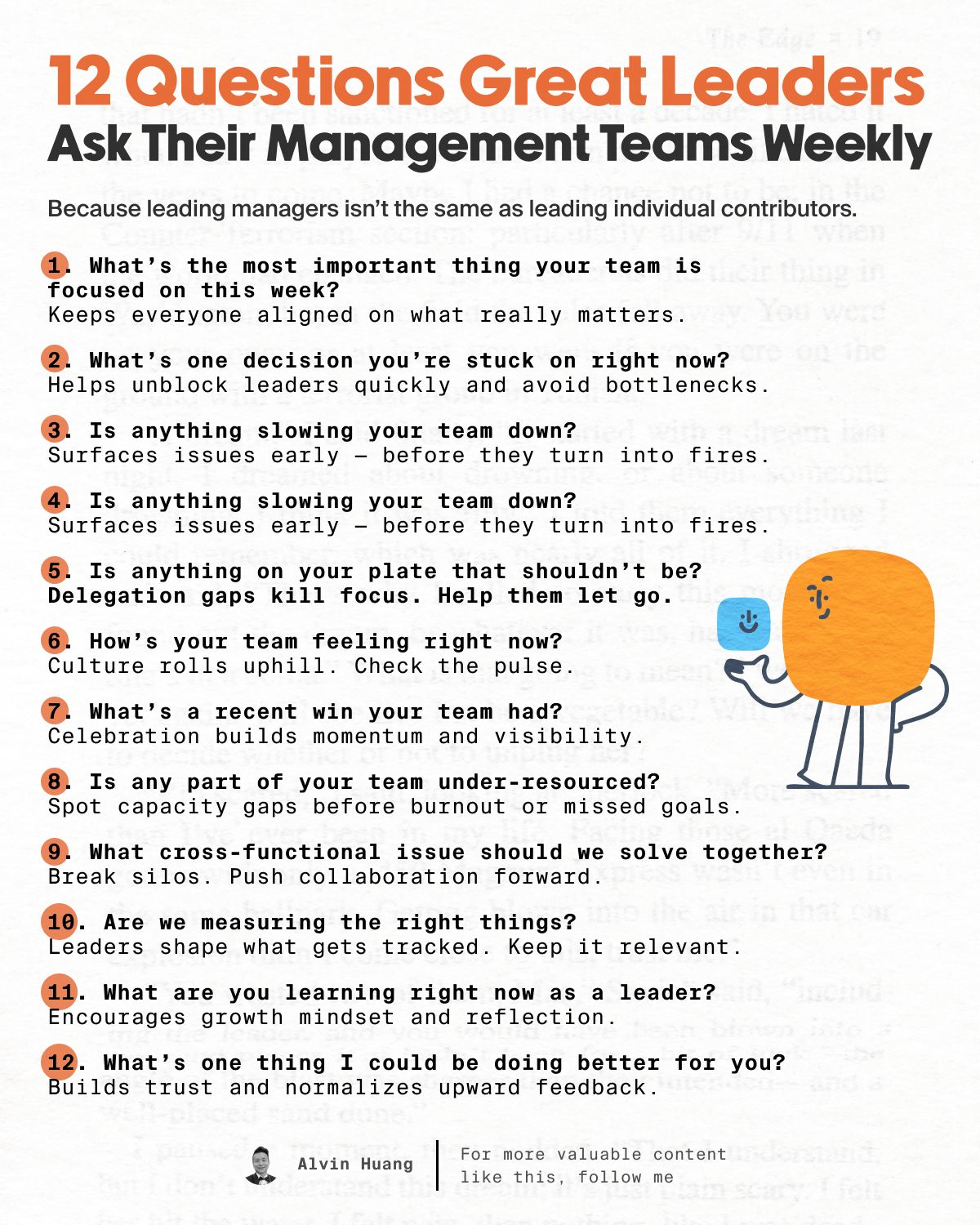
In a recent LinkedIn post, Alvin Huang challenges the conventional approach to one-on-one (1:1) meetings, arguing that many leaders fall into the trap of treating them as mere status updates rather than opportunities for genuine leadership development. Huang, who is the CEO of Truegenics, a company that scaled to over $200 million, suggests that a leader’s primary role evolves beyond task management to fostering strategic thinking and alignment across an organization.
Huang asserts that typical 1:1s, focused on questions like “Did you send that email?” or “Any blockers this week?”, reduce the meeting to a “glorified to-do list.” This approach, he contends, fails to equip management teams with the critical thinking necessary for higher-level leadership.
“You’re not a project tracker. You’re a leader of leaders. Your job is to make sure leaders are thinking, not just doing.”
Shifting from Task Tracking to Strategic Development
The core of Huang’s argument is that effective leadership at a certain level requires a focus on “managing alignment and performance across the entire org.” This necessitates a different kind of conversation during 1:1s, one that probes deeper into strategic challenges, decision-making, and team dynamics.
The Power of Probing Questions
To facilitate this shift, Alvin Huang proposes a list of 12 questions that he believes great leaders should ask their management teams. These questions are designed to encourage reflection, identify obstacles, and promote strategic thinking. As Huang notes, these questions move beyond simple task verification to address crucial aspects of leadership and organizational health.
Among the insightful questions suggested by Huang are:
- “What’s the single most important focus for your team this week?” – This question aims to ensure sharp focus and prevent chaos by clarifying priorities.
- “What’s one decision you’re stuck on right now?” – Huang emphasizes that “Stuck decisions = stuck growth. Fix that fast.”
- “Is anything slowing your team down?” – Identifying and addressing friction early is presented as key to maintaining momentum.
- “Where do you need clarity from me?” – This seeks to eliminate ambiguity, which Huang states “affects execution.”
- “How’s your team feeling right now?” – Huang highlights the importance of team energy, stating, “You can’t scale burnout. Energy is currency.”
- “What’s one thing I could be doing better for you?” – This question underscores the value of humility and continuous improvement in leadership, as Huang puts it, “Real leaders invite feedback, not flattery.”
Huang argues that consistently asking these types of questions fosters exponential growth in alignment, trust, and accountability. He believes this is the pathway for good companies to become great ones.
“When leaders ask these kind of questions consistently, Alignment, trust and accountability grow exponentially. That’s how good companies scale into great ones.”
Encouraging Reflection and Feedback
The list of questions also emphasizes the importance of celebrating wins, assessing resource needs, addressing cross-functional issues, and tracking meaningful metrics. Furthermore, Huang includes questions about personal leadership growth and invites feedback, demonstrating a commitment to continuous learning and development for both the leader and their team.
According to Alvin Huang, by shifting the focus of 1:1s from operational updates to strategic dialogue, leaders can unlock greater potential within their teams and drive more significant organizational success.
“At a certain level, leadership goes beyond just managing people. It’s about managing alignment and performance across the entire org.”
Huang concludes by prompting his audience to consider which of these questions they wish their own bosses would ask, further engaging them with the practical application of his insights.
📝 About This Content
This article is based on insights shared by Alvin Huang on LinkedIn.
📅 Originally posted on November 6, 2025 | View original post on LinkedIn →