
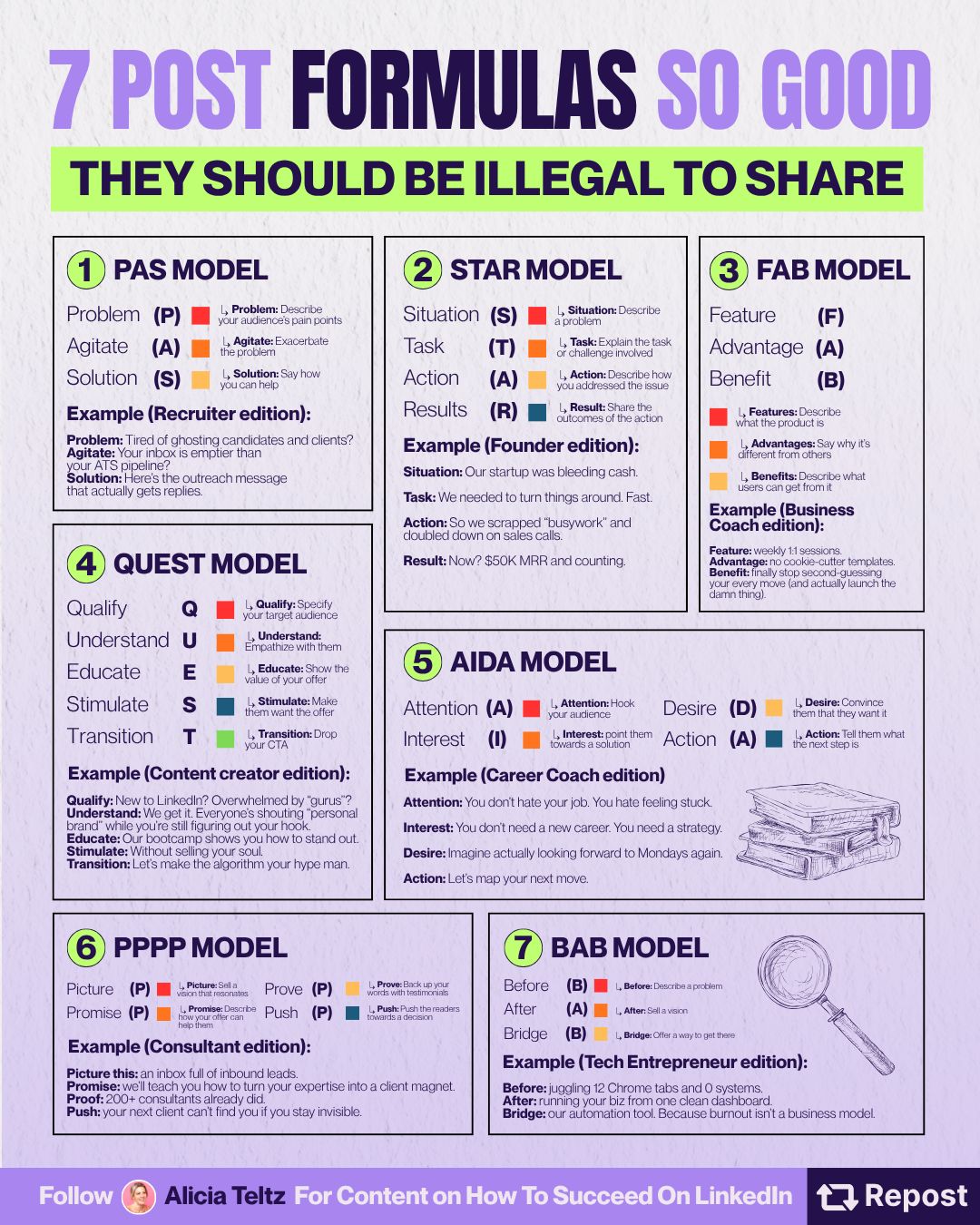
In a recent LinkedIn post, Alicia Teltz explores the power of structured content frameworks for individuals aiming to build their presence and authority on the platform. Teltz emphasizes that while these methods may not be the most glamorous, they are highly effective for generating consistent and impactful content.
Teltz opens by addressing different types of LinkedIn users, from beginners to seasoned creators, and posits that regardless of one’s current posting habits, adopting a framework can simplify content creation. She states:
“Humans are predictable little gremlins who respond to structure. So here are 7 content frameworks that aren’t sexy, but they work.”
The post then delves into seven specific frameworks, each designed to guide users through the process of crafting compelling content. Teltz breaks down each model with a concise explanation and a relatable analogy.
The Power of Proven Content Structures
Alicia Teltz highlights several established marketing and storytelling models that can be readily applied to social media content. These frameworks, she argues, provide a much-needed roadmap for creators who struggle with consistency or direction.
1. PAS (Problem-Agitate-Solution)
This model, according to Teltz, involves identifying a problem, intensifying the user’s awareness of it, and then presenting a solution. Teltz humorously describes this as, “Make them panic a tiny bit… then casually fix it.” She refers to it as “ethical chaos.”
2. AIDA (Attention-Interest-Desire-Action)
Teltz likens the AIDA model to the process of dating: grabbing attention, building interest, making oneself irresistible, and then guiding the prospect toward a desired action. This framework is designed to move a prospect through a decision-making funnel.
3. FAB (Features-Advantages-Benefits)
Focusing on what the audience truly cares about, Teltz explains that while features are facts, benefits are the emotions. “People buy feelings. Always have. Always will,” she asserts, underscoring the emotional drivers behind purchasing decisions.
4. QUEST (Qualify-Understand-Educate-Stimulate-Transition)
This framework, as Teltz outlines, is about ensuring you’re engaging with the right audience, understanding their needs, educating them, stimulating their interest further, and then transitioning them towards a conversion. She describes it as “prove you’re not a robot and then ask for the sale.”
5. STAR (Situation-Task-Action-Result)
Teltz suggests the STAR model is ideal for corporate storytelling and can even be used for answering interview questions effectively. It provides a structured way to present a narrative by detailing the context, the objective, the actions taken, and the outcome.
6. PPPP (Picture-Promise-Prove-Push)
Described by Teltz as aggressive but effective, the PPPP model encourages creators to paint a picture of the desired outcome, make a promise, provide evidence, and then encourage the audience to act. She sums it up as “show me the dream + slap me with receipts + shove me through the checkout.”
7. BAB (Before-After-Bridge)
For those aiming for a transformative narrative, Teltz recommends the BAB model. This framework highlights the audience’s current state, illustrates the improved future state, and explains how to get there. Teltz notes, “People love a transformation arc.”
Concluding her post, Alicia Teltz emphasizes the critical role of writing in professional success on platforms like LinkedIn. She encourages her audience to leverage these frameworks rather than feeling the need to constantly innovate.
“Writing isn’t “a core skill.” It is the whole darn game if you want to succeed on this platform and become the go-to person in your industry.”
Teltz prompts engagement by asking her followers which framework they prefer, playfully warning against simply relying on “vibes.” She also promotes upcoming workshops and webinars for those seeking further guidance on LinkedIn strategy.
📝 About This Content
This article is based on insights shared by Alicia Teltz on LinkedIn.
📅 Originally posted on November 11, 2025 | View original post on LinkedIn →