
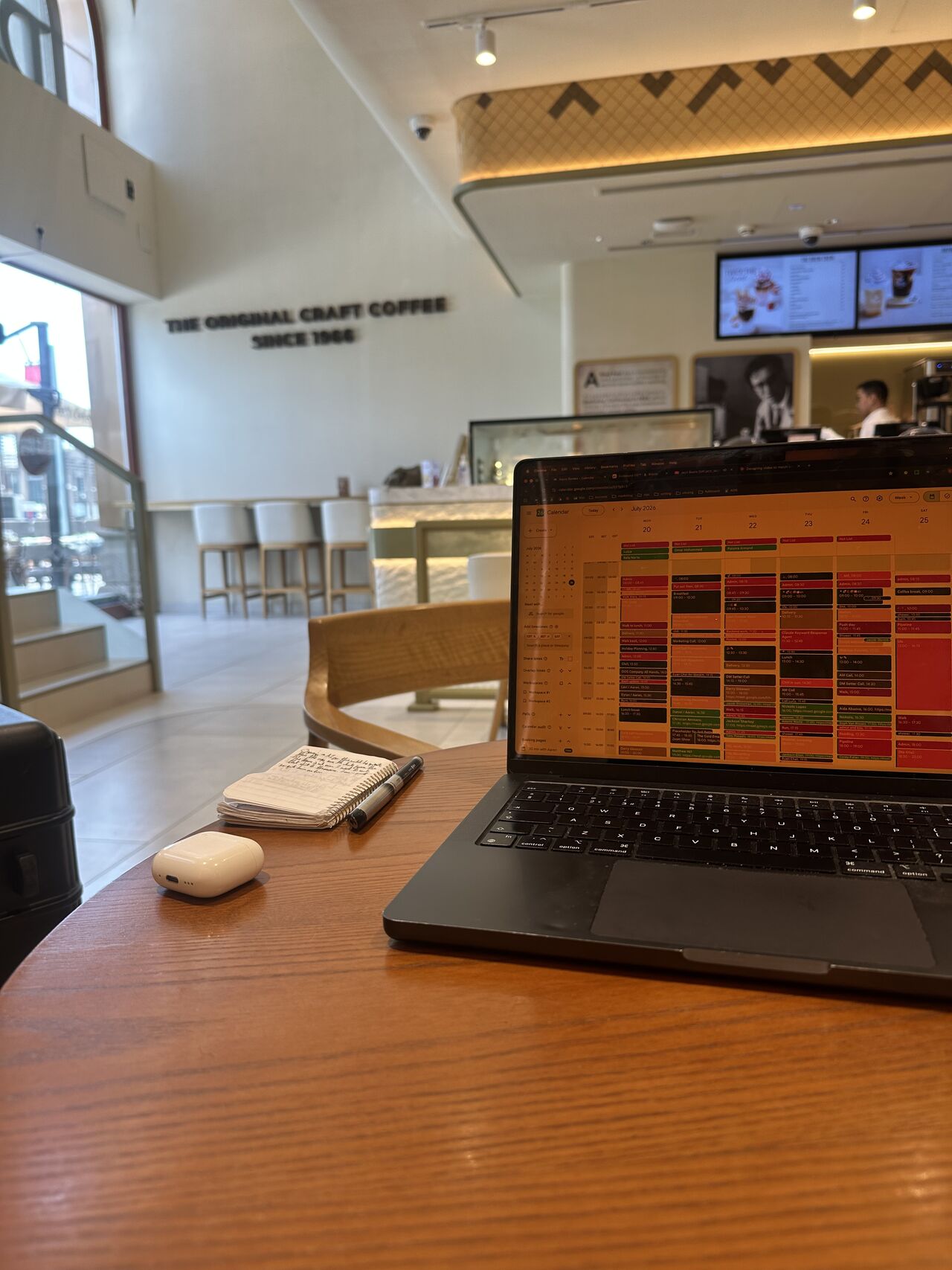
In a recent LinkedIn post, Aaron Reeves shares a candid look at his significant personal investment in self-development this year, totaling $42,000. Reeves details his approach to investing in his own skills and knowledge, contrasting it with traditional market investments and highlighting the exponential returns he has experienced.
Reeves breaks down his year-to-date expenditures, which include $17,000 for backend software, $12,000 for business coaching, and $10,000 for fractional consultants, alongside additional funds for various programs. He admits that such a sum would have been financially distressing for him in the past, noting that his total investment over the last two years exceeds $70,000.
“In the S&P, in a great year that would’ve made me 10% so $7,000. But investing in my skills increased my income 10x.”
This substantial investment, Reeves argues, has yielded far greater returns than traditional market investments like the S&P 500. He points to a concept coined by “Hormozi” as the “S&ME 500,” emphasizing the personal and entrepreneurial sector as a more lucrative area for investment when aiming for significant income growth.
Criteria for Strategic Self-Investment
Reeves outlines a clear framework he now uses to decide where to allocate his self-development funds. This strategic approach ensures that his investments are aligned with his growth objectives and have a high probability of delivering substantial returns.
Key Investment Filters
- Expertise and Alignment: Reeves first assesses if the potential mentor or resource is led by someone who has already achieved what he aspires to.
- Proven Results: He looks for evidence that the coach or consultant has a track record of success with individuals in similar situations.
- Risk Assessment: A crucial factor is understanding the potential downside. Reeves only invests if he can tolerate the financial loss should the investment not pan out as expected.
- Return on Investment (ROI): A minimum potential ROI of 5x is a key metric, indicating a strong belief in the value and impact of the investment.
If an investment opportunity meets these criteria, Reeves indicates he is likely to proceed. He elaborates on his philosophy:
“Because the fastest way to improve is by learning from others. Learning how they do it Learning from their experience Learning and taking parts for yourself”
Reeves states that this method, practiced since 2020, has been instrumental in his career progression.
The Individual as the Ultimate Asset
While acknowledging the importance of investing in tangible assets, Reeves strongly advocates for prioritizing self-investment. He posits that an individual’s skills and capacity for growth are their most valuable assets.
“But you are your own biggest asset in life. Your skills determine how far you’ll go. So develop yourself first 💪”
He concludes by posing a question to his network about their own self-investment figures, revealing that some of his peers have invested upwards of $200,000, underscoring the diverse levels of commitment to personal and professional development within his circle.
📝 About This Content
This article is based on insights shared by Aaron Reeves on LinkedIn.
📅 Originally posted on August 8, 2026 | View original post on LinkedIn →