
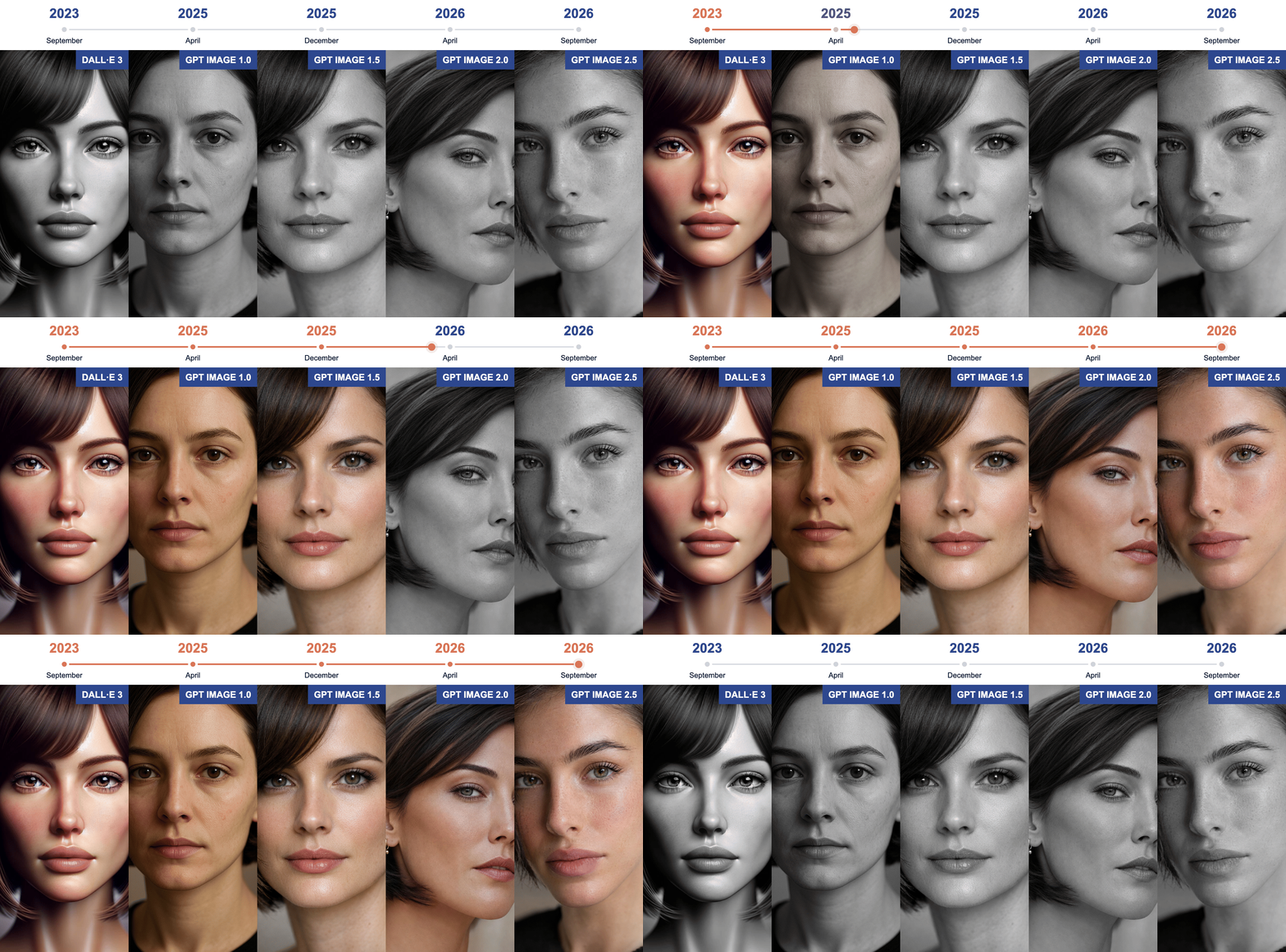
In a recent LinkedIn post, Charlie Hills 🦩 discusses the rapid advancements in AI image generation technology, specifically highlighting the impressive capabilities of GPT Image 2.5. Hills 🦩 expresses astonishment at the evolving realism, noting the significant leaps made since earlier iterations of AI image tools.
Charlie Hills 🦩 shared the progress observed, stating:
“This is getting ridiculous. GPT Image 2.5 is here.”
The post emphasizes the dramatic improvement in the quality and photorealism of AI-generated portraits, contrasting the latest outputs with those from September 2023 when DALL·E 3 was released. Hills 🦩 points out that while earlier versions like GPT Image 1 were significant for editing, the portraits often retained a discernible “AI look.” However, the newer versions, 2.0 and 2.5, have seemingly overcome this limitation.
The Leap in Photorealism
Hills 🦩’s analysis centers on the uncanny realism achieved by the latest AI models. The author provides a specific prompt used to generate a highly detailed portrait, underscoring that the prompt itself remained unchanged while the output quality dramatically improved across versions.
According to Charlie Hills 🦩, the evolution from earlier models to the current state is remarkable, leading to questions about future advancements.
“Imagine where we’ll be in another 3 years.”
The detailed prompt shared by Hills 🦩 illustrates the level of specificity now possible and the fidelity with which AI can interpret and render complex visual instructions. The prompt includes nuanced details about facial structure, hairstyle, nose contouring, and photographic techniques like macrophotography and shallow depth of field.
Analyzing the Prompt’s Impact
The specific prompt shared by Charlie Hills 🦩 reads:
“A high-resolution, photorealistic, close-up portrait of a woman. The woman, softly and evenly lit, has an oval-shaped face with an even more pronounced oval jawline. She sports an asymmetric bob hairstyle, her hair cut to ear-length. She has an impressively straight nose contour, with the base of her nose being equally straight. The image is a splendid display of macrophotography, with a shallow depth of field adding an extra layer of interest to it. The textures are incredibly detailed, adding much to the overall realism of the image.”
Hills 🦩 encourages readers to test the prompt themselves, asserting that the results will demonstrate the technology’s current capabilities. This call to action highlights the author’s confidence in the observed progress and aims to engage the audience directly with the technology being discussed.
Future Implications of Advanced AI Imaging
Charlie Hills 🦩’s post serves as a commentary on the accelerating pace of AI development. By showcasing the tangible improvements in image generation, particularly in photorealism, Hills 🦩 prompts consideration of the broader implications for creative industries, digital content, and potentially even fields requiring high-fidelity visual representations.
The author concludes by offering access to free AI workflows, suggesting a continued engagement with and exploration of AI tools. The call to repost the content further indicates a desire to disseminate information about these rapidly evolving AI capabilities within professional networks.
📝 About This Content
This article is based on insights shared by Charlie Hills 🦩 on LinkedIn.
📅 Originally posted on September 11, 2026 | View original post on LinkedIn →