
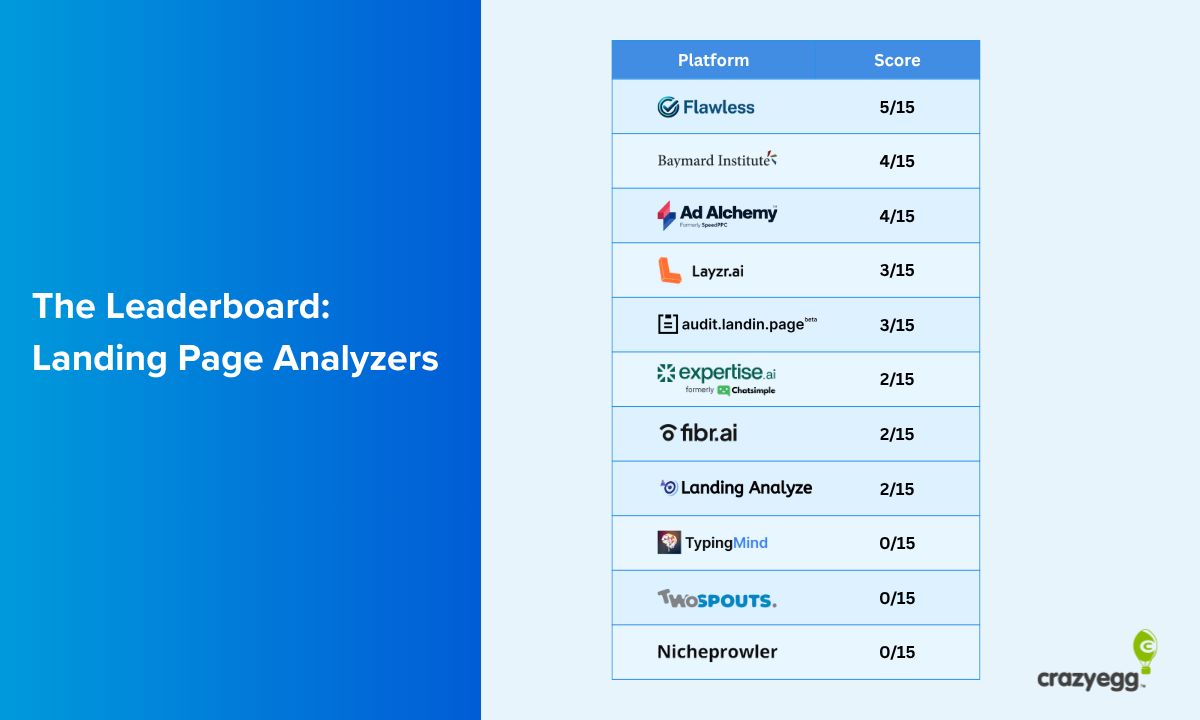
In a recent LinkedIn post, Hiten Shah discusses the surprising results of an experiment evaluating the effectiveness of current AI tools for conversion rate optimization (CRO). Shah, the founder of Crazy Egg, detailed how his team tested major AI landing page analyzers by implementing their top suggestions and then A/B testing the outcome against the original page.
The findings, as Shah presented them, indicate a significant gap between the capabilities of AI tools and the nuanced requirements of effective web page design. The experiment revealed that the AI-optimized version of a Crazy Egg page ultimately underperformed the control, despite the precise implementation of the AI’s recommendations.
“After three weeks, the ‘optimized’ version underperformed the control.”
AI’s Understanding of Page Purpose Lags Behind Implementation
Hiten Shah argues that the underperformance was not due to random suggestions but a fundamental misunderstanding by the AI tools of the page’s core purpose. The AI focused on structural and linguistic changes without grasping the specific function each element was designed to serve.
As Shah points out, the tools are not yet sophisticated enough to discern the strategic intent behind a page’s design. This leads to optimizations that, while appearing logical on the surface, fail to address the underlying user journey or conversion goals.
The Disconnect Between AI Analysis and CRO Objectives
According to Hiten Shah, the current generation of AI landing page analyzers struggles with the qualitative aspects of CRO. While they can identify patterns and suggest common best practices, they lack the deeper comprehension needed for pages with specific, often unique, objectives.
“The tools missed the purpose of the page. They shifted structure and language without understanding the job each element performs.”
Shah elaborates that the AI’s recommendations, while seemingly data-driven, are based on a limited understanding of the context. This can lead to changes that disrupt the intended user flow or dilute the page’s primary message, ultimately hindering conversion rather than improving it.
Data-Grounded Insights Over Demos
Hiten Shah emphasizes the importance of grounding CRO evaluations in real-world data rather than relying on tool demonstrations. The experiment conducted by his team provides a clear example of how practical testing can reveal the limitations of AI solutions.
“If your team is evaluating AI for CRO, the full breakdown is worth reading. It’s grounded in data, not demos.”
He suggests that businesses looking to leverage AI for CRO should approach these tools with a critical eye, verifying their suggestions through rigorous A/B testing. The article linked in his post offers a detailed account of the methodology and results, providing valuable insights for anyone in the field.
In conclusion, Hiten Shah’s analysis highlights that while AI offers potential benefits for speeding up certain tasks, its current application in CRO requires careful validation. The experiment underscores that a deep understanding of user intent and page purpose remains a critical human element that AI has yet to fully replicate.
📝 About This Content
This article is based on insights shared by Hiten Shah on LinkedIn.
📅 Originally posted on December 9, 2025 | View original post on LinkedIn →