
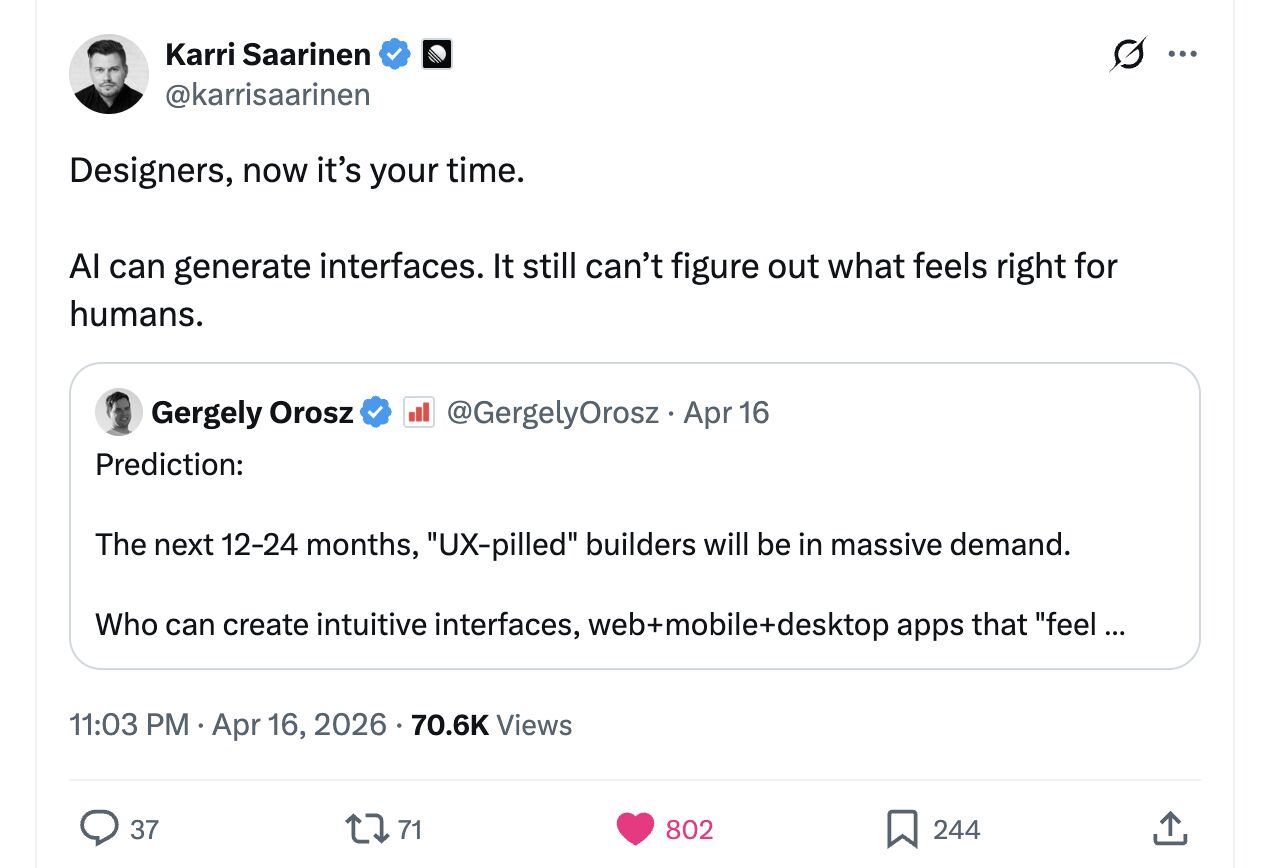
In a recent LinkedIn post, Shreyas Doshi offers a nuanced perspective on the integration of new AI tools into creative and technical fields, particularly concerning their impact on designers, product managers, and engineers. Doshi’s analysis focuses on the distinction between the output of AI tools and the unique capabilities of top-tier human professionals.
The AI Advantage: Outperforming the Median
Doshi begins by acknowledging the impressive capabilities of emerging AI technologies. He highlights that the output generated by these new tools is likely to surpass that of the average professional in fields like design, product management, and engineering. This capability, he suggests, is a primary driver behind the anticipated popularity of these AI tools.
“An important nuance, not just restricted to design, is that the output of new AI tools will outperform the output of the *median* designer/PM/engineer today—so these tools will get popular”
According to Shreyas Doshi, this benchmark of outperforming the median professional is a key factor that will drive widespread adoption. The immediate utility and efficiency gains offered by AI are undeniable, making them an attractive proposition for many. However, Doshi pivots to a more critical distinction.
The Unseen Context: Why Top Talent Remains Essential
While AI may excel at producing outputs that exceed the median standard, Doshi argues that it currently lacks the deeply embedded context that defines top performers. This embedded context, he implies, is what allows elite designers, PMs, and engineers to achieve results that go beyond mere median performance.
“but a top designer/PM/engineer has a certain embedded context that AI doesn’t yet access.”
As Shreyas Doshi points out, this ’embedded context’ is multifaceted. It encompasses years of experience, an understanding of subtle user needs, strategic foresight, and the ability to navigate complex, often unarticulated, organizational and market dynamics. These are qualities that AI, in its current form, struggles to replicate. Doshi’s insight suggests that while AI can augment and accelerate the work of many, it does not yet possess the holistic understanding and nuanced judgment that characterize the highest echelons of creative and technical expertise.
Implications for the Future of Work
In Doshi’s view, this distinction has significant implications for how professionals and organizations should approach AI integration. Rather than viewing AI as a replacement for skilled human talent, Doshi’s analysis suggests it should be seen as a powerful tool that elevates the baseline. The true value, and perhaps the competitive edge, will lie in how effectively human professionals can leverage AI while infusing their own unique, context-driven insights.
Shreyas Doshi’s observation encourages a re-evaluation of AI’s role, emphasizing that while efficiency gains are significant, the irreplaceable human element—particularly the expertise of top performers—will continue to be crucial. The challenge, therefore, is not simply adopting AI, but understanding where its limitations lie and how human expertise can be amplified by, rather than supplanted by, technology.
📝 About This Content
This article is based on insights shared by Shreyas Doshi on LinkedIn.
📅 Originally posted on April 18, 2026 | View original post on LinkedIn →