
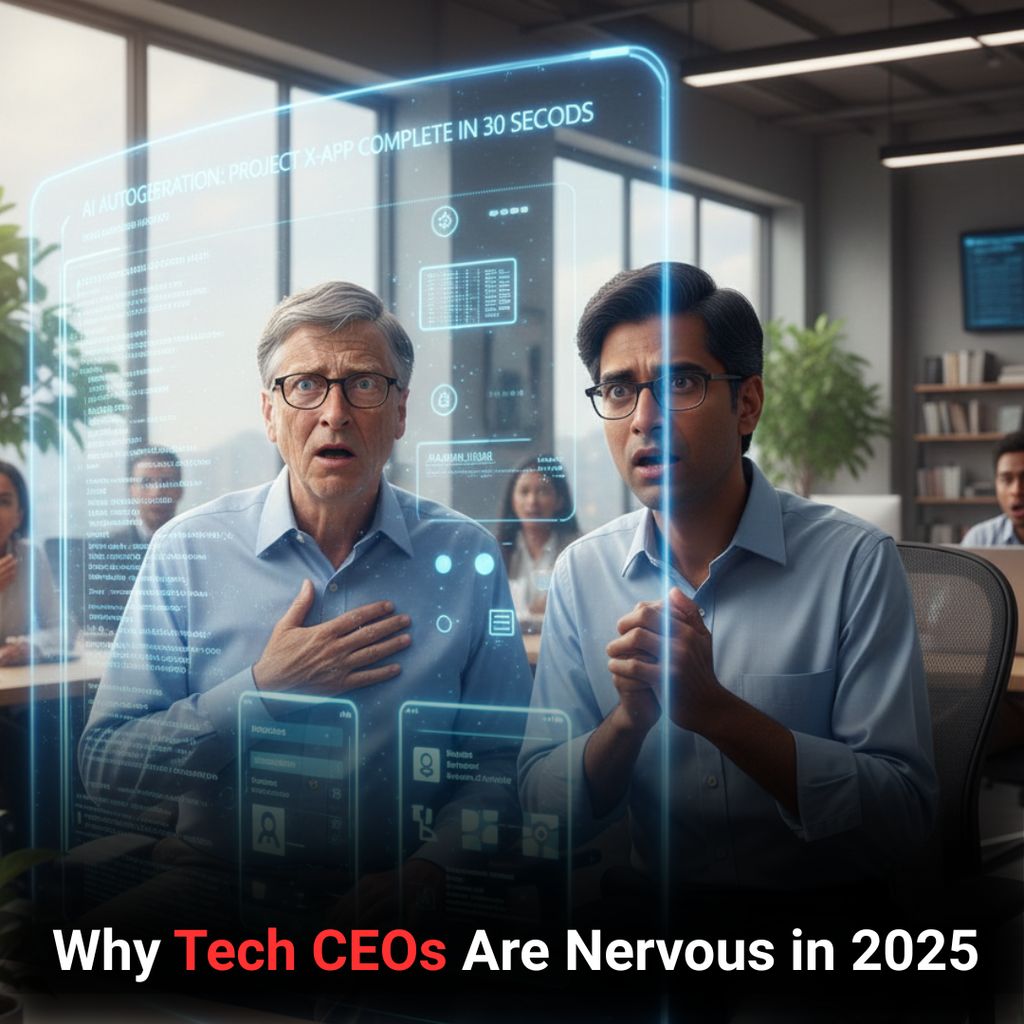
In a recent LinkedIn post, Chirag Goswami discusses the seismic shift occurring in software development, driven by the rapid advancement of artificial intelligence. Goswami highlights how AI is fundamentally altering the landscape for tech companies and developers, particularly as they look towards 2025.
Goswami begins by contrasting the past with the present and near future of app development. He points out the significant resources and time required even a decade ago. As Chirag Goswami notes:
“In 2010, building an app was a big operation. You needed designers, developers, testers, DevOps — easily 6 to 10 people, and it still took months.”
This historical perspective sets the stage for the dramatic changes Goswami believes are imminent. He emphasizes that the traditional, multi-specialist approach is becoming obsolete.
The AI Revolution in Coding
The core of Goswami’s argument centers on how AI is empowering a single individual to achieve what once required a large team. He posits that the year 2025 marks a significant inflection point.
“But in 2025, everything flipped,” Goswami writes. “One person with AI can design, code, test, and deploy an entire app — sometimes in a single day.”
This capability, according to Goswami, doesn’t signify the end of coding but rather the obsolescence of manual, repetitive coding tasks. He suggests that the nature of developer competition is also evolving.
Developers and AI: A New Competitive Arena
Goswami argues that the future competitive advantage for developers lies in their ability to leverage AI tools effectively. He states:
“We’re not watching coding die. We’re watching manual coding die. Developers who use AI won’t compete with other developers — they’ll outrun entire teams.”
This perspective underscores a critical distinction: AI is not replacing developers but augmenting their capabilities to an unprecedented degree. The focus shifts from the act of writing code line-by-line to orchestrating AI-powered development processes.
Implications for Tech Companies
The ramifications of this AI-driven transformation extend deeply into the operational and strategic aspects of tech companies. Goswami points out the significant business advantages that will emerge.
“And for tech companies, this changes everything,” Goswami explains. “Faster shipping cycles, smaller teams, lower costs, and a massive competitive gap between companies that embrace AI and those that don’t.”
In Chirag Goswami’s view, companies that fail to integrate AI into their development workflows risk falling significantly behind. The ability to iterate rapidly, reduce operational overhead, and deploy products more efficiently will become key differentiators. This necessitates a strategic embrace of AI not just as a tool, but as a fundamental component of their operational strategy.
📝 About This Content
This article is based on insights shared by Chirag Goswami on LinkedIn.
📅 Originally posted on December 7, 2025 | View original post on LinkedIn →