
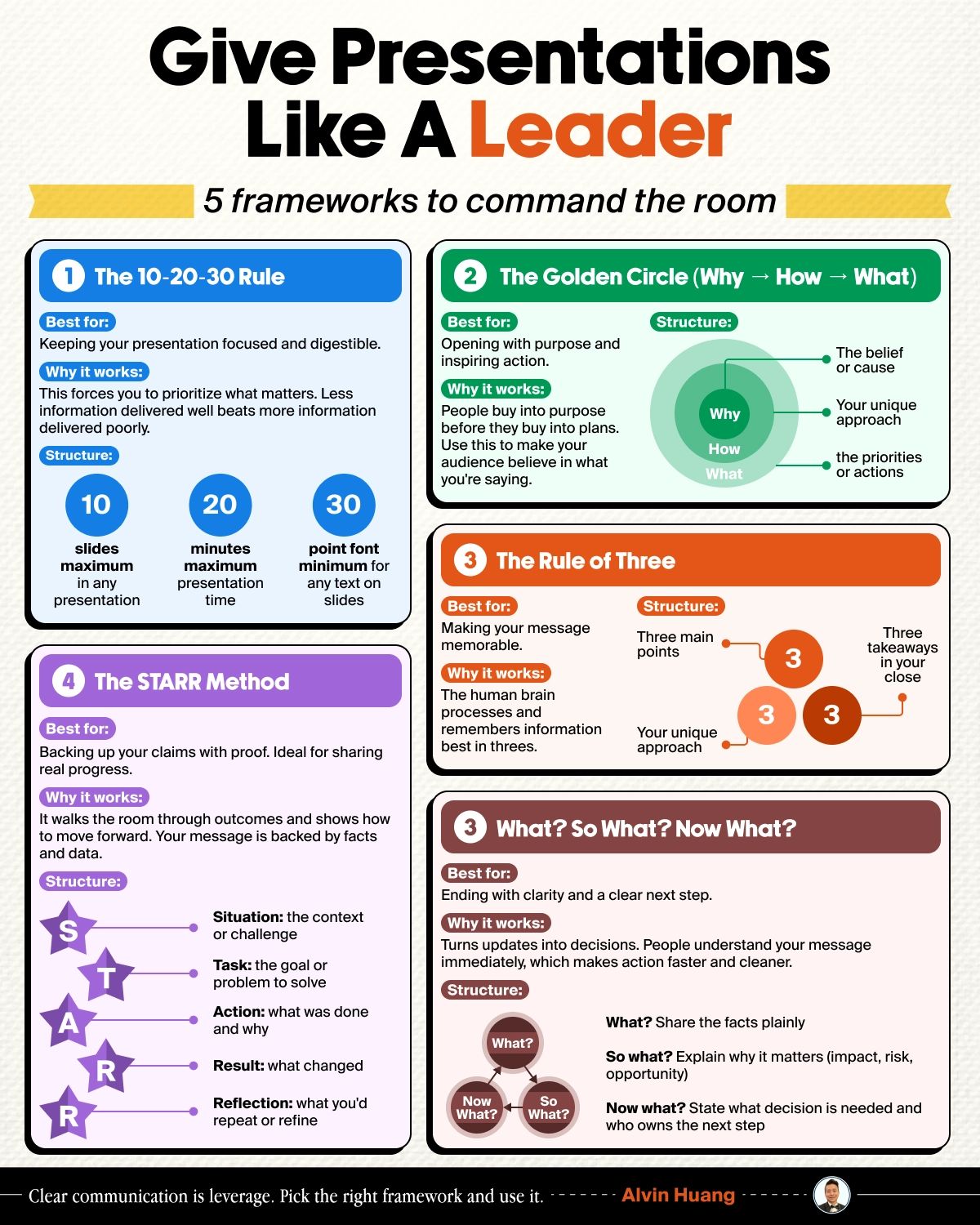
In a recent LinkedIn post, Alvin Huang argues that the standard 60-minute meeting is a sign of leadership failure, not a marker of productivity. He shares his personal journey from experiencing lengthy, unfocused meetings to implementing a structured communication approach that drastically reduced meeting times and improved outcomes.
Huang asserts that the key to transforming ineffective meetings lies in imposing tighter communication structures. He found that by adopting the “What? So What? Now What?” framework, his 60-minute meetings were cut down to a mere 20 minutes, with participants leaving with clear ownership and defined action items.
“Regular 60-minute meetings are a leadership failure. Not a sign of how busy you are.”
The Cost of Unstructured Communication
Huang elaborates on the inefficiencies he previously encountered, describing meetings that “used to run long with no clear decision at the end. Updates were vague, and nobody knew who owned what.” This lack of clarity, he suggests, directly impacts the business’s overall speed and effectiveness.
He emphasizes that communication should be viewed as an essential operating system for a business, rather than just a soft skill. “Communication is an operating system, not a mere soft skill. And when it breaks down, the whole business slows with it,” Huang states.
Frameworks for Effective Communication
To combat these issues, Huang introduces five communication frameworks designed for different meeting scenarios. He posits that different situations call for different tools, and understanding these frameworks can lead to sharper, more productive interactions.
Framework 1: The 10-20-30 Rule
This framework is ideal for keeping presentations focused and digestible, recommending a maximum of 10 slides, 20 minutes, and a minimum 30-point font size.
Framework 2: The Golden Circle
Best for inspiring action, this method advises starting with “Why,” then moving to “How,” and finally landing on “What.”
Framework 3: The Rule of Three
To make messages memorable, Huang suggests using three key points, three examples, or three takeaways.
Framework 4: The STARR Method
For backing up claims with evidence, the STARR method (Situation, Task, Action, Result, Reflection) is recommended.
Framework 5: What? So What? Now What?
As highlighted in his personal experience, this framework is crucial for concluding updates with clear next steps, focusing on Facts, Impact, and Decision/owner.
“Everyone speaks. The leverage is in what’s clear when you stop.”
Challenging Conventional Wisdom on Communication
Huang challenges the common belief among founders that communication is primarily about confidence and speaking ability. He argues that a polished speaker without a structured approach will ultimately fail to engage an audience effectively.
“Most founders think communication is about confidence. Speak well enough and the room will follow. But a polished talker with no structure still loses the room,” Huang writes. He concludes that the true value lies in the clarity that remains after the communication has ended.
“The leverage is in what’s clear when you stop.”
Huang encourages readers to share their own effective communication methods for meetings, positioning these structured frameworks as essential tools for efficient leadership and business operations.
📝 About This Content
This article is based on insights shared by Alvin Huang on LinkedIn.
📅 Originally posted on May 24, 2026 | View original post on LinkedIn →