
In a recent LinkedIn post, Alvin Huang discusses the underutilization of Artificial Intelligence (AI) by founders, likening their approach to using a spare tire – only in emergencies rather than for its full capabilities. Huang, founder of Truegenics, argues that many businesses are missing significant opportunities to leverage AI for efficiency and cost reduction.
Huang highlights that businesses often invest heavily in new hires when AI could perform similar tasks much faster and at a lower cost. He states:
“I’ve watched founders spend thousands on new hires. When all the while AI could do the same in minutes.”
At Truegenics, Huang explains, AI has been integrated as a core operational component, akin to a trained employee, which has led to a substantial decrease in operating costs. He emphasizes that this success wasn’t due to superior software or AI technology but rather a precise understanding of which business areas to target with AI.
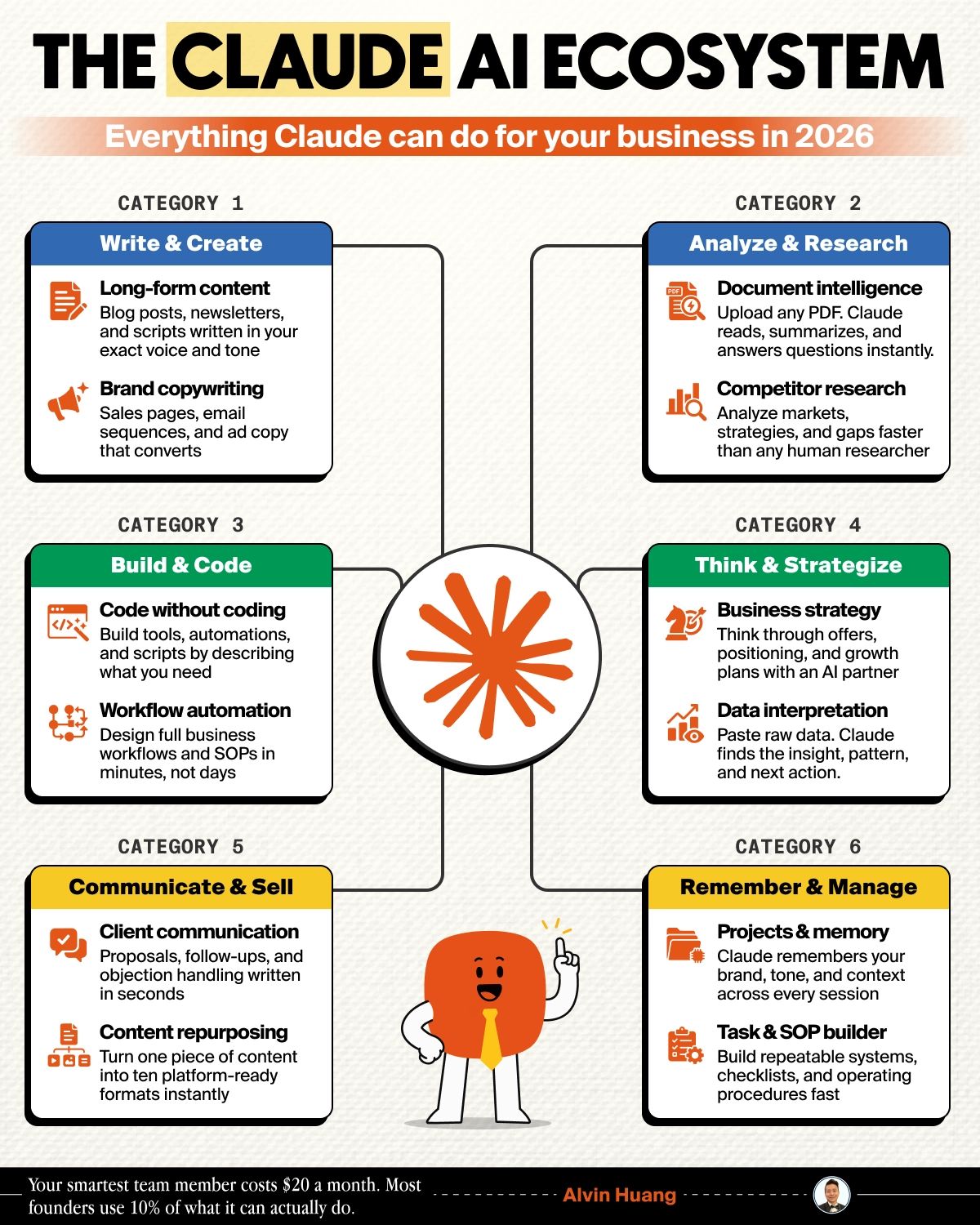
Six Categories Where AI Can Drive Business Value
Huang outlines six key categories where AI can significantly benefit businesses:
- Write and create: Beyond simple emails, AI can assist with SOPs, ad copy, and initial drafts, tackling any task that starts from a blank page.
- Analyze and research: This category is often overlooked, leading to founders spending days on tasks AI can complete in minutes, such as competitor analysis, customer feedback interpretation, and market reads.
- Build and code: Contrary to the belief of non-technical founders, AI can automate repetitive tasks and help build internal tools without requiring a dedicated development team.
- Think and strategize: Huang identifies this as the most underused category, where AI can be used to pressure-test decisions and identify potential flaws before full commitment.
- Communicate and sell: AI can help create reusable proposal templates and enable rapid personalization, potentially doubling output for sales efforts.
- Remember and manage: This application of AI helps prevent critical information from falling through the cracks by managing meeting notes, tracking tasks, and maintaining knowledge bases.
According to Huang, founders should identify the two categories that offer the most significant impact for their specific business and focus on implementing AI there first. He believes that mastering these initial applications will pave the way for broader AI integration.
Huang further elaborates on the strategic implementation:
“Pick the two that move the needle for your business most and start there. The rest will follow once those two are working properly.”
He adds that building such systems is a layered process, emphasizing a systematic approach rather than an all-at-once implementation. Huang posits that the complex systems he developed over a decade to scale Truegenics to millions in revenue can now be accessed quickly through his resources.
Leveraging AI Beyond Basic Functions
The core of Huang’s message is a call to action for founders to re-evaluate their AI strategy. He suggests that current usage is often superficial, failing to tap into AI’s potential for deep strategic and operational improvements. As Huang notes:
“We did not have better software, or a better AI stack than anyone. We just knew the exact parts of our business to target.”
This insight underscores the importance of strategic application over technological sophistication. By focusing on specific, high-impact areas, businesses can achieve significant results. Huang encourages founders to explore all six categories and strategically select those that will yield the greatest return, thereby building a robust operational system one layer at a time.
📝 About This Content
This article is based on insights shared by Alvin Huang on LinkedIn.
📅 Originally posted on May 23, 2026 | View original post on LinkedIn →