
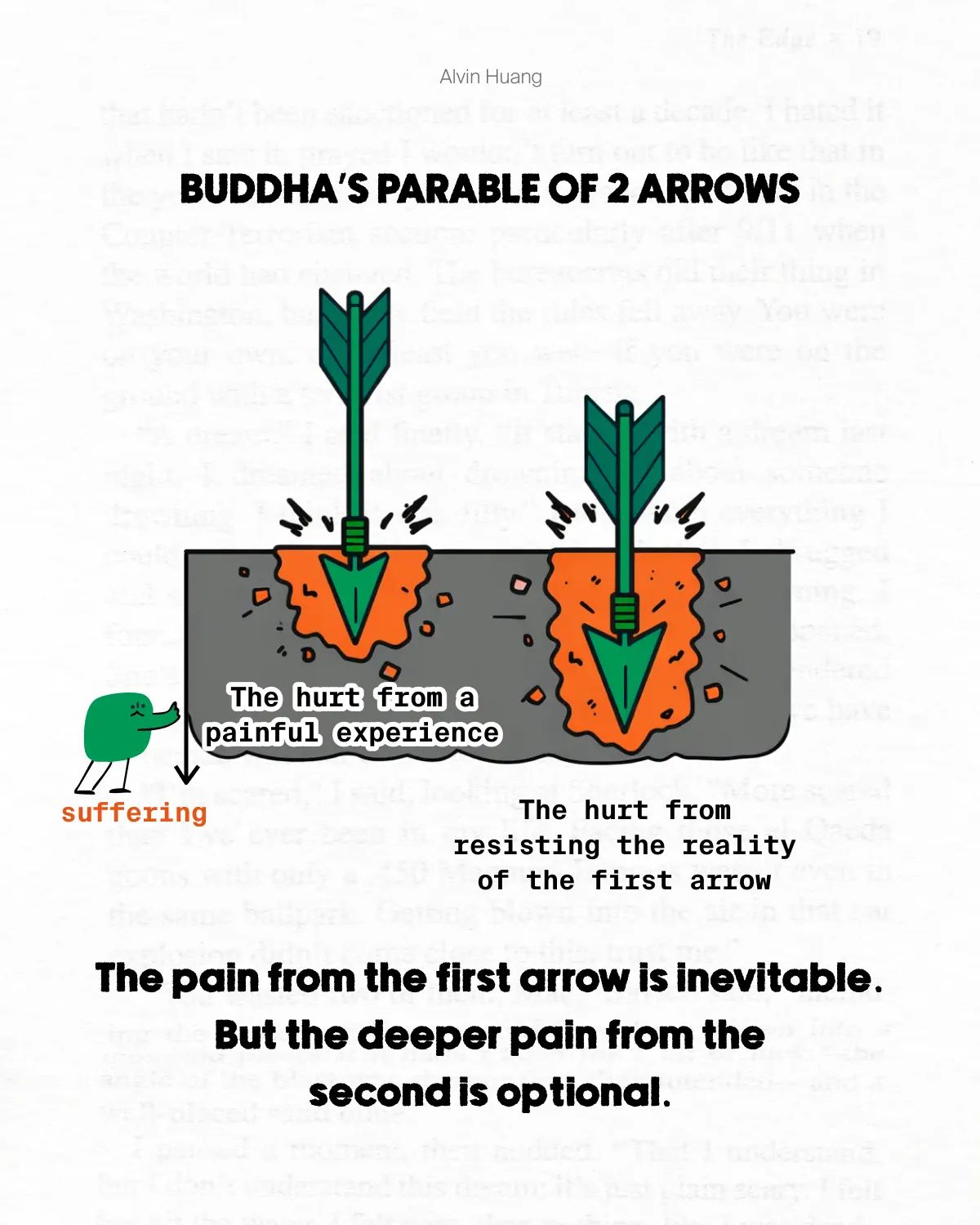
In a recent LinkedIn post, Alvin Huang delves into the critical distinction between the pain of failure itself and the self-inflicted suffering that often follows. Huang, a prominent voice in business leadership, uses a compelling Buddhist parable to illustrate how leaders can navigate setbacks more effectively by avoiding the “second arrow” of negative self-talk and resistance.
Huang opens by emphasizing the inevitability of failure, regardless of one’s skill or effort. He writes:
Failure is going to happen. It doesn’t matter how good you are, or how hard you work. You’re going to get hit.
The core of Huang’s message revolves around the concept of the “second arrow” – the additional pain we create for ourselves after an initial setback. He elaborates on what constitutes this self-inflicted wound:
- Denying the problem exists until it gets worse
- Blaming your team instead of owning it
- Replaying what “should have happened” on a loop
- Refusing to adapt because your ego won’t let you
The Inevitability of the First Arrow
Huang posits that the initial failure – whether a failed product launch, a departing key employee, or a lost deal – is the “first arrow.” This, he acknowledges, is a painful but unavoidable aspect of business and leadership. The real damage, however, often stems from our reaction to this first hit.
Avoiding the Self-Inflicted Second Arrow
According to Huang, the true art of leadership lies in skillfully managing the aftermath of failure, specifically by disarming the “second arrow.” He argues that leaders who are adept at processing failure do so quickly, avoiding prolonged rumination on what might have been.
They don’t waste weeks marinating in what could have been. They just move.
Huang provides a practical framework for leaders to stop “shooting that second arrow.” This involves a conscious shift in perspective and action:
Key Strategies for Processing Failure
- Acknowledge what happened: Huang stresses the importance of openly stating the reality of the situation, without spin, to oneself and the team.
- Focus on what you control now: He advises shifting attention from past decisions, which are immutable, to present actions and choices.
- Ask “What does this teach me?”: Huang suggests viewing every failure as a source of valuable data and learning opportunities.
- Communicate transparently: He highlights that teams are often aware of setbacks, and owning the situation proactively prevents the spread of rumors and builds trust.
In essence, Alvin Huang’s insights on LinkedIn emphasize that while experiencing the pain of failure is inevitable, the prolonged suffering that often accompanies it is a choice. By confronting reality, focusing on the present, extracting lessons, and maintaining transparency, leaders can effectively sidestep the “second arrow” and move forward with resilience and greater wisdom.
Huang concludes with a clear distinction:
The first arrow is inevitable. The second one is a choice.
His post serves as a guide for professionals to build greater emotional and strategic resilience in the face of adversity.
📝 About This Content
This article is based on insights shared by Alvin Huang on LinkedIn.
📅 Originally posted on February 8, 2026 | View original post on LinkedIn →