
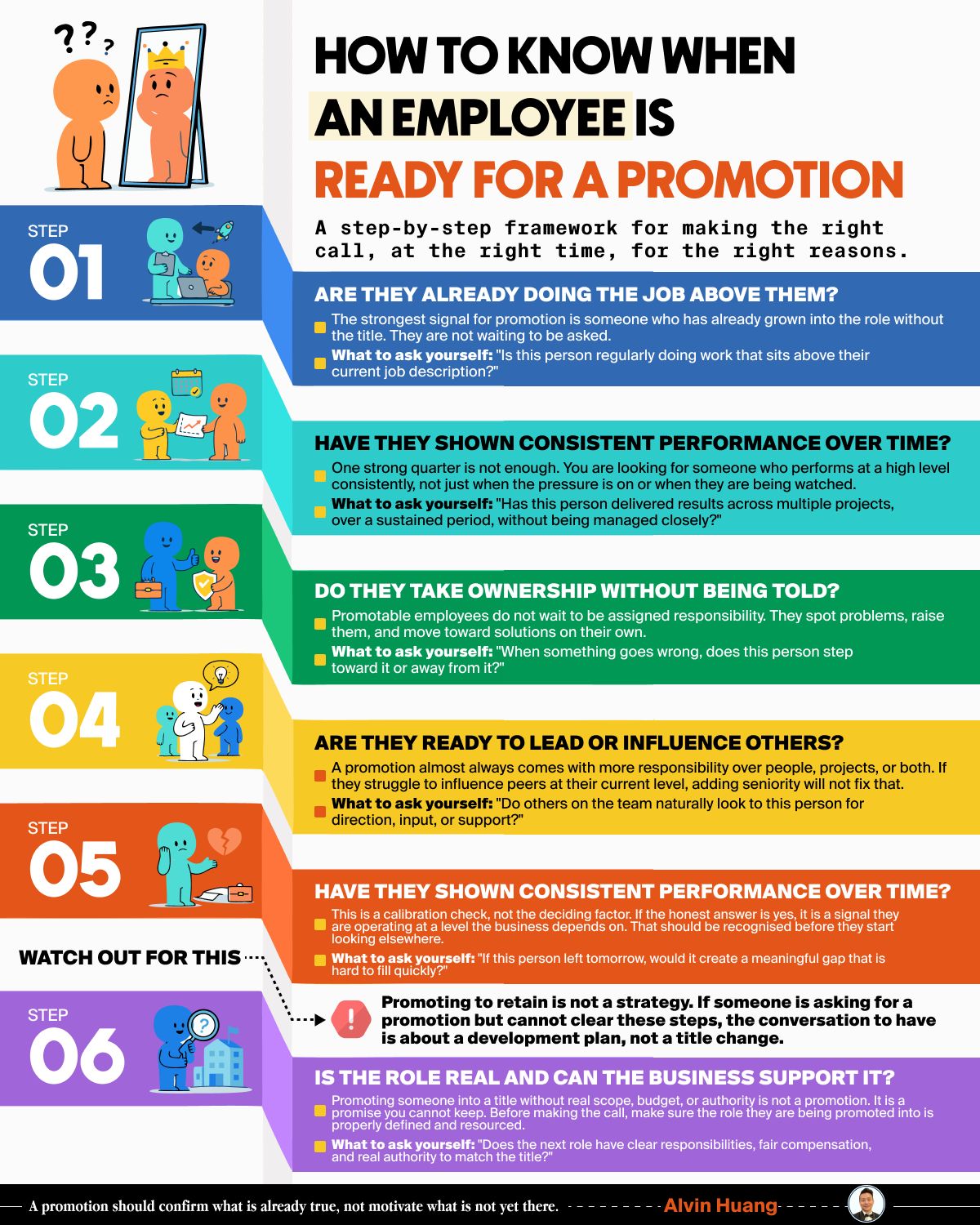
In a recent LinkedIn post, Alvin Huang delves into the critical, yet often overlooked, process of internal promotions, arguing that a misstep here can be far more damaging than a poor hiring decision. Huang emphasizes that while leaders often have some process for evaluating new hires, the same rigor is frequently absent when considering internal candidates for advancement.
According to Huang, the consequences of a flawed promotion are significant and multifaceted.
“The team sees it, trust takes a hit, and the person you promoted is now set up to struggle.”
Huang points out that leaders often fall into one of two traps: promoting too quickly due to fear of losing a valuable employee, or delaying promotions because they lack a clear framework for identifying the right candidate at the right time. As he notes, “Most leaders either move too fast because they’re worried about losing someone, or they stall because they have no real process for when ‘yes’ is the right answer.” Neither approach, he argues, ultimately serves the business or the individual being considered.
Addressing the Promotion Paradox
Huang proposes a structured, six-step framework designed to guide leaders through the decision-making process, ensuring that promotions are strategic and well-justified. He stresses that candidates should ideally clear all six steps to confirm they are the right fit.
Step 1: Role Equivalence
The first indicator Huang suggests leaders look for is whether the candidate is already performing the duties of the higher role. As Huang puts it:
“The clearest sign is someone who has already grown into the role without the title. They’re doing high-level tasks without waiting to be asked.”
This demonstrates initiative and a natural progression into the responsibilities associated with the elevated position.
Step 2: Consistent Performance
Beyond merely performing the job, Huang emphasizes the importance of sustained performance over time. He cautions against making decisions based on short-term successes, stating that a single strong quarter is insufficient. Instead, leaders should look for evidence of consistent delivery across multiple projects and over a sustained period, requiring minimal direct supervision.
Step 3: Proactive Ownership
Huang highlights that individuals ready for promotion tend to take initiative without explicit direction. They don’t wait to be assigned tasks but actively identify problems and work towards solutions. This proactive approach, according to Huang, is a key differentiator.
Step 4: Influence and Leadership Potential
Promotions often come with increased responsibility for people or projects. Huang argues that a candidate’s ability to lead or influence others at their current level is a critical predictor of future success in a more senior role. He notes, “If they can’t influence peers at their current level, a new title won’t fix that.”
Step 5: Impact of Departure
As a calibration check, Huang suggests leaders consider the impact their departure would have. If losing the individual would create a significant gap, it’s a strong signal that they are already operating at a higher level than their current title or pay grade reflects.
Step 6: Role Viability
Finally, Huang insists that the promoted role itself must be legitimate and adequately resourced. He warns against creating titles without real scope, authority, or fair compensation, stating, “A title without real scope, authority, or fair compensation isn’t a promotion.” Ensuring the role is clearly defined before the promotion is made is crucial.
Avoiding Retention-Based Promotions
A critical warning from Huang is against promoting solely as a retention tactic. He advises that if an employee is pushing for a title but doesn’t meet the established criteria, the appropriate response is a development plan, not an immediate promotion. As Alvin Huang concludes, making the right promotion decision requires a systematic approach grounded in performance, capability, and the actual needs of the business.
📝 About This Content
This article is based on insights shared by Alvin Huang on LinkedIn.
📅 Originally posted on April 10, 2026 | View original post on LinkedIn →