
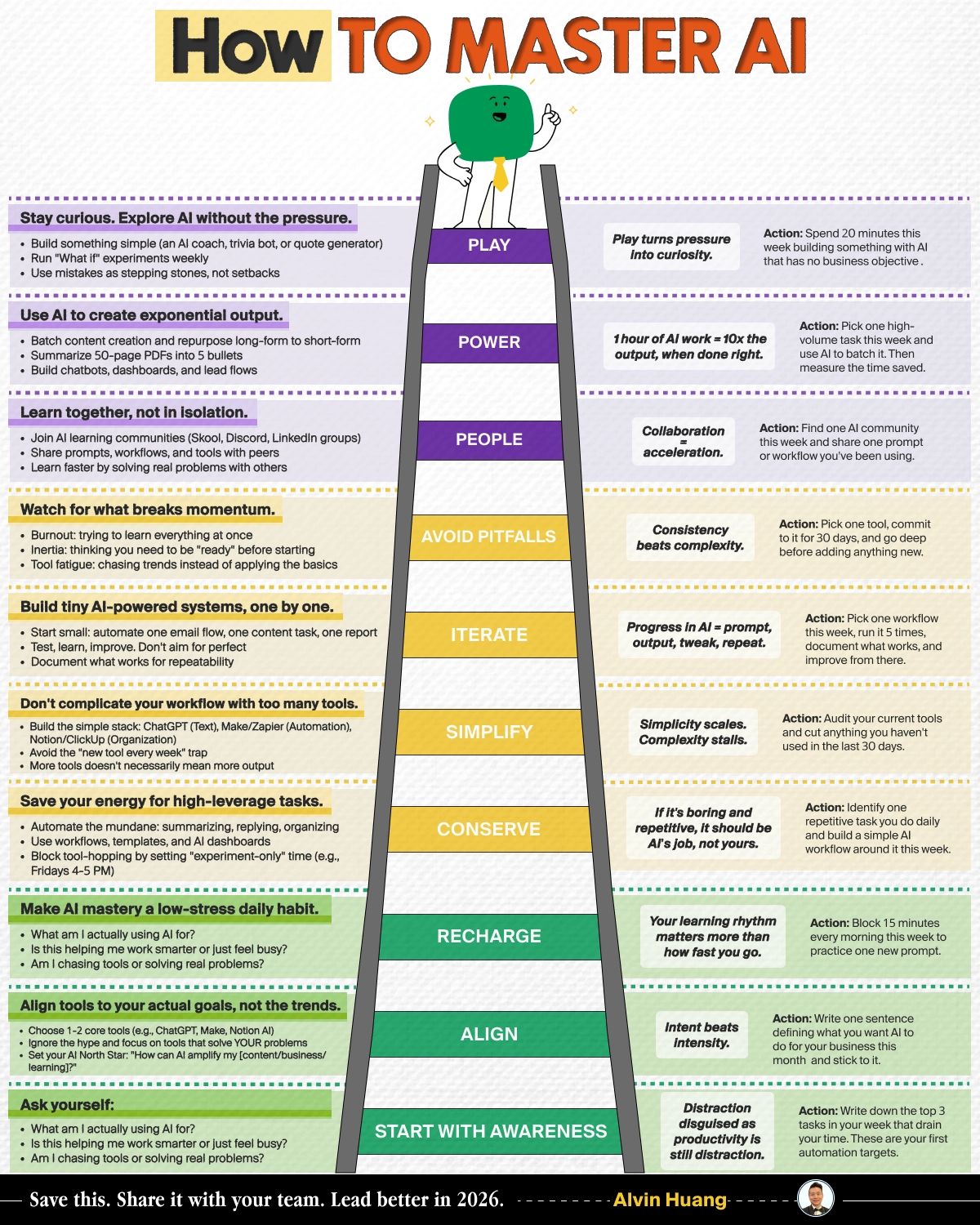
In a recent LinkedIn post, Alvin Huang discusses the common pitfall of adopting numerous Artificial Intelligence tools without achieving tangible results. Huang contrasts the experience of many businesses drowning in AI subscriptions with his own company’s success at Truegenics, where AI implementation led to significant cost reductions and productivity gains. He emphasizes that the key to effective AI adoption lies not in chasing the latest technology, but in establishing clear, problem-focused systems.
Huang highlights the frustration many feel when new AI tools fail to deliver on their promise of saving time. He notes:
“ChatGPT, Notion AI, 5 browser extensions, and a dedicated Slack channel; But ask them what saved time last week, and they go quiet.”
This observation sets the stage for his argument that a strategic approach is crucial. Huang shares his experience at Truegenics, where AI was implemented two years prior to address time-consuming manual processes. The outcome, he states, was a substantial 32% reduction in operating costs and a doubling of internal productivity. Crucially, Huang attributes this success not to the novelty of the tools themselves, but to a well-defined system.
Prioritizing Problems Over Hype
Huang outlines a five-step framework for founders looking to implement AI effectively from scratch. The foundational principle, he argues, is to start with the problem, not the tool. As Alvin Huang advises:
“Start with the problem, not the tool. Write down the 3 tasks draining the most time in your week. Those are your first automation targets.”
This approach ensures that AI is deployed to solve actual business challenges, rather than being adopted for its own sake. Huang suggests identifying the most time-consuming tasks and targeting those for automation first. This focus on practical application, rather than the allure of new technology, is central to his strategy.
Depth Over Breadth in Tool Adoption
Another key tenet of Huang’s strategy is to concentrate on mastering a few core tools rather than spreading resources thinly across many. He points out:
“Pick 1-2 tools and go deep. ChatGPT for text, Make or Zapier for automation, Notion for organization. More tools doesn’t mean more output. Usually it means more confusion.”
This advice underscores the importance of deep integration and understanding of chosen AI solutions. Huang advocates for mastering tools like ChatGPT for text generation, Make or Zapier for automation, and Notion for organization, rather than getting lost in a proliferation of specialized applications. He believes that focusing on a limited set of tools allows for more effective implementation and a clearer understanding of their capabilities and limitations.
System Building for Sustainable Gains
Huang further elaborates on the importance of building small, iterative systems and automating repetitive tasks. He stresses that AI should handle the mundane, freeing up human energy for strategic decision-making. According to Alvin Huang, founders should:
“Automate the repetitive work first. Summarizing, replying, reporting. That’s AI’s job, not yours. Save your energy for the decisions only you can make.”
His framework encourages building small systems, testing them, and refining them based on performance. The ultimate goal, as Huang sees it, is to create a robust system that operates efficiently, rather than a theoretically perfect but practically unworkable one. The primary metric for success, he insists, is time saved, and any AI implementation that doesn’t yield this benefit should be re-evaluated.
AI as an Operator, Not a Toy
In conclusion, Alvin Huang contrasts how successful founders use AI—treating it as an operational asset—with how many others treat it as a mere novelty. He observes that leaders who achieve significant growth focus on fixing broken processes with AI, rather than on debating which new tool is superior. This perspective frames AI as a powerful engine for business transformation when applied with a clear strategy and a focus on measurable outcomes.
📝 About This Content
This article is based on insights shared by Alvin Huang on LinkedIn.
📅 Originally posted on May 4, 2026 | View original post on LinkedIn →