
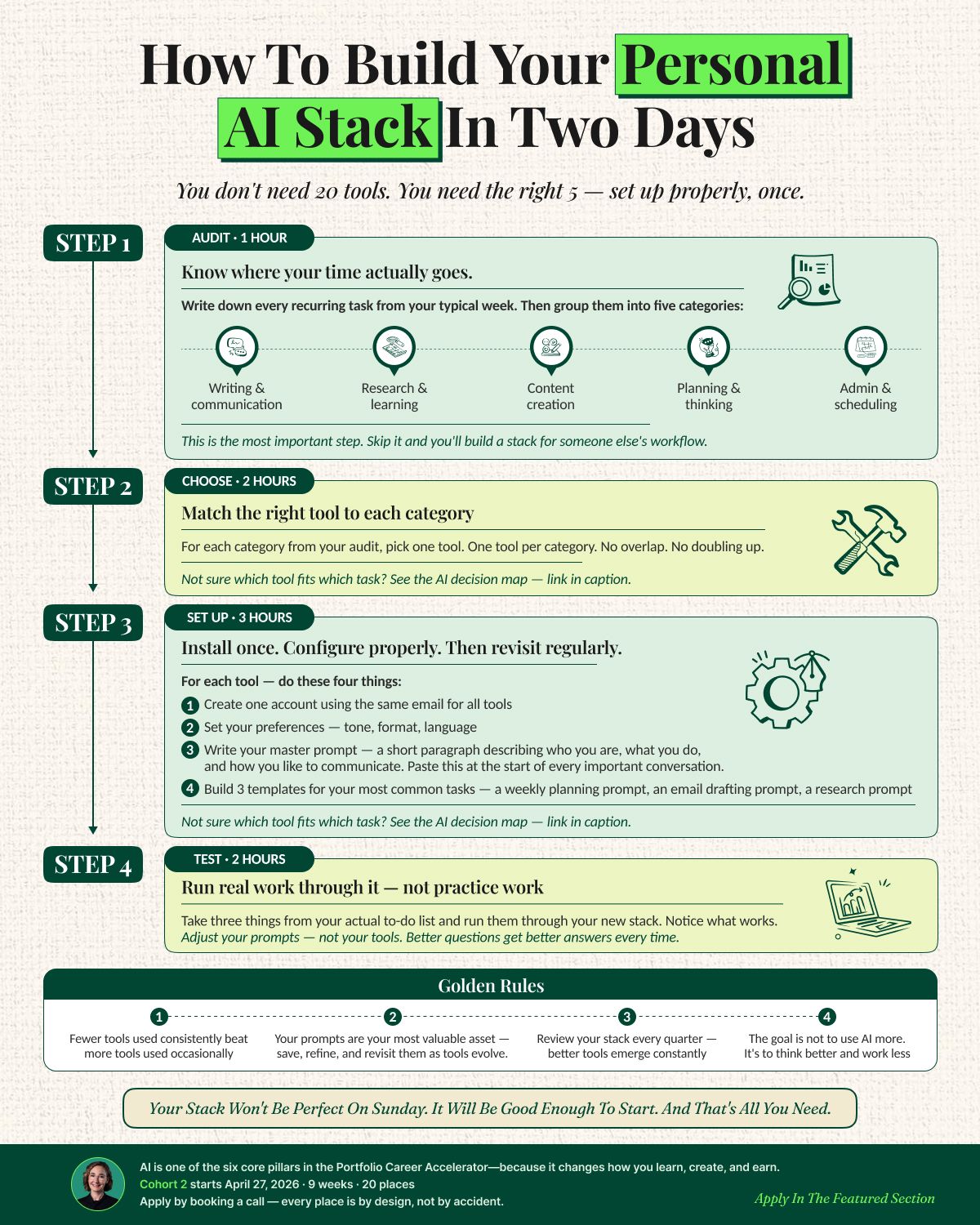
In a recent LinkedIn post, Ani Filipova challenges the common perception that building effective AI workflows is a time-consuming endeavor, asserting that it can be accomplished in as little as two days when approached correctly. Filipova, a proponent of strategic AI integration, highlights the pitfalls of haphazard tool adoption and emphasizes the creation of a personalized AI stack.
Filipova points out that many professionals fall into the trap of accumulating numerous AI tools without a coherent strategy. “Grabbing every tool they hear about. Using them randomly. No system. No consistency,” she writes, illustrating the common mistake that leads to a lack of efficiency. This approach, according to Filipova, results in users wondering why their efforts don’t yield the desired productivity gains.
The Core of an Effective AI Stack
According to Filipova, the essence of a personal AI stack is not about the sheer number of tools available, but about selecting the right ones. She advocates for tools that are specifically matched to an individual’s actual tasks and integrated in a way that feels intuitive and becomes second nature.
Filipova’s Two-Day Framework
Filipova outlines a structured, two-day process for building and implementing an AI workflow:
Day 1: Audit and Match
The first day is dedicated to a thorough audit of one’s actual time commitments. Filipova stresses the importance of identifying where time is truly spent, rather than relying on assumptions. “Audit what you actually spend your time on. Not what you think you spend it on. What you actually do every week,” she instructs. Following this audit, the afternoon is dedicated to matching a single, appropriate tool to each identified task category. Filipova’s advice is clear: “One. Not three. Not five. One.”
Day 2: Setup and Real-World Application
The second day focuses on the proper setup of the chosen tools. This includes crafting a master prompt and developing templates that serve as a starting point. Filipova notes that these initial setups are foundational and should be revisited as the AI landscape evolves. The crucial final step is to “run real work through it. Not only test tasks. Real ones.” This hands-on application allows for necessary adjustments to prompts rather than constantly seeking new tools.
Adapting to the Evolving AI Landscape
Filipova also addresses the rapid pace of AI development, warning that the most effective tools today may be surpassed in six months. She champions the establishment of a quarterly review habit to keep the AI stack current. “New tools emerge. Existing ones improve. Your workflow should evolve with them,” she advises. The ultimate objective, as articulated by Filipova, is not merely to increase AI usage but to foster better thinking and reduce workload: “The goal isn’t to use AI more. It’s to think better and work less.”
For those seeking a more in-depth understanding and structured implementation, Filipova mentions her course, the Portfolio Career Accelerator, which teaches the proper methods for building AI stacks and workflows to create leverage. She also directs readers to a previously posted AI decision map for assistance in tool selection.
📝 About This Content
This article is based on insights shared by Ani Filipova on LinkedIn.
📅 Originally posted on April 16, 2026 | View original post on LinkedIn →