
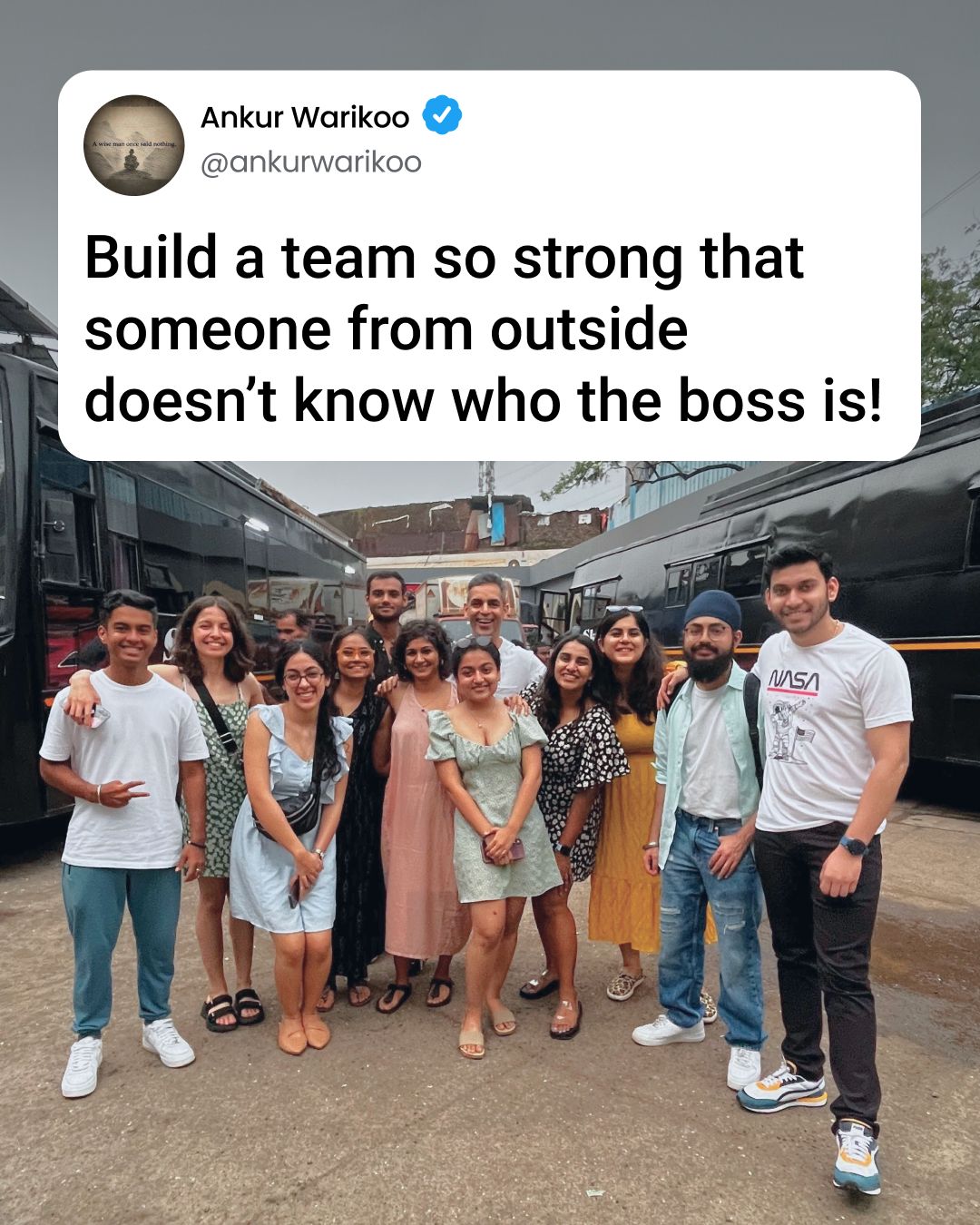
In a recent LinkedIn post, Ankur Warikoo explores a radical approach to team operations, advocating for a model that eschews traditional hierarchy and managerial control in favor of inherent trust and end-to-end ownership. Warikoo, founder of wariCrew, details how his organization intentionally operates without direct instruction, aiming to mitigate the dysfunction he believes often stems from layers of management and approval processes.
Challenging Traditional Hierarchies
Warikoo begins by questioning the conventional wisdom of team management, suggesting that many operational issues arise from excessive structure. He highlights the deliberate choice made at wariCrew to dismantle these barriers.
“A lot of dysfunction comes from layers – hierarchy, approvals, permissions.
At wariCrew, we chose to do the opposite.
No managers telling people what to do.
No hierarchy deciding whose voice matters more.
No systems designed around control.”
As Ankur Warikoo notes, this deliberate absence of top-down direction is foundational to their operational philosophy. Instead of dictating tasks, the focus shifts to empowering individuals to manage their responsibilities fully.
The Power of Trust and Ownership
The core of Warikoo’s argument rests on the principle of trust. He posits that by entrusting employees with complete ownership of their work, a more engaged and effective team emerges. This autonomy, according to Warikoo, encourages deeper thinking and a stronger sense of accountability for results.
He elaborates on the benefits derived from this trust-centric model:
- Employees tend to ask better questions, indicating a deeper engagement with their work.
- A longer-term perspective is fostered, as individuals are invested in the ultimate outcomes.
- There’s a greater focus on results rather than just task completion.
Warikoo emphasizes that while team members might not always have a clear roadmap, his trust in their ability to navigate challenges is paramount. He states:
“They may not know the exact path – that’s fine.
But I trust them to figure it out.
And they do figure it out!”
Rethinking Human Resources
Ankur Warikoo challenges the notion of employees as mere ‘resources’ to be managed and controlled. He proposes a paradigm shift where human capital is nurtured through trust and support, expecting a significant return on that investment.
According to Warikoo, when individuals feel trusted and supported, their commitment and contribution often exceed expectations. This reciprocal relationship is key to fostering a high-performing team environment.
“People aren’t resources that need to be controlled.
Trust them, support them, guide them – and they will want to return 10x of that trust.”
Warikoo concludes his post with a note of gratitude for his team, who he describes as proactive and self-reliant. He highlights their willingness to take initiative, their mutual trust, and their accountability for mistakes as hallmarks of this autonomous structure.
In Ankur Warikoo’s view, this model of empowering individuals and fostering a high-trust environment is not just a management style but a fundamental rethinking of how teams can achieve greater success and fulfillment.
📝 About This Content
This article is based on insights shared by Ankur Warikoo on LinkedIn.
📅 Originally posted on July 1, 2026 | View original post on LinkedIn →