
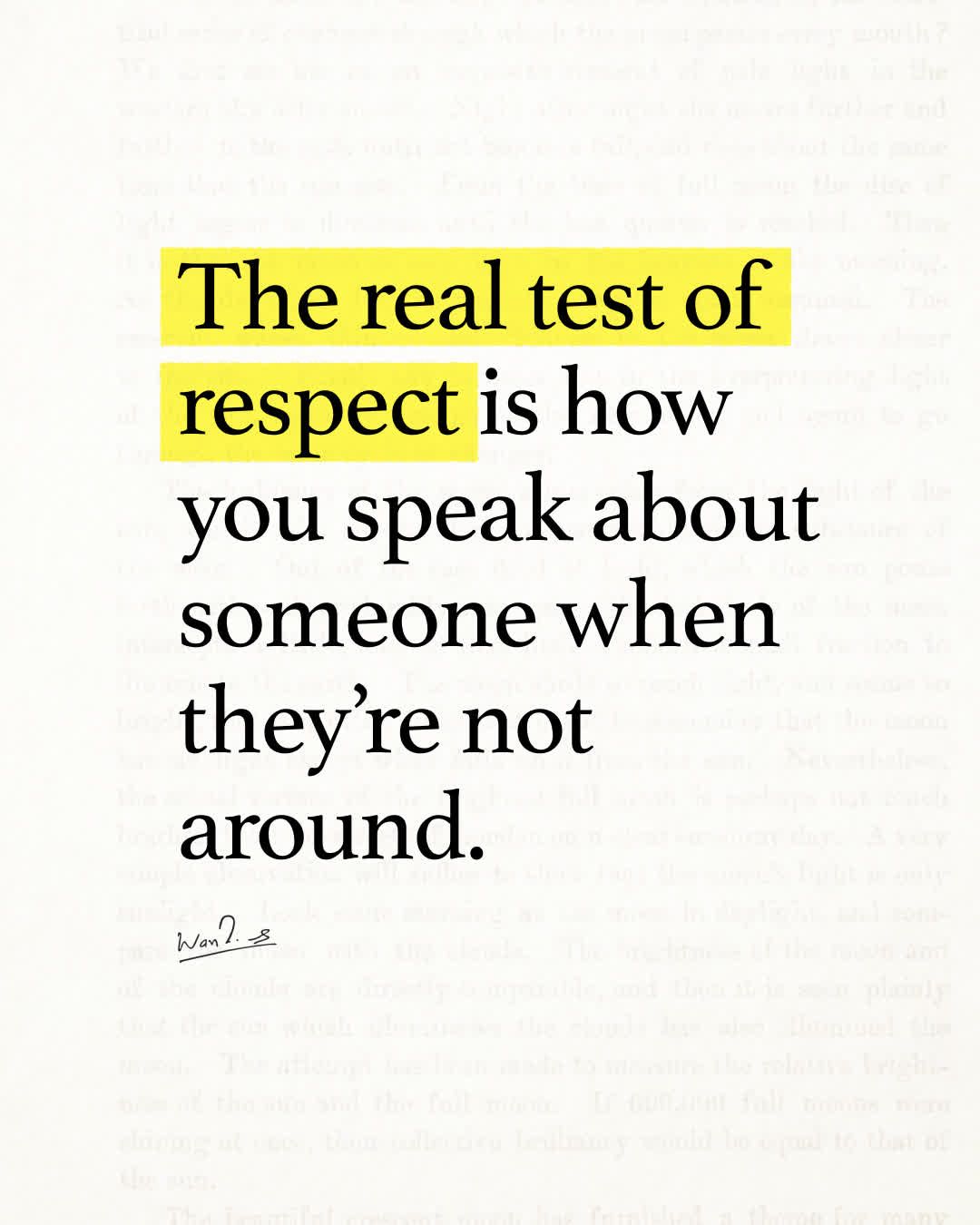
In a recent LinkedIn post, Ankur Warikoo delves into the nuanced definition of true respect, distinguishing it from mere social etiquette. The business leader and entrepreneur challenges the common perception that politeness and agreeable behavior in person equate to genuine respect. Instead, Warikoo proposes that the real measure of respect is demonstrated in private, during moments when an individual is absent and unable to defend themselves.
The Private Versus Public Persona of Respect
Warikoo posits that the critical test of respect occurs when one’s words and actions are not being observed by the subject of those words or actions. He suggests that the common practice of being outwardly pleasant while harboring negative sentiments privately is a superficial display, not indicative of true respect. According to Warikoo, this dichotomy highlights a fundamental misunderstanding of what it means to truly value another person.
“True respect is built in the moments when the other person is not around.
It’s in how you speak about them when they can’t hear you.
When they’re not present to defend themselves.”
This perspective shifts the focus from performative niceties to the underlying character and integrity of an individual. As Ankur Warikoo notes, respect is not merely about adhering to social norms but about demonstrating a deeper sense of fairness and empathy.
Respect as Fairness in Spirit
Expanding on his definition, Warikoo argues that respect is fundamentally about being “fair in spirit.” This means acting with integrity and consideration even when no one is watching. He contrasts this with the common, yet flawed, approach of offering smiles and compliments in a professional setting, only to engage in criticism or mockery behind closed doors. This behavior, he implies, erodes any respect that might have been initially perceived.
“You don’t earn respect by smiling at someone in a meeting and then mocking them later.
You earn it by choosing empathy and silence over unnecessary opinions.”
Warikoo emphasizes that genuine respect is cultivated through consistent ethical behavior, particularly when faced with the temptation to engage in gossip or negative commentary about others. The choice to remain silent or to speak kindly, even in absence, is presented as the cornerstone of building lasting respect and strong character.
Building Character Through Enduring Respect
The core message from Warikoo’s post is that the most authentic and impactful form of respect is internal and consistent, rather than situational. It is the kind of respect that shapes one’s character and builds a reputation that is resilient because it is founded on genuine principles.
“True respect is when your words stay kind, even in someone’s absence.
That’s the kind of respect that builds character.
The kind that truly lasts.”
In conclusion, Ankur Warikoo’s LinkedIn post serves as a powerful reminder that true respect is a reflection of one’s inner values and ethical compass, demonstrated most clearly in the moments when one is not seeking external validation. It is a call to cultivate a more profound and authentic way of interacting with and speaking about others, thereby building a more robust and meaningful form of respect.
📝 About This Content
This article is based on insights shared by Ankur Warikoo on LinkedIn.
📅 Originally posted on November 15, 2025 | View original post on LinkedIn →