
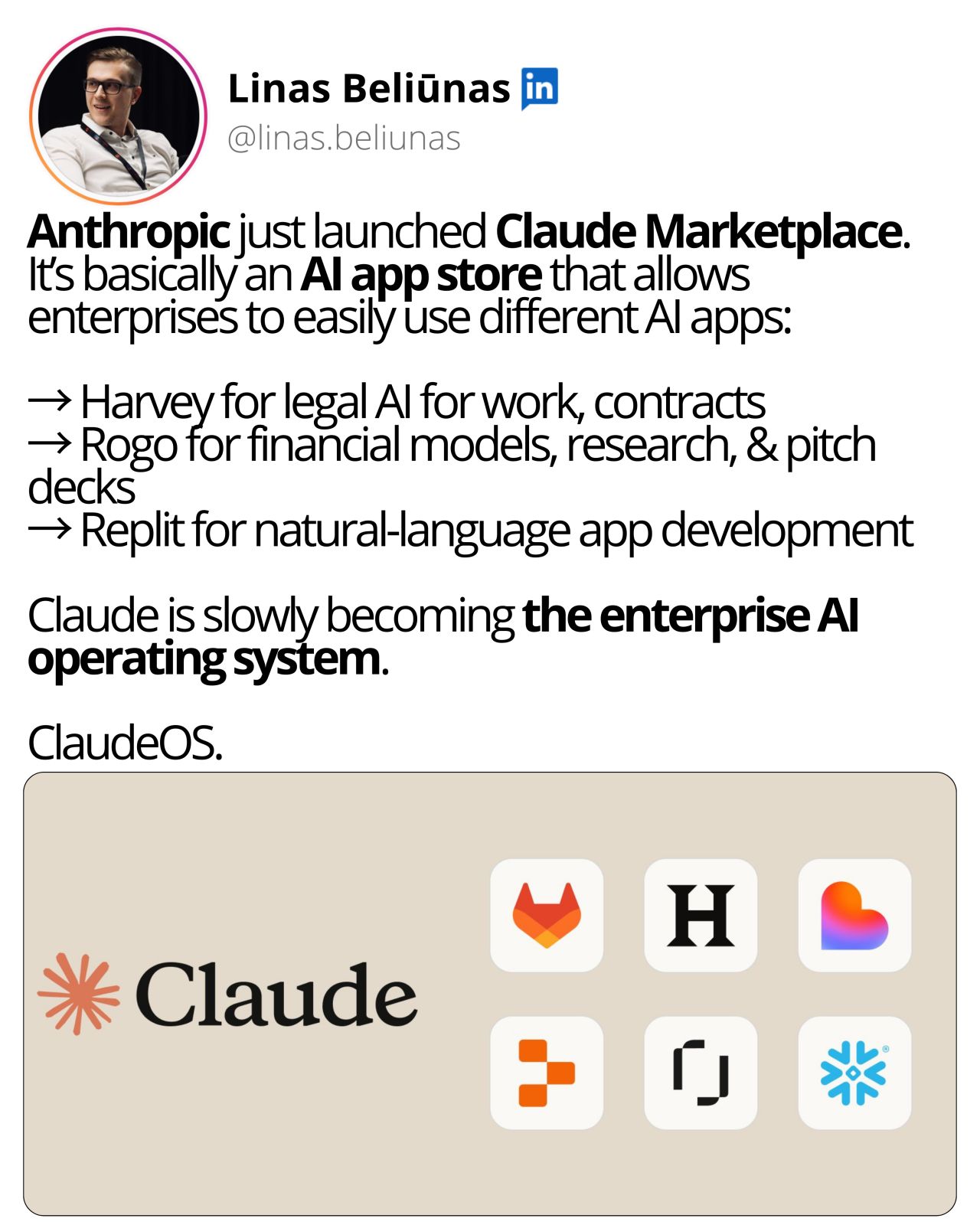
In a recent LinkedIn post, Linas Beliūnas discusses what he describes as a pivotal moment for enterprise AI, likening Anthropic’s newly launched Claude Marketplace to the App Store’s impact on mobile technology. Beliūnas highlights the marketplace’s potential to significantly reduce the friction associated with deploying specialized AI tools within large organizations.
According to Beliūnas, the core innovation lies in how enterprises can access these specialized AI platforms. He explains the streamlined process:
Claude Marketplace lets enterprises buy specialized AI platforms using their existing Claude spend. No new vendor contracts. No security reviews. No procurement cycles. Just allocate part of your Claude budget.
Addressing Enterprise AI Deployment Friction
Beliūnas argues that this approach directly tackles one of the most significant hurdles in enterprise AI adoption: the lengthy and complex deployment cycles. By allowing companies to allocate existing Claude budgets, the marketplace bypasses traditional procurement processes, which often involve extensive security vetting and contract negotiations. This, in Beliūnas’s view, dramatically accelerates the path from AI tool selection to actual implementation.
A New Ecosystem for Specialized AI
The post details the initial partners integrated into Claude Marketplace, showcasing a diverse range of specialized AI capabilities. These include:
- Harvey for legal AI
- Rogo for finance and research
- Replit for natural-language software development
- GitLab for DevOps automation
- Snowflake for data agents
- Lovable for prompt-to-app building
Beliūnas points out the strategic significance of Anthropic taking no commission on these transactions. He suggests the primary goal is not immediate marketplace revenue but rather establishing Claude as a foundational enterprise AI operating system.
The real strategy is not about marketplace revenue. It’s turning Claude into the enterprise AI operating system 🤖
The Vision of an AI Operating System
In Beliūnas’s analysis, this model envisions a future where companies interact with a single AI platform that intelligently routes tasks to specialized agents. Legal queries would go to Harvey, financial analysis to Rogo, and application development through Replit, all managed under a unified Claude infrastructure and billing system. This consolidation, he posits, could shift the competitive landscape significantly.
A Shift in Competitive Dynamics
Beliūnas elaborates on this potential market disruption, stating:
If this model works, companies won’t buy 15 separate AI tools. They’ll adopt one AI platform and plug specialized agents into it.
He concludes by emphasizing the long-term implications, suggesting that the entity that successfully establishes itself as the dominant enterprise AI operating system could define the next decade of software development and business operations. The strategy hinges on creating a cohesive, integrated experience that simplifies the adoption and management of powerful AI capabilities.
📝 About This Content
This article is based on insights shared by Linas Beliūnas on LinkedIn.
📅 Originally posted on March 8, 2026 | View original post on LinkedIn →