
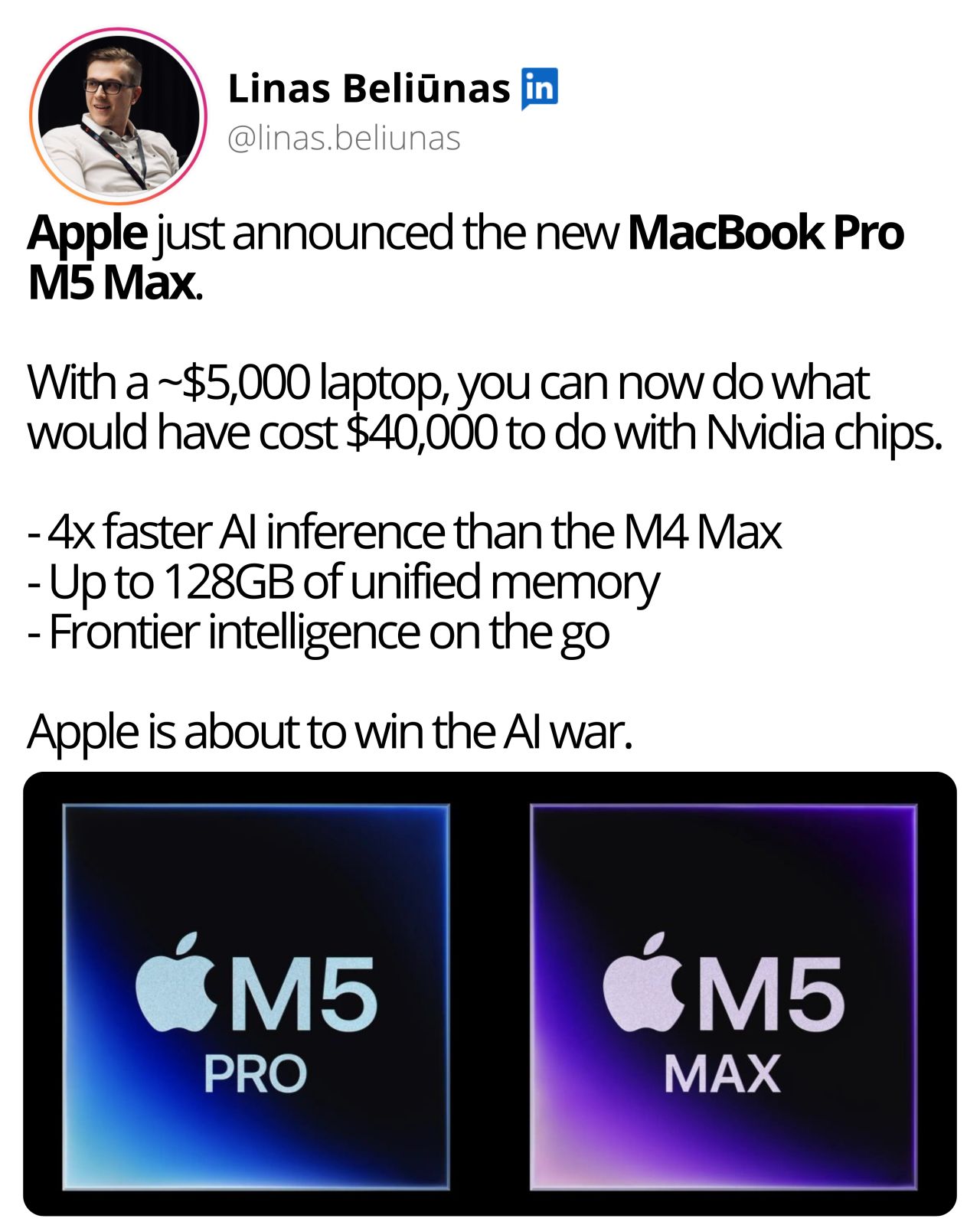
In a recent LinkedIn post, Linas Beliūnas offers a contrarian view on Apple’s approach to artificial intelligence, suggesting the tech giant may have been strategically positioning itself for a different kind of AI dominance all along.
Beliūnas challenges the prevailing narrative that Apple has been lagging in the AI race. Instead, he posits that Apple’s strategy has been less about building the most advanced AI models and more about leveraging its vast ecosystem and hardware. As Linas Beliūnas notes:
“While the industry burned $1.4 trillion+ training frontier models, Apple quietly waited.”
The “Different Game” of AI Distribution
Beliūnas argues that the true measure of success in the AI era might not be model superiority, but rather the ability to deploy AI capabilities to a massive user base. He highlights Apple’s partnership with Google to integrate Gemini AI into Siri as a pivotal move.
According to Linas Beliūnas, Apple’s approach is characterized by identifying and integrating the best available technology rather than attempting to create it from scratch. This strategy allows Apple to deploy AI across its devices efficiently. Beliūnas states:
“Not “build the biggest model.” Pick the winner. Integrate it everywhere 🤖”
Hardware, Ecosystem, and the Distribution Advantage
A key theme in Beliūnas’s analysis is the stark contrast between Apple’s strategy and that of its competitors. While many companies are investing heavily in model training and chasing subscription revenue, Apple is focusing on its established strengths.
Linas Beliūnas points out the significant financial disparities:
- Industry spending: Over $1.4 trillion on training models since 2023.
- Apple’s integration cost: Approximately $1 billion per year to integrate leading AI models.
Furthermore, Beliūnas contrasts the subscription models of rivals with Apple’s on-device AI processing, which he suggests offers benefits in speed, cost, and privacy. He also draws attention to Apple’s vertical integration, from its own AI chips to its diverse hardware offerings like iPhones, iPads, Macs, and Vision Pro.
The core of Beliūnas’s argument is that Apple’s existing distribution network of 2.5 billion devices provides an unparalleled advantage. As Linas Beliūnas puts it:
“While everyone else is fighting for AI users, Apple already owns the devices on which those users live.”
Rethinking the AI Race Narrative
Beliūnas concludes that Apple’s perceived delay in AI development might have been a deliberate and strategic choice, fitting its historical modus operandi. The real race, in his view, is not solely about who builds the most powerful AI model, but who controls the platform through which users access and interact with AI.
The author’s perspective suggests that the future of AI may be determined not by the smartest algorithms, but by the ubiquity of the devices running them. Linas Beliūnas emphasizes this point:
“It might be decided by who owns the device that model runs on.”
This analysis by Beliūnas provides a compelling counterpoint to the common understanding of Apple’s position in the rapidly evolving AI landscape, highlighting the enduring power of its integrated hardware and software ecosystem.
📝 About This Content
This article is based on insights shared by Linas Beliūnas on LinkedIn.
📅 Originally posted on March 5, 2026 | View original post on LinkedIn →