
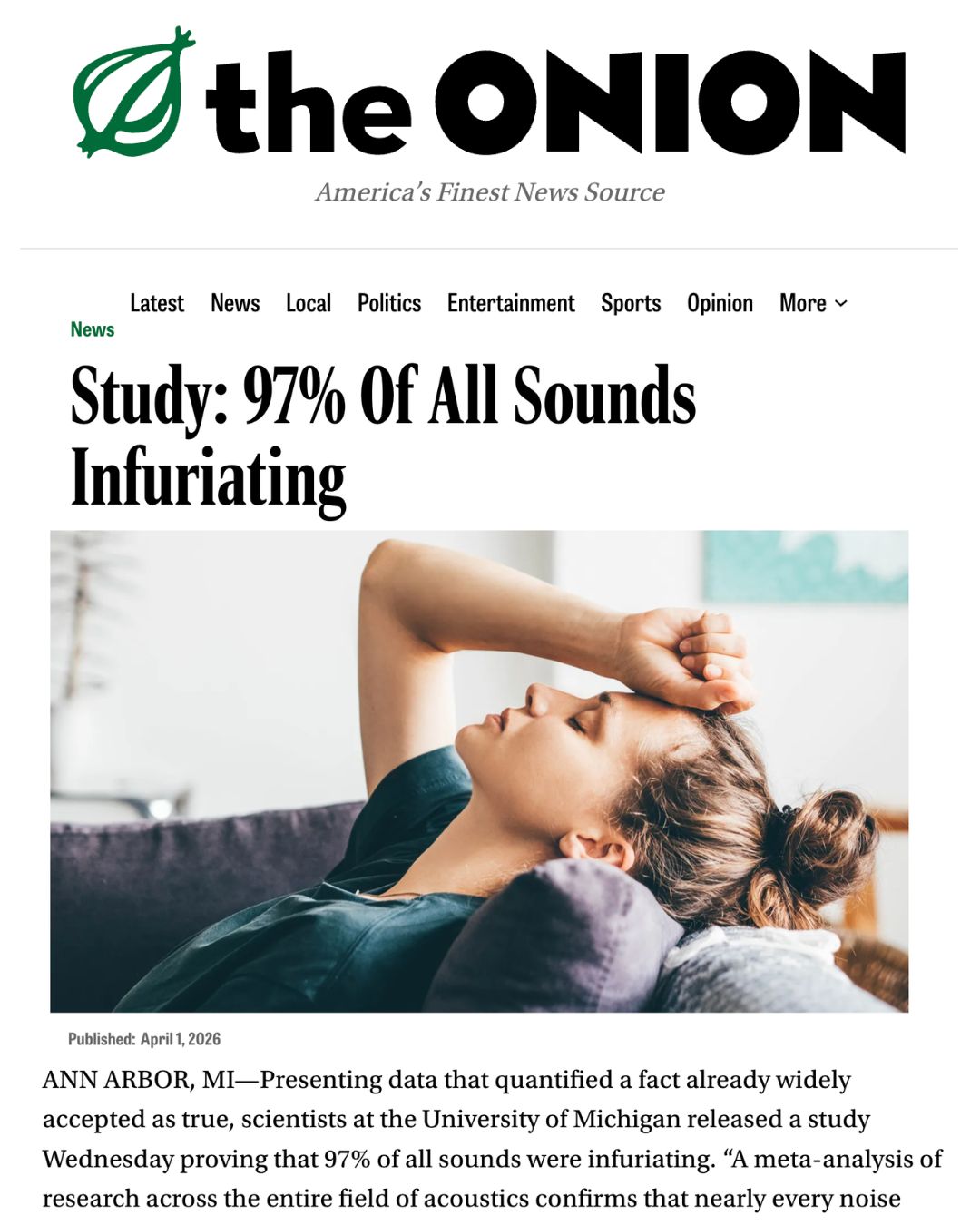
In a recent LinkedIn post, Arianna Huffington discusses the pervasive nature of music in our physical and mental spaces, drawing a parallel to a satirical piece from The Onion that highlights the overwhelming presence of audio. Huffington frames this phenomenon as a potential detriment to our inner lives, suggesting it crowds out valuable thinking time.
“Yes, it’s The Onion, but like so many Onion pieces (and all great humor), it’s spiritually true!”
Huffington’s commentary stems from her own observations about how nearly every public and private physical space has become saturated with music. She notes that this constant auditory environment leaves little room for personal reflection.
The Pervasive Soundscape
Huffington points out that the ubiquity of music in restaurants, gyms, and even museums contributes to a broader issue: the constant filling of the space between our ears. This, in her view, prevents individuals from engaging in their own thoughts.
“Which also means that the space between our ears is now constantly filled with music — instead of our own thoughts.”
She references a previous piece she wrote on the subject, linking to it for further context. The core of her argument revolves around the idea that this external noise pollution is encroaching upon our internal mental landscape, a space she argues is crucial for creativity, problem-solving, and overall well-being.
A Call for Quiet Reflection
While acknowledging the satirical nature of The Onion’s suggestion to address the issue, Huffington implies a need for greater awareness and perhaps deliberate efforts to reclaim moments of quiet. The Onion’s humorous, albeit extreme, suggestion of physical intervention underscores the intensity of the problem as perceived by some.
“Though I stop short of The Onion’s call to action — stabbing a knitting needle into your ears. Maybe just into the audio speakers instead.”
According to Huffington, the constant barrage of external audio stimuli can be seen as a form of ‘death by music,’ where the absence of silence leads to a diminished capacity for introspection and original thought. She suggests that the constant availability of music, while often intended for enjoyment or ambiance, may be inadvertently hindering deeper cognitive processes and personal mental space.
Reclaiming Mental Space
Huffington’s insights prompt a consideration of how individuals and society at large engage with sound. As she highlights, the intentional or unintentional filling of every available moment with audio content may come at the cost of mental clarity and the capacity for uninterrupted thought. Her commentary serves as a reminder to be mindful of our auditory environments and their potential impact on our inner lives.
📝 About This Content
This article is based on insights shared by Arianna Huffington on LinkedIn.
📅 Originally posted on April 18, 2026 | View original post on LinkedIn →