
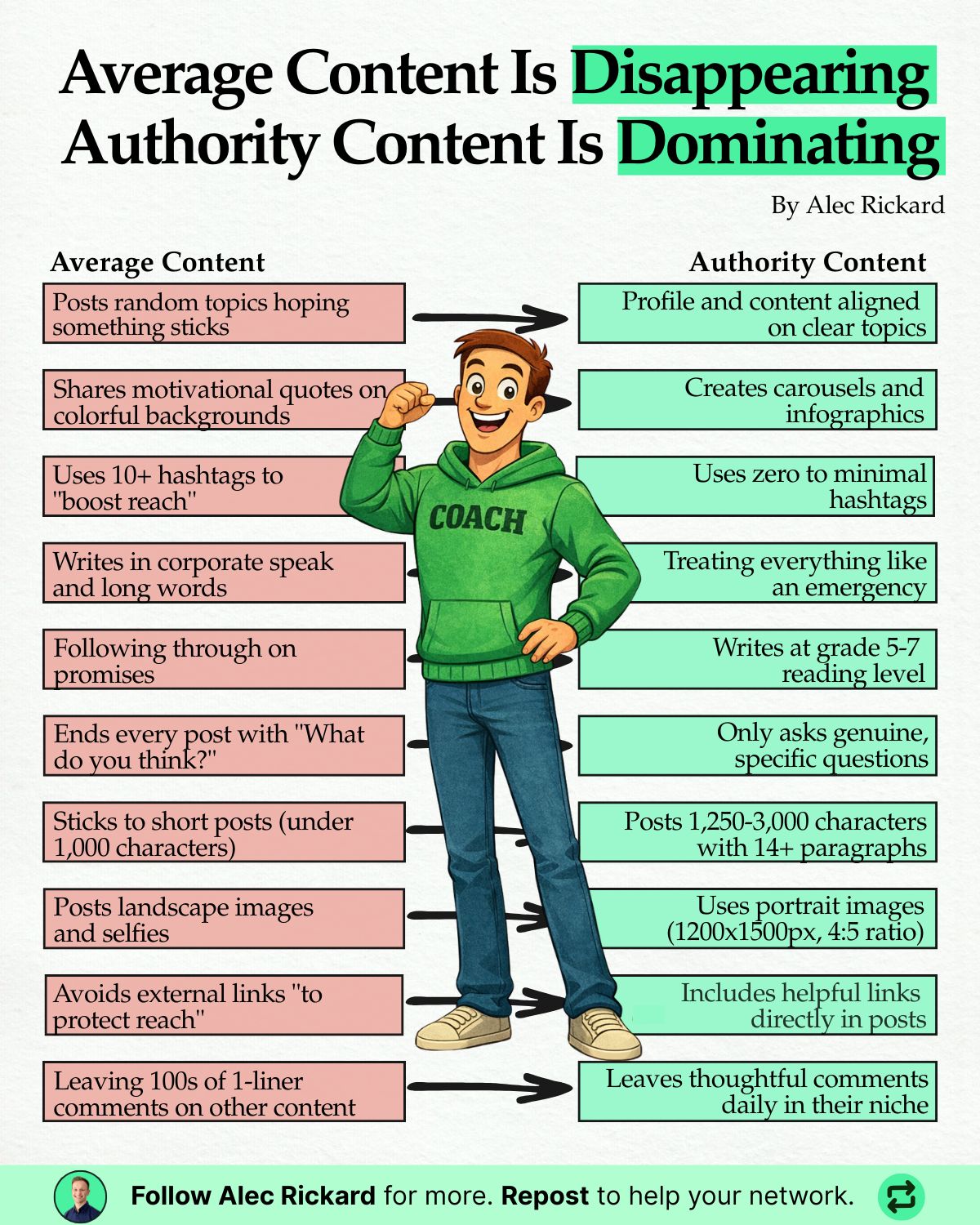
In a recent LinkedIn post, Alec Rickard discusses a significant shift occurring on the platform, asserting that “average content is disappearing” while “authority content is dominating.” Rickard’s analysis, based on a study of over 100,000 LinkedIn posts, suggests a stark reality for content creators: the era of generic, high-volume posting is over, and standing out requires a deeper, more specialized approach.
Rickard highlights a concerning trend for those still relying on conventional content strategies. He states:
Average content looks like:
10 skills every job in the world needs.
Superficial takes on the same topic.
That burnout quote from 2024.
Skin deep leadership advice.
This type of content, according to Rickard, is increasingly being ignored by the LinkedIn audience. He points to a substantial decline in median impressions, noting they are “already down ~66% from peak levels. And falling every quarter.” This data underscores a critical point: the platform’s algorithm and user behavior are evolving, favoring depth and expertise over breadth and repetition.
The Rise of Authority Content
Conversely, Rickard identifies “authority content” as the key to success in the current LinkedIn landscape. This category is characterized by several distinct features that resonate with users seeking genuine value and expertise. As Rickard outlines, authority content involves:
- Strong alignment between your profile and posts.
- Educating people with real-world experience.
- Clear perspectives on consistent topics.
- Offering deeper insights to stand out.
The implication, as Rickard argues, is that the audience is actively seeking out creators who demonstrate a clear point of view and share valuable, experience-backed knowledge. He emphasizes that “Vague ideas get ignored. Generic posts get skipped. Sound like everyone else, and you won’t be seen.” This suggests a need for creators to cultivate a unique voice and a consistent thematic focus.
The Impact of AI on Content Quality
Rickard also addresses the growing presence of AI-generated content on the platform, identifying it as a significant factor contributing to the decline of average content. He observes that while AI can produce grammatically correct and superficially “fine” content, it often lacks substance and originality. Rickard’s take is blunt:
The elephant in the room?
AI content is switching people off.
99% of AI writing sounds fine.
But it says nothing.
This observation is crucial, as it suggests that AI-generated content, while potentially increasing output volume, fails to capture the attention or build the authority that human-driven, experience-based content can. The “brutal truth,” as Rickard puts it, is that the audience can discern the difference and is increasingly turning away from generic, AI-assisted posts.
Navigating the New Landscape
For individuals and businesses experiencing a dip in their LinkedIn engagement, Rickard offers a clear path forward. He advises creators to move beyond superficiality and embrace their unique perspectives. The core recommendation is straightforward:
If your impressions have lowered lately,
You need to:
Decide what you actually think.
Say it clearly.
Rickard concludes by posing a direct question to his audience, urging them to consider their current positioning and desired recognition on the platform: “What do you want to be known for here right now?” This call to action encourages introspection and a strategic approach to content creation, emphasizing that genuine insight and clear communication are the cornerstones of building authority and visibility in today’s competitive digital environment.
📝 About This Content
This article is based on insights shared by Alec Rickard on LinkedIn.
📅 Originally posted on January 24, 2026 | View original post on LinkedIn →