
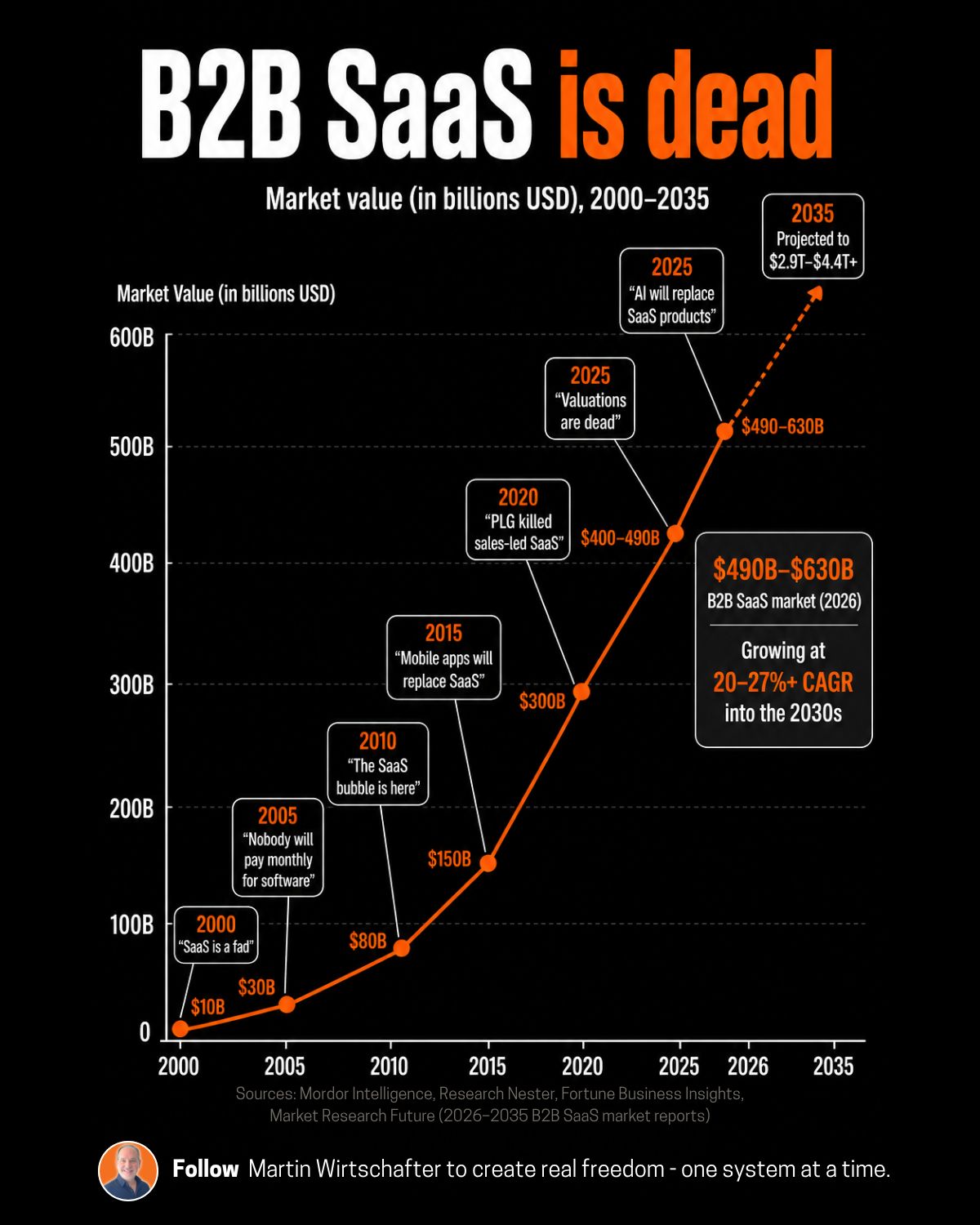
In a recent LinkedIn post, Martin Wirtschafter tackles the recurring narrative that B2B SaaS is on its last legs, arguing that despite repeated predictions of its demise, the sector continues to thrive and evolve. Wirtschafter highlights a pattern of skepticism and disruption that has surrounded Software as a Service since the year 2000, yet asserts that the underlying model remains robust.
Wirtschafter opens by listing a series of past pronouncements about the end of B2B SaaS, from the dot-com crash to the notion that “on-prem will always win.” He notes the cyclical nature of these critiques:
B2B SaaS has been dying since 2000. Some notable “deaths” include: The dot-com crash, The SaaS bubble, “On-prem will always win,” etc.
He further points out that current sentiments, echoed by prominent figures like Microsoft CEO Satya Nadella and various venture capitalists, mirror these historical doubts. Wirtschafter frames these as recurring themes rather than fundamental threats.
The Enduring Strength of SaaS
Despite the persistent predictions of SaaS’s demise, Wirtschafter provides data to underscore its continued growth and market value. He asserts that SaaS consistently compounds through various market cycles and “software is dead” narratives.
According to Wirtschafter, the market’s current valuation and future projections are substantial, indicating a sector that is far from over. He states:
SaaS keeps compounding through every “software is dead” cycle. The market is already worth $490B+ in 2026. Some estimates put it above $630B this year. Forecasts place it between $2.9T and $4.4T by 2034–2035.
Wirtschafter’s analysis suggests that technologies and trends often cited as SaaS killers, such as mobile apps, cloud computing, and even emerging technologies like AI and agents, ultimately integrate with or build upon the SaaS foundation rather than replacing it entirely. “Every ‘SaaS killer’ so far has ended up building on SaaS,” he argues.
Core Principles for SaaS Founders
While debunking the idea of SaaS’s imminent death, Wirtschafter emphasizes that the fundamental challenges and responsibilities for SaaS founders remain unchanged. He outlines three key areas for sustained success:
Focus on Genuine Need
Wirtschafter stresses the importance of building a product that addresses a real market demand. The core of any successful SaaS business, in his view, is providing genuine value to customers.
Continuous Improvement
The market is dynamic, and Wirtschafter advises founders to remain adaptable and committed to improving their offerings as the market evolves. This iterative approach is crucial for long-term relevance.
Scalable Company Building
Perhaps most critically, Wirtschafter highlights the need to build a company whose growth is not solely dependent on the founder’s personal involvement. This involves establishing robust processes, teams, and infrastructure that allow the business to scale independently.
In conclusion, Martin Wirtschafter’s analysis on LinkedIn presents a clear perspective: B2B SaaS is not dying, but rather undergoing continuous evolution. The recurring predictions of its demise are, in his view, a testament to its resilience and adaptability, with the core tenets of building essential products and scalable companies remaining paramount for founders.
📝 About This Content
This article is based on insights shared by Martin Wirtschafter on LinkedIn.
📅 Originally posted on July 24, 2026 | View original post on LinkedIn →