
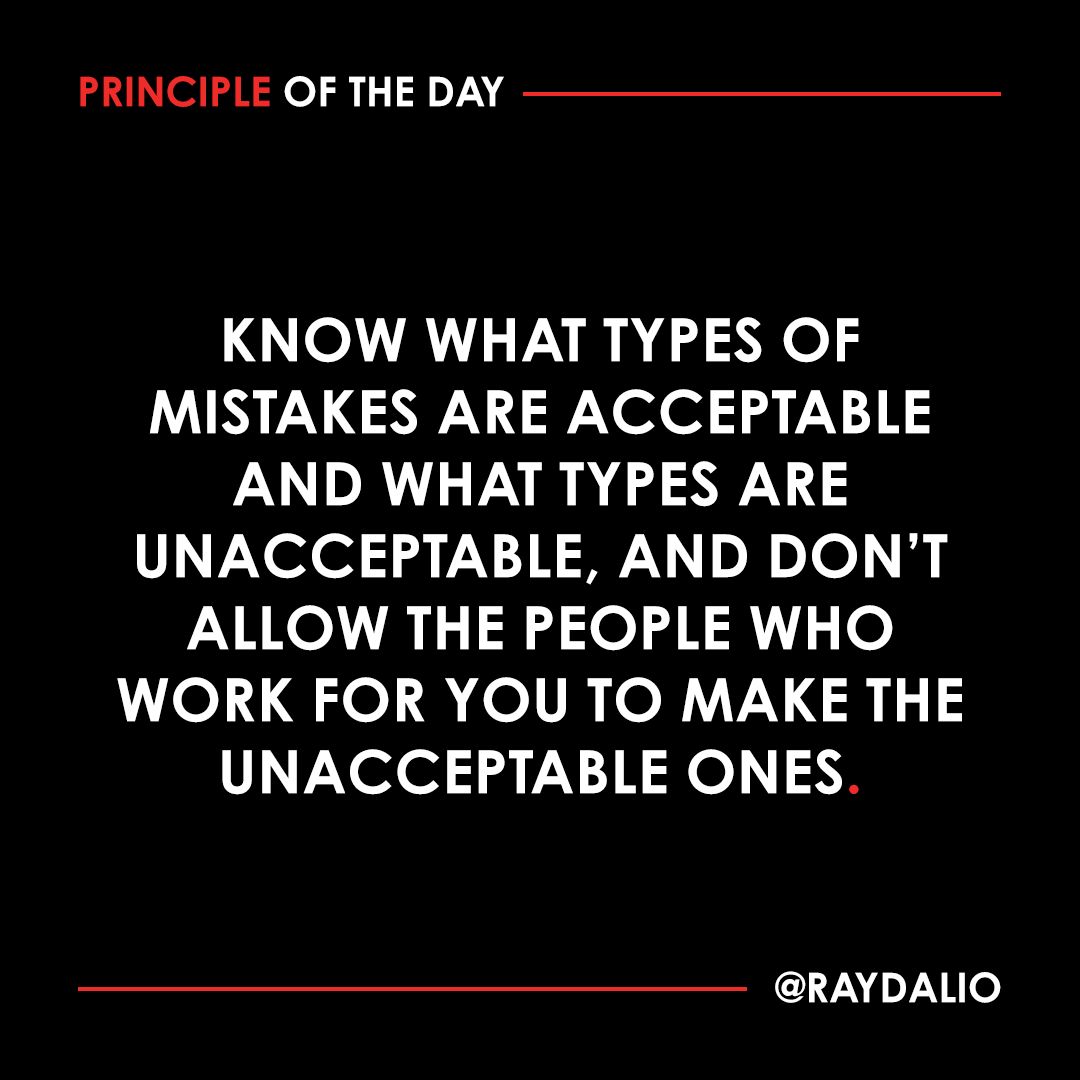
In any environment that encourages innovation and growth, fostering a culture of learning through trial and error is paramount. However, this process is not without its inherent risks. As business leaders, a crucial aspect of empowering our teams involves carefully considering the types of mistakes that are acceptable, and those that must be avoided at all costs. This delicate balance is key to unlocking potential without jeopardizing the enterprise.
Defining Acceptable Risk for Learning
Ray Dalio, the founder of Bridgewater Associates, offers a powerful analogy to illustrate this principle. He articulates his approach to allowing mistakes for the sake of learning with a clear, yet nuanced, boundary:
The ‘Scratch or Dent’ vs. ‘Totaling the Car’ Analogy
Dalio’s guiding principle is straightforward: “I’m willing to let you scratch or dent the car, but I won’t put you in a position where there’s a significant risk of your totaling it.” This statement encapsulates a sophisticated understanding of risk management in the context of personal and professional development.
The ‘scratch or dent’ represents minor setbacks – mistakes that are recoverable, offer valuable lessons, and do not cause irreparable harm. These are the learning opportunities that allow individuals to experiment, push boundaries, and gain practical experience. When mistakes are of this nature, the benefit of the incremental learning gained often far outweighs the cost of the error.
Conversely, ‘totaling the car’ signifies catastrophic failure. These are mistakes that could lead to significant financial loss, reputational damage, or severe operational disruption. Allowing individuals to operate in scenarios where such high-stakes errors are probable is not conducive to learning; it is reckless. The potential damage far exceeds any conceivable learning benefit.
Implications for Leadership and Culture
Applying Dalio’s principle requires thoughtful leadership and a clear understanding of the potential consequences associated with different tasks and decisions. It means:
- Assessing Potential Damage: Leaders must meticulously evaluate the potential downside of any initiative or decision before assigning it to an individual or team.
- Graduating Responsibility: Individuals should be given opportunities to learn and grow by taking on progressively challenging tasks. This starts with lower-stakes errors and gradually moves towards more complex challenges as competence and confidence build.
- Providing Guardrails: While allowing for trial and error, it’s essential to establish clear guidelines and safety nets to prevent major failures. This might include mentorship, oversight, or phased rollouts of new projects.
- Focusing on the Learning Outcome: The ultimate goal is not to avoid mistakes altogether, but to ensure that mistakes serve as catalysts for improvement and knowledge acquisition.
By consciously defining the boundaries of acceptable risk, leaders can create an environment where experimentation is encouraged, learning is accelerated, and innovation can flourish without the paralyzing fear of devastating failure. This approach empowers individuals to take calculated risks, fostering a more dynamic and resilient organization.
This article is based on insights shared by Ray Dalio in a recent LinkedIn post.
📝 About This Content
This article is based on insights shared by Ray Dalio on LinkedIn.
📅 Originally posted on October 25, 2025 | View original post on LinkedIn →