
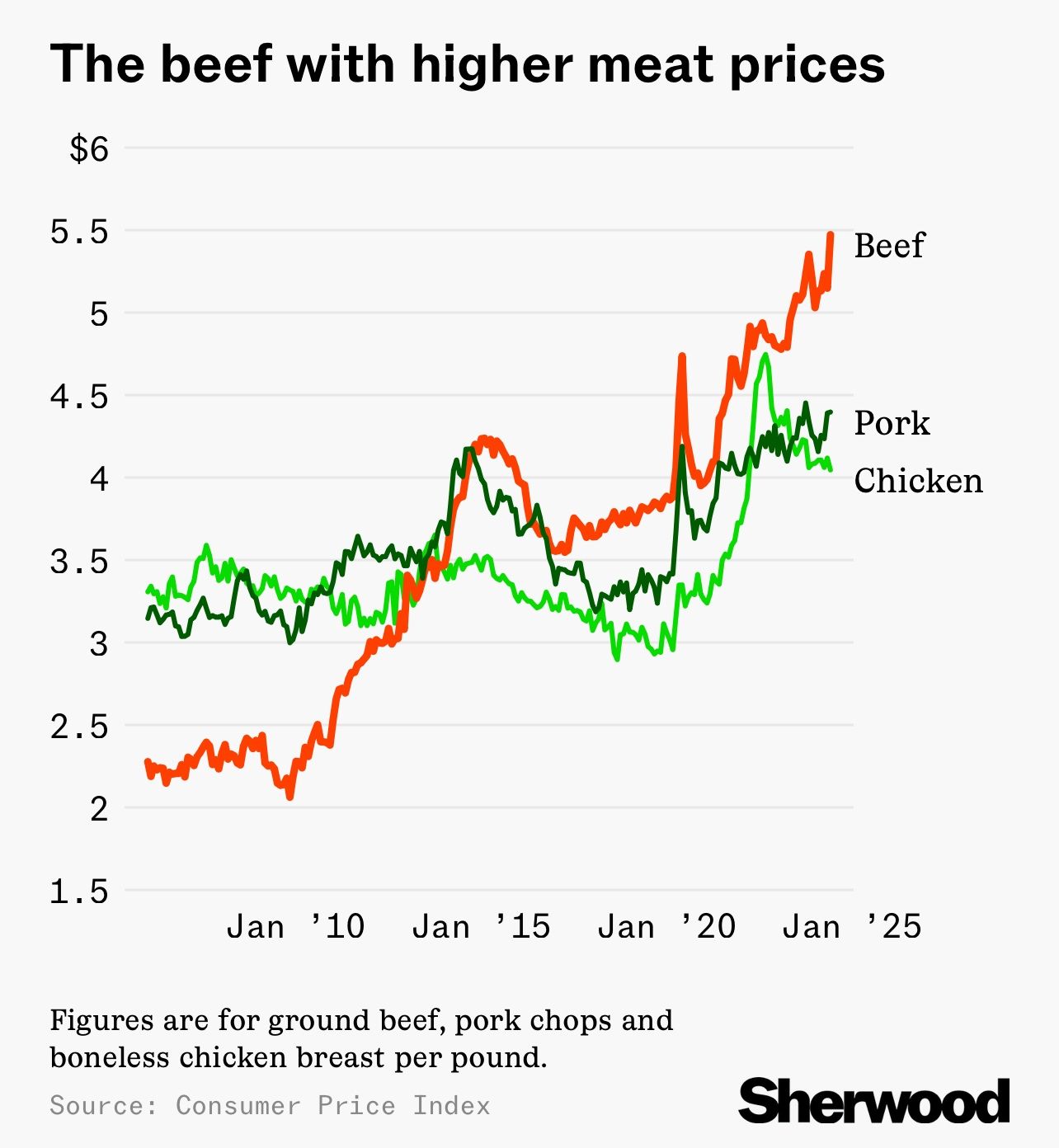
In a recent LinkedIn post, Nathan Crockett, PhD discusses the significant shift in consumer protein choices driven by soaring beef prices, highlighting how the market is responding to economic pressures and supply chain dynamics.
Crockett, PhD notes the core issue: “As beef prices skyrocket, Americans increasingly choose chicken.” This trend, he explains, is not merely a matter of preference but a direct consequence of economic factors affecting both beef and chicken markets.
“Higher beef costs come from: Decreased cattle supply -Because of drought and high interest rates”
The post details the multifaceted reasons behind the increased cost of beef. According to Crockett, PhD, a decreased cattle supply, exacerbated by drought conditions and rising interest rates, is a primary driver. This contrasts sharply with the situation in the poultry market.
The Chicken Advantage: Deflationary Forces at Play
Nathan Crockett, PhD points out that lower grain prices have contributed to increased chicken availability, making it a more cost-effective option for consumers. This economic advantage is being recognized and capitalized upon by major food service companies.
“Major players like Taco Bell’s parent company, Yum! Brands, and McDonald’s have witnessed a surge in chicken sales,” Crockett, PhD observes. He specifically mentions Taco Bell’s Cantina Chicken menu as a key growth driver for the fast-food giant.
Industry Leaders Confirm the Trend
The financial implications of this protein pivot are significant. Crockett, PhD quotes Wendy’s CFO, who highlighted the stark cost differences:
“beef is inflationary – chicken is deflationary”
This inflationary pressure on beef means that once budget-friendly staples are now commanding higher prices. As Nathan Crockett, PhD illustrates, “Sirloin steak costs more than 2x pork chops or chicken breasts per pound. Ground beef, historically a budget-friendly option, is now pricier than chicken or pork.”
Impact on Meatpacking Industry
The shift in consumer demand has also had a notable impact on meatpacking companies. Crockett, PhD’s analysis indicates that companies specializing in poultry have seen a positive effect on their bottom lines.
“The chicken shift has benefited meatpackers like Tyson and JBS, with Tyson’s poultry business seeing significant profits,” he writes. This suggests a broader economic ripple effect throughout the food supply chain, from farm to table.
Crockett, PhD concludes his post by posing a direct question to his audience: “Do you eat more chicken 🐔 or beef 🥩???” This interactive element encourages engagement and further discussion on consumer habits in the face of changing economic conditions.
📝 About This Content
This article is based on insights shared by Nathan Crockett, PhD on LinkedIn.
📅 Originally posted on July 11, 2026 | View original post on LinkedIn →