
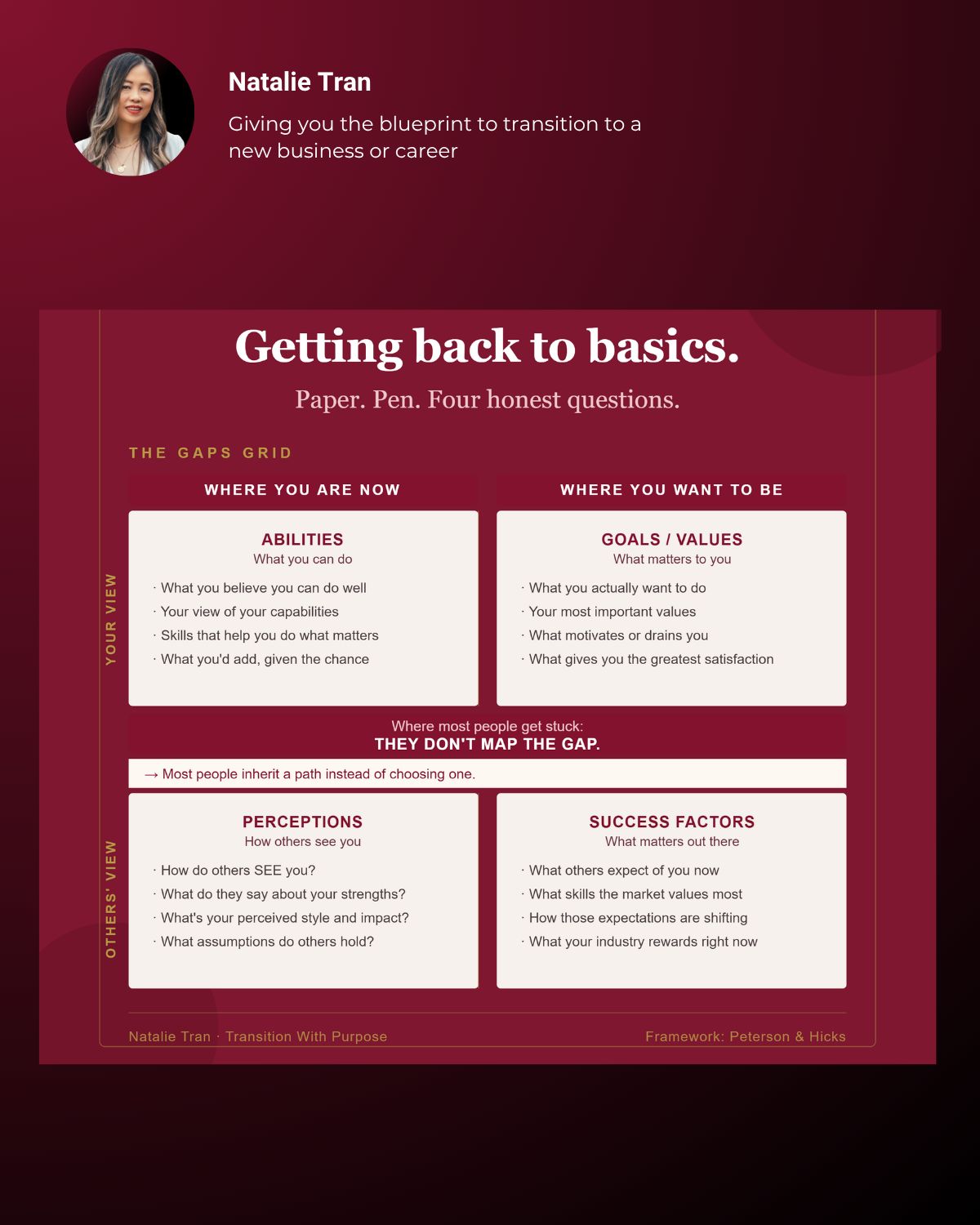
In a recent LinkedIn post, Natalie Tran offers a grounded approach to career transitions, urging professionals to pause and reflect before making impulsive moves. Instead of immediately updating résumés or consulting AI for next steps, Tran advocates for a deliberate self-assessment process.
Tran emphasizes the importance of introspection, stating:
“Before you update your LinkedIn, touch your résumé or ask AI what your next career move should be (and I know it’s tempting), pause here first.”
This foundational step, she explains, is crucial for navigating the often uncomfortable pull of career change. Tran highlights that the professionals she has observed making successful transitions almost invariably begin by honestly answering four key questions.
The Four Pillars of Career Transition
Tran outlines a structured inquiry designed to uncover an individual’s current professional landscape and future aspirations. She poses the following questions:
- What do you believe you can do well right now? What you know to be true about your own abilities.
- What do you actually want? The work, the feeling, the life attached to it. What really matters to you and not just what sounds impressive.
- How do others see you? What would your manager, your peers, your clients say about your strengths if you weren’t in the room?
- What does the market actually value right now? Don’t worry about 3 years or 5 years ago, focus on right now. You may know some answers already but do your research. AI will help for some of this.
According to Tran, these questions move beyond superficial career updates to address the core of professional identity and market relevance. She points out the temptation to act quickly during a transition, but insists that this deliberate pause is where effective change originates.
“From coaching thousands over the last 10 years, i have seen the uncomfortable part of transition and it has a pull to it. It wants you to act. Update something, apply for something, tell people you’re open to something.”
Bridging the Gaps with the GAPS Grid
Tran introduces the concept of the “GAPS Grid” as a framework to synthesize the answers to these four questions. She explains that this grid maps an individual’s abilities and goals on one side, and how others perceive them along with current market values on the other.
Identifying the Opportunity in the Discrepancy
The space between these two sets of information, Tran argues, represents the “real work” of career development. It’s in this gap that individuals can identify areas for growth, skill development, or strategic repositioning.
“The professionals I’ve watched transition well almost always paused here first, long enough to answer these four questions honestly, before they did anything else.”
Tran suggests dedicating approximately forty minutes to this exercise, emphasizing the need for honesty and self-awareness. She pointedly advises against relying on AI for this particular introspection, noting that genuine answers stem from within.
“No AI for this one. The honest answers only come from you.”
By encouraging this focused, introspective approach, Natalie Tran provides a valuable framework for professionals seeking meaningful career progression, positioning self-awareness as the indispensable first step in any significant career move.
📝 About This Content
This article is based on insights shared by Natalie Tran on LinkedIn.
📅 Originally posted on July 15, 2026 | View original post on LinkedIn →