
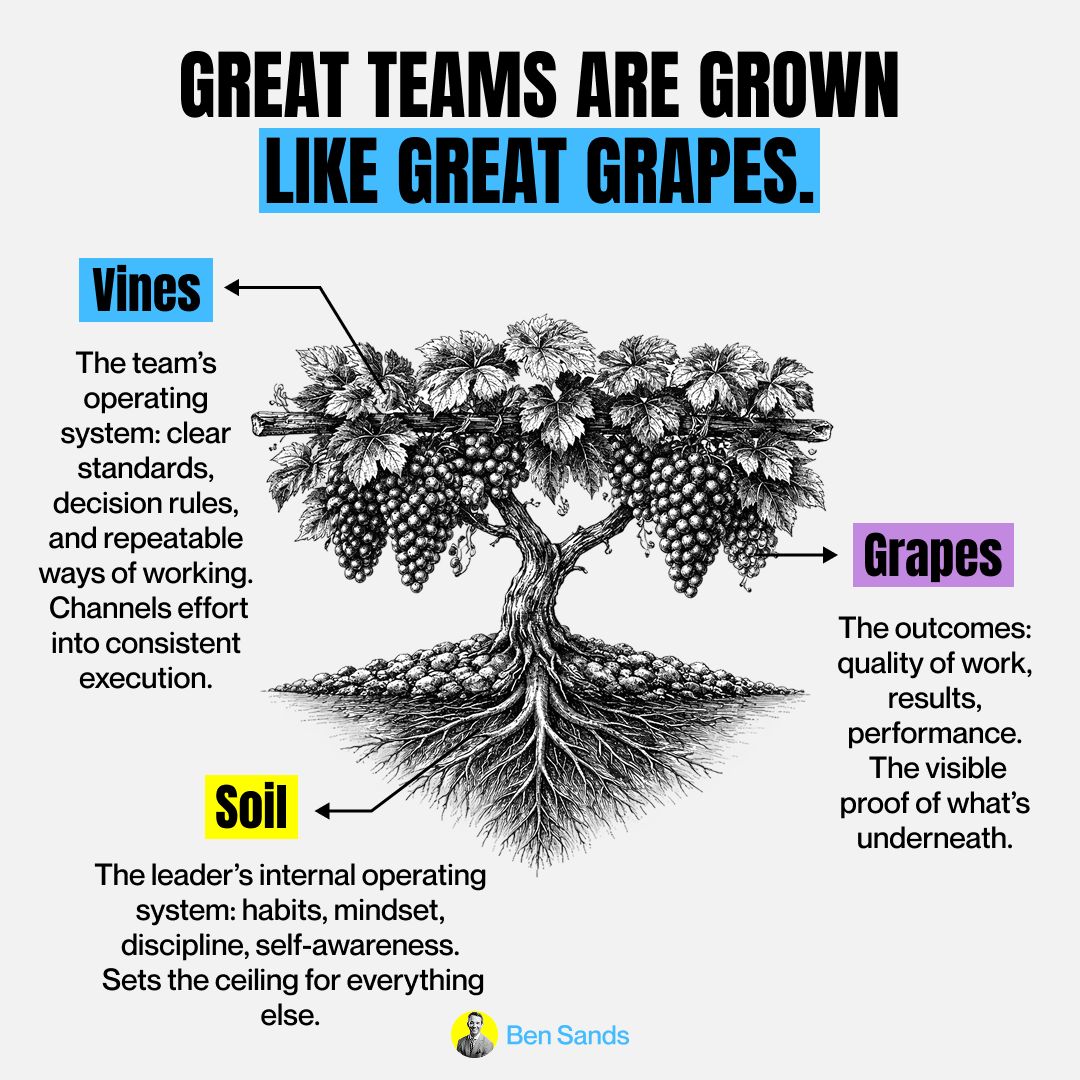
In a recent LinkedIn post, Ben Sands tackles a common misconception business leaders face: the belief that upgrading tools will automatically improve results. Sands argues that the true bottleneck for performance lies not in technology or organizational structure, but in the underlying systems of thinking and execution—what he terms the leadership and team operating systems.
Sands opens by highlighting a prevalent, yet flawed, approach to improving business outcomes. “Leaders want better results. So they upgrade the tools. New systems. New org charts. New AI. And still… output doesn’t change,” he writes, setting the stage for his core argument.
The Flaw in Tool-Centric Improvement
According to Sands, the persistent lack of output improvement despite new investments stems from a misdiagnosis of the problem. He posits that leaders often focus on superficial changes rather than the foundational elements that drive performance. “Because the constraint isn’t the tools. It’s the systems underneath them,” Sands states, emphasizing that better tools merely accelerate existing inefficiencies if the core systems are weak.
To illustrate this point, Sands employs an analogy of a vineyard. He explains that regardless of how advanced the equipment, refined the processes, or skilled the people, the quality of the grapes will always be capped by the quality of the soil. Even with excellent soil, poorly structured vines will lead to inconsistent fruit. This analogy directly translates to the business world, where Sands identifies the ‘soil’ as the leadership operating system and the ‘vines’ as the team’s operating system.
“In business, that soil = your leadership operating system.
→ How you think
→ How you decide under pressure
→ What you prioritize
→ What you avoid saying out loud”
Deconstructing the Operating Systems
Sands elaborates on these critical systems. The leadership operating system, he explains, encompasses the leader’s fundamental thinking patterns, decision-making under pressure, prioritization habits, and communication choices (or omissions). These internal frameworks dictate the environment and direction set for the entire organization.
Complementing this is the team’s operating system, which governs the practical realities of how work is accomplished. This includes the actual workflows, the standards that are upheld, the mechanisms by which decisions are made within the team, and the recurring habits that shape daily operations. Sands points out that if these team systems are “loose, unclear, or inconsistent, performance will be too.”
“The vines are your team’s operating system.
→ How work actually gets done
→ The standards you enforce
→ The way decisions get made
→ The habits that repeat every week”
The Impact of Weak Systems
The consequence of neglecting these foundational operating systems, as Sands highlights, is that any attempt at improvement through new tools becomes counterproductive. “Better tools just help you execute bad thinking faster,” he asserts. This means that investing in new software or restructuring departments without addressing the core ‘how’ and ‘why’ of leadership and team operations will inevitably lead to frustration and a failure to achieve desired results.
Focusing on Inputs, Not Just Outputs
The most effective leaders, according to Sands, understand this dynamic. They shift their focus from merely chasing better outputs to diligently improving the inputs and the systems that connect them. This strategic pivot leads to tangible improvements such as stronger judgment, cleaner decision-making, and more consistent execution.
“The best leaders know this. They don’t start with outputs. They fix the inputs—and the system that connects them.”
Ultimately, Sands concludes with a powerful statement about the non-negotiable link between cognitive quality and organizational success: “Because you can’t build a high-performing company on low-quality thinking.” His post serves as a call to action for leaders to look inward and diagnose the health of their fundamental operating systems before seeking external solutions.
📝 About This Content
This article is based on insights shared by Ben Sands on LinkedIn.
📅 Originally posted on April 3, 2026 | View original post on LinkedIn →