
In a recent LinkedIn post, Ben Sands discusses how an overabundance of meetings and poor calendar management can significantly hinder business progress and team effectiveness. Sands argues that the issue often lies not with the team’s effort, but with the structure of their schedules, particularly the meetings that fill their calendars.
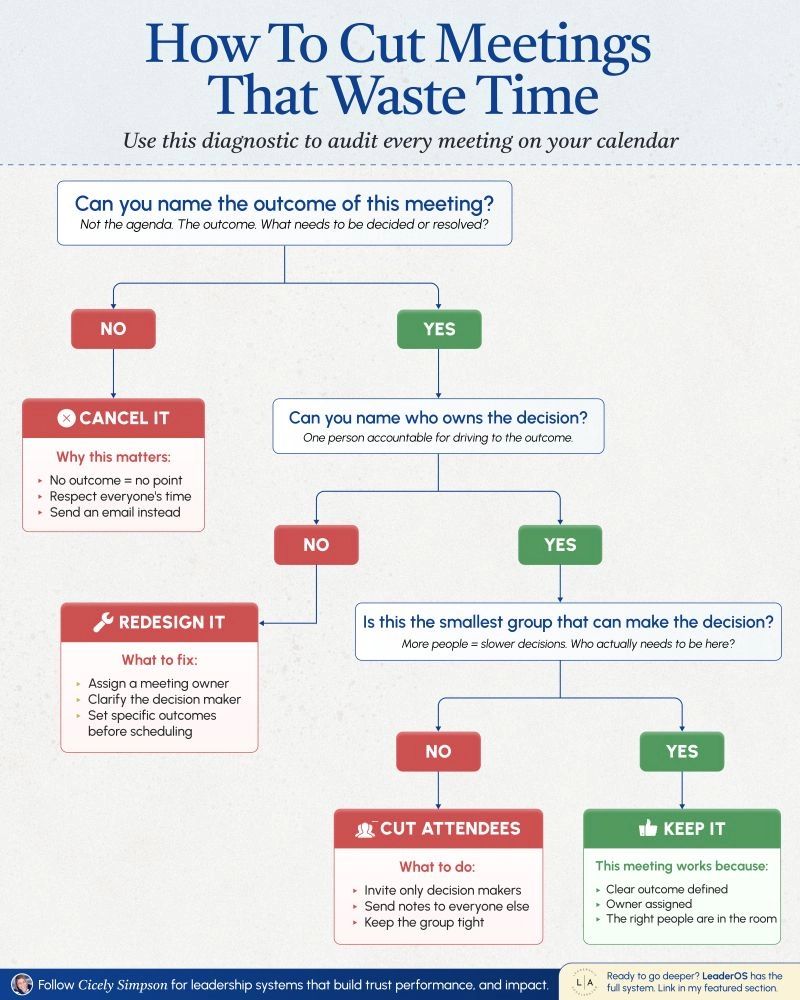
Sands poses a critical diagnostic question for professionals: “Look at every meeting on your calendar this week. Can you name the outcome of each one? Not the agenda. The actual result.” He suggests that if one cannot articulate the specific decision, resolution, or forward movement expected from a meeting, its existence is likely questionable.
The Hidden Costs of Ineffective Meetings
According to Ben Sands, the cost of poorly planned meetings extends beyond mere wasted time. He points out that these meetings can inadvertently train teams to adopt counterproductive behaviors. “Discuss instead of decide,” “Escalate issues instead of solve them,” and “Attend just to listen instead of contribute” are some of the negative habits Sands identifies, leading to confusion, slowed decision-making, and leaders feeling disengaged.
“If you’ve ever walked out of a meeting thinking, ‘Why was I even there?’ Try this simple diagnostic: Look at the past 30 days in your calendar.”
Sands recommends a retrospective analysis, advising leaders to review their past month’s calendar and identify meetings that genuinely advanced objectives. By examining what made these productive sessions different, leaders can uncover the keys to more effective meeting structures.
Three Pillars of Productive Meetings
Ben Sands highlights three core elements present in successful meetings:
- A clear outcome: All participants understand the specific decision or result the meeting is intended to produce.
- A clear decision-maker: One individual is designated as accountable for driving the final decision.
- Only essential people in the room: Attendance is limited to those who can directly contribute to the decision, excluding passive observers.
Sands asserts that meetings lacking these three components are likely impeding company progress. He advocates for either reworking such meetings to meet these criteria or canceling them altogether.
“If a meeting doesn’t have those three elements, it’s probably slowing your company down. Rework it. Or cancel it.”
Scaling and Leadership Execution
The post further connects effective meeting practices to broader challenges faced by scaling companies, particularly regarding leadership execution. Sands notes that while strong managers may understand the principles of good meetings, they often struggle to implement systemic solutions that sustain these practices as the company grows. This can lead to leadership bottlenecks and hinder the company’s ability to execute at a higher level.
“This is one of the execution problems CEOs run into as companies scale. Strong managers understand good meetings. But they often struggle to build the systems that sustain it.”
Sands also announced a free live session on March 18th at 12:30 pm ET, where he plans to delve deeper into how CEOs can cultivate leadership teams that excel in execution. Topics will include common scaling traps, a structured approach to leadership development, the limitations of training alone, and building repeatable development paths for rising leaders.
Ultimately, Ben Sands’s insights underscore the importance of intentional calendar management and meeting structure as foundational elements for efficient operations and effective leadership, especially within growing organizations.
📝 About This Content
This article is based on insights shared by Ben Sands on LinkedIn.
📅 Originally posted on March 11, 2026 | View original post on LinkedIn →