
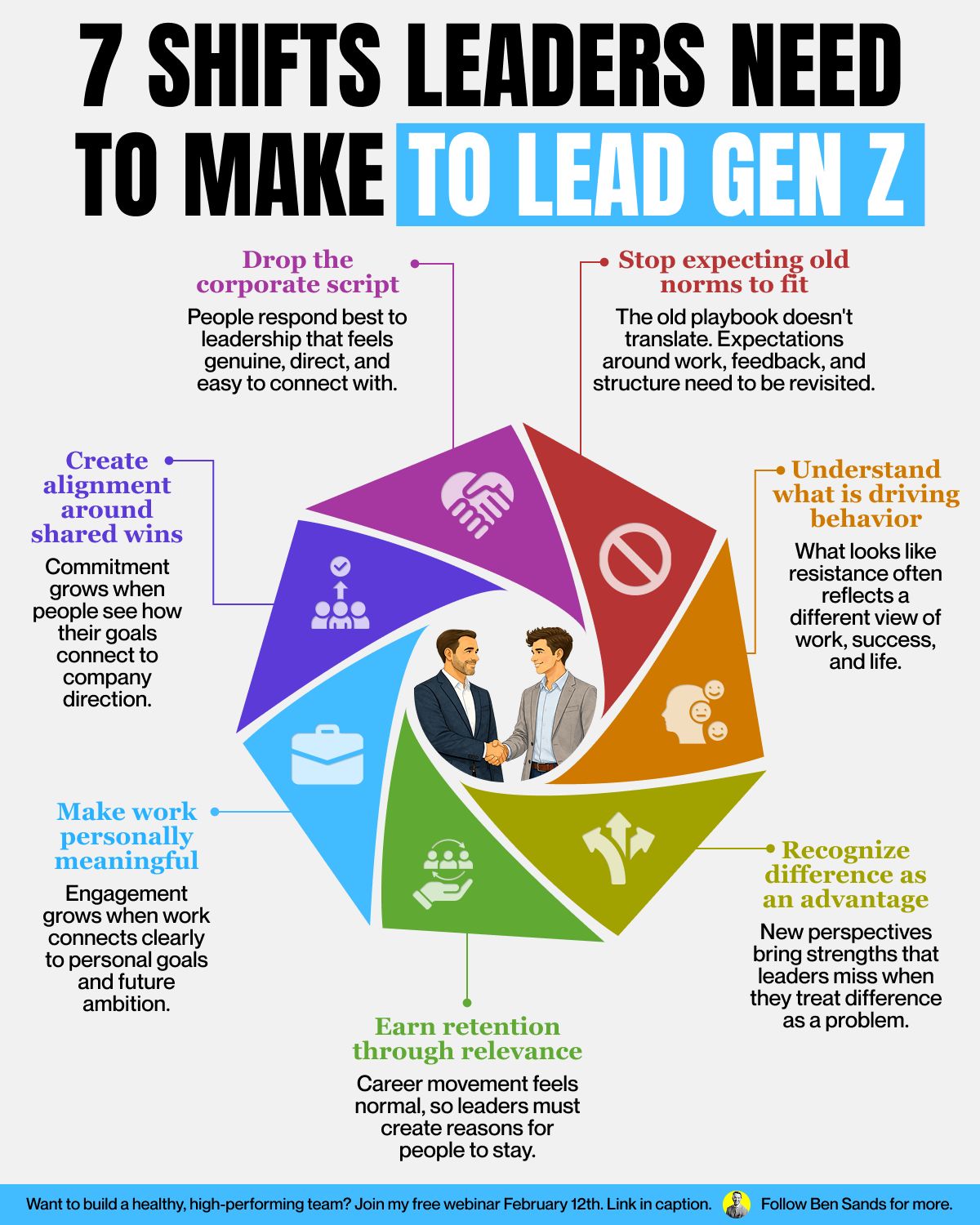
In a recent LinkedIn post, Ben Sands addresses the growing presence of Gen Z in the workforce and argues that many leaders are ill-equipped to manage this demographic, not due to Gen Z’s difficulty, but because of outdated leadership systems. Sands emphasizes that Gen Z is not rejecting work itself, but rather the traditional methods of how work has been conducted.
Sands shared an anecdote from a CEO conference where the central idea was that Gen Z’s approach signifies a fundamental shift in workplace expectations. “Gen Z isn’t rejecting work. They’re rejecting how we’ve been doing it,” Sands stated, highlighting that this perspective has significant implications for leadership strategies. He posits that attracting and retaining top talent requires a modernized “operating system” rather than simply enhanced perks.
Rethinking Leadership for a New Generation
Ben Sands outlines a strategic approach for leaders to adapt, moving beyond conventional management styles. He suggests that effective leadership in the current landscape involves several key adjustments:
1. Authenticity Over Corporate Scripts
Sands advocates for genuine communication, asserting, “People trust what feels real.” This means leaders should communicate clearly and directly, abandoning overly formal or scripted interactions that may alienate younger employees who value authenticity.
2. Moving Beyond Outdated Norms
The post stresses that traditional management playbooks are no longer sufficient. “The old playbook doesn’t translate automatically,” Sands notes, urging leaders to reconsider established practices concerning communication, feedback mechanisms, and workplace flexibility to align with contemporary expectations.
3. Understanding Motivations
A crucial element highlighted by Sands is the need to understand the underlying drivers of Gen Z’s behavior. He advises leaders to approach perceived resistance with curiosity rather than criticism, recognizing that what might appear as defiance could stem from a different worldview. As Sands puts it, “What looks like resistance is often a different worldview. Get curious before you get critical.”
4. Leveraging Diverse Perspectives
Sands encourages leaders to view generational differences as a strategic advantage. He argues that new perspectives should be seen as leverage, not a threat. This involves actively inviting input and avoiding the standardization of thinking, thereby fostering innovation.
5. Earning Retention Through Relevance
The concept of loyalty has evolved, according to Sands. “Loyalty isn’t assumed anymore. It’s created,” he states. Leaders must therefore focus on building roles and work environments that are so relevant and engaging that employees are motivated to stay.
6. Cultivating Meaningful Work
Engagement, as Sands explains, follows meaning rather than mandates. He suggests that connecting daily tasks to employees’ personal values and broader purposes is key to fostering genuine commitment. “Engagement follows meaning, not mandates,” he writes.
7. Building Shared Success
Finally, Sands emphasizes the importance of creating alignment around collective achievements. “People commit when they see how they matter,” he points out. Making success visible and ensuring it is a shared experience can significantly boost team cohesion and dedication.
Core Needs Remain Consistent Across Generations
Reflecting on a recent coaching cohort, Ben Sands observed a unifying theme: different generations share fundamental needs for clarity, growth, trust, and meaning. The variance lies primarily in how these needs are expressed. He concludes that exceptional leaders are those who develop systems capable of harnessing these diverse expressions rather than resisting them. “Different generations don’t actually want different things. They want the same core things—clarity, growth, trust, meaning. They just express them differently,” Sands summarizes. He asserts that great leaders build systems that embrace this diversity.
Sands suggests that if leaders find their teams harder to motivate, it is likely due to a failure to adapt their leadership systems. He offers assistance to those looking to build a more effective, cross-generational leadership framework.
📝 About This Content
This article is based on insights shared by Ben Sands on LinkedIn.
📅 Originally posted on April 5, 2026 | View original post on LinkedIn →