
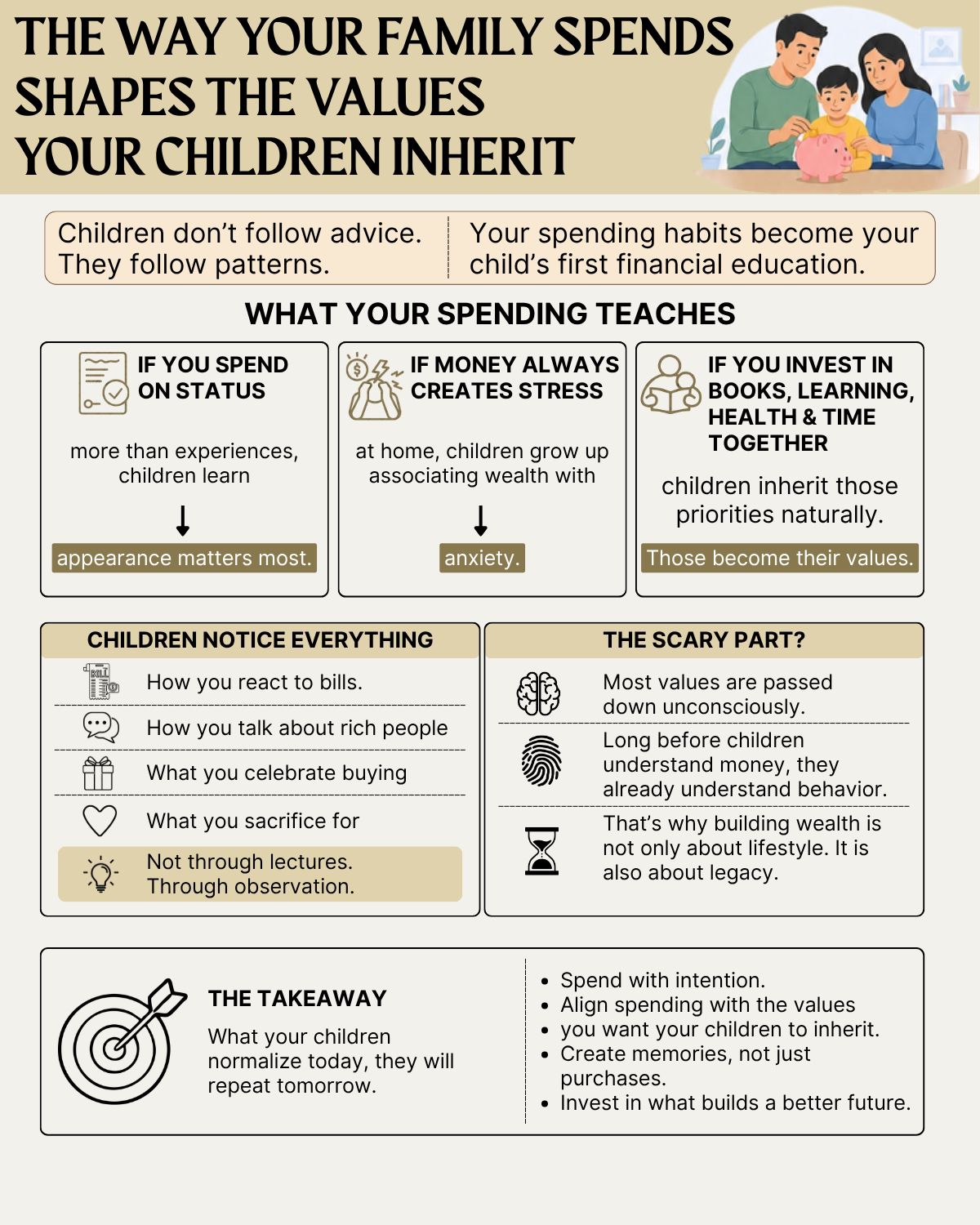
In a recent LinkedIn post, Michael Merlin explores a less-discussed aspect of financial education: the profound impact of parental spending habits on children’s values and future financial behaviors. Merlin argues that children learn far more from observing their parents’ financial actions than from direct advice, which he suggests is often ineffective.
Merlin highlights the unconscious nature of this transmission of values, stating:
“Most parents think values are taught through advice. But children rarely follow advice. They follow patterns.”
This observation sets the stage for Merlin’s core argument: that the way a family allocates its resources serves as a powerful, albeit silent, curriculum for children. He asserts that these spending patterns communicate what truly matters to the parents, what defines success, and what deserves their attention and effort.
The Silent Curriculum of Spending
Merlin elaborates on how specific financial behaviors can instill particular values. For instance, he points out that a family prioritizing spending on status symbols over experiences might inadvertently teach children that appearances are paramount. Conversely, if financial discussions at home are consistently fraught with stress, children may grow to associate wealth with anxiety and unease.
The author contrasts these scenarios with more constructive financial modeling:
“If parents invest in books, learning, health, and time together, children inherit those priorities naturally.”
According to Merlin, these investments, rather than lectures, create an environment where financial prudence and personal growth are normalized. He emphasizes that this observational learning begins long before children grasp the complexities of monetary systems, suggesting that a child’s understanding of behavior and its link to identity forms early.
From Behavior to Legacy
Merlin underscores the long-term implications of these early financial lessons, framing building wealth not just as a pursuit of a better lifestyle but as the creation of a lasting legacy. He posits that the financial behaviors normalized in childhood are likely to be replicated in adulthood, shaping future generations.
His post emphasizes the unconscious transfer of values:
“The scary part? Most values are passed down unconsciously.”
This unconscious transmission means that parents might be imparting financial lessons without realizing it, through everyday decisions about how money is spent, saved, or even worried about. Merlin encourages a mindful approach to personal finance, suggesting that awareness of one’s spending habits is crucial for intentional parenting.
The Role of Observation
As Michael Merlin notes, children are keen observers of their parents’ financial lives. They notice reactions to bills, the language used when discussing wealth, the celebration of purchases, and the sacrifices made. These observations, he argues, form the bedrock of a child’s financial identity and understanding of the world.
Merlin concludes that a parent’s spending habits are, in essence, their child’s first financial education. This education, delivered through consistent behavioral patterns rather than explicit instruction, shapes a child’s perception of money, success, and well-being, ultimately influencing their financial future and the legacy they will, in turn, pass on.
📝 About This Content
This article is based on insights shared by Michael Merlin on LinkedIn.
📅 Originally posted on July 4, 2026 | View original post on LinkedIn →