
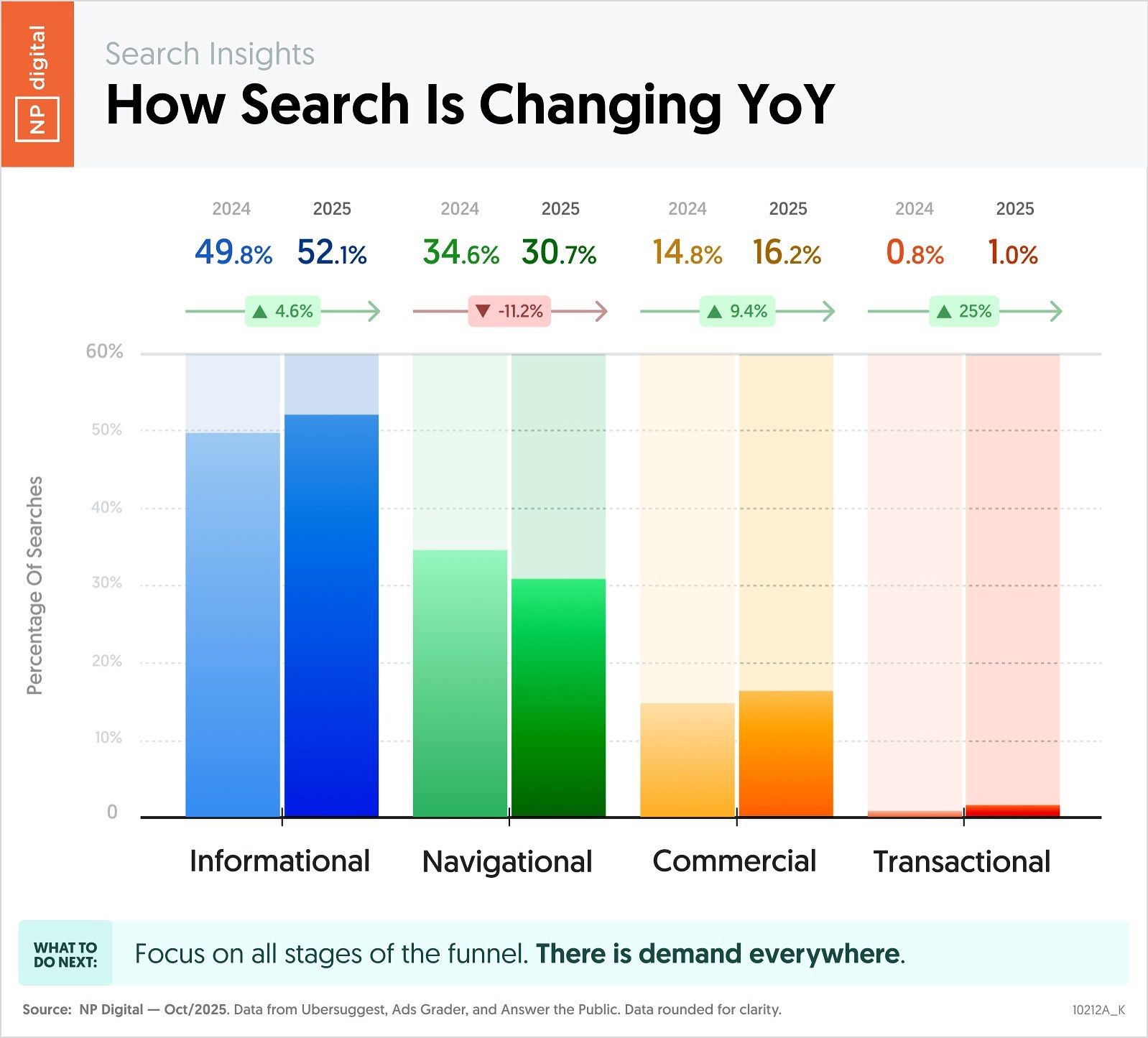
The landscape of search is undergoing a significant transformation, and while the impact of Artificial Intelligence is undeniable, it’s not the sole driver of change. A more profound shift is occurring in how people actually interact with search engines, altering the nature of queries and the expectations of users.
While AI’s ability to deliver more accurate and relevant results is a major factor, it has also influenced user behavior in subtle yet powerful ways. As AI-powered search becomes more sophisticated, users are increasingly comfortable with and inclined towards conducting broader, more exploratory searches.
The Evolution of Search Queries
Traditionally, search queries often reflected a user’s direct need for a specific product or service, leaning towards bottom-of-funnel intent. However, the current trend indicates a notable increase in top-of-funnel and informational queries. This means users are leveraging search engines earlier in their decision-making process, seeking to understand concepts, explore options, and gather general knowledge rather than immediately looking for a solution or purchase.
Consider the difference in search behavior observed between 2024 and the projections for 2025. The enhanced quality of AI-driven results has empowered users to ask more open-ended questions and delve into topics with less initial specificity. This creates an environment where users feel more confident exploring a wider range of information, knowing that the search engine can intelligently guide them.
Anticipating Future Trends
This evolution is not a fleeting trend; it’s a fundamental shift that is expected to continue and likely accelerate. As we look ahead to 2026, we can anticipate that search queries will become even more conversational and information-seeking in nature. This presents both challenges and opportunities for businesses and content creators.
Implications for Content Strategy
For businesses aiming to capture attention in this evolving search environment, a strategic adjustment is necessary. The focus needs to shift from solely optimizing for transactional keywords to also catering to informational intent. This involves:
- Creating comprehensive, educational content that addresses user questions at all stages of the funnel.
- Developing content that anticipates future user needs and provides valuable insights.
- Leveraging AI tools to understand emerging search patterns and user interests.
The Role of AI in User Behavior
AI’s role extends beyond simply providing better answers; it’s actively shaping user expectations. When users consistently receive high-quality, relevant information, they naturally become more adventurous in their search queries. This creates a positive feedback loop where advanced AI capabilities encourage more complex and informational search behaviors.
In conclusion, while AI is a critical component of modern search, the true revolution lies in the evolving way people search. Understanding and adapting to these user-driven changes will be paramount for anyone seeking to succeed in the digital space.
This article is based on insights shared by Neil Patel.
📝 About This Content
This article is based on insights shared by Neil Patel on LinkedIn.
📅 Originally posted on October 23, 2025 | View original post on LinkedIn →