
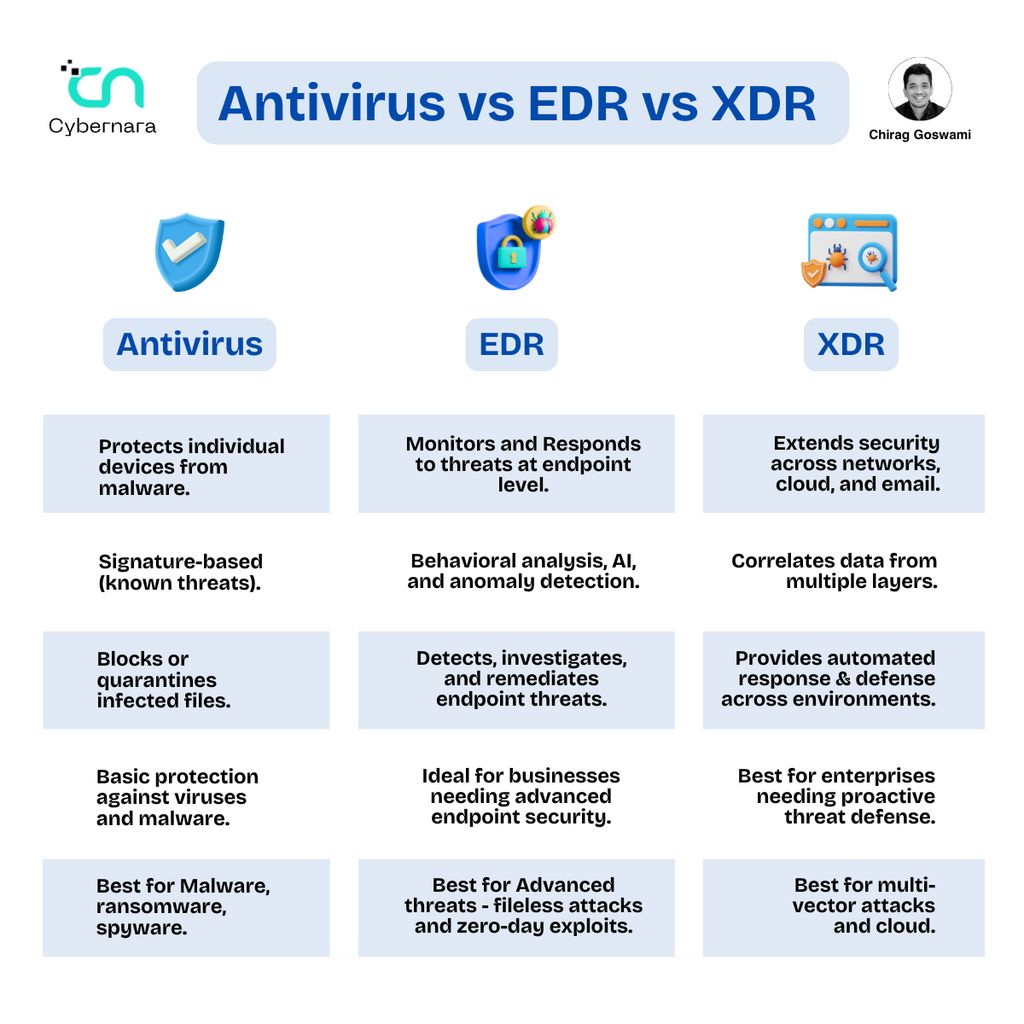
In a recent LinkedIn post, Chirag Goswami explores the evolving landscape of cybersecurity defenses, highlighting the limitations of traditional antivirus software and advocating for more integrated approaches like Endpoint Detection and Response (EDR) and Extended Detection and Response (XDR).
Goswami emphasizes that modern cyber threats are multifaceted, requiring a more sophisticated defense strategy than what single-point solutions can offer. He points out the fundamental differences in how these security tools operate:
“Antivirus stops known malware.”
This basic function, while essential, is insufficient against contemporary threats that often leverage novel or polymorphic malware, or employ non-malware-based attack vectors. Goswami’s analysis suggests a reactive stance when relying solely on such traditional methods.
The Limitations of Traditional Antivirus
Goswami argues that the cybersecurity world has moved beyond the era where signature-based detection was enough. He states:
“If your security stack still relies only on traditional antivirus, you’re reacting — not defending. 🚨”
This assertion underscores a critical point: traditional antivirus solutions are primarily designed to identify and block threats that have been previously cataloged. This leaves organizations vulnerable to zero-day exploits and advanced persistent threats (APTs) that utilize unknown or rapidly changing attack methods. The reactive nature means that a breach may have already occurred or is in progress before detection can take place.
EDR and XDR: A Layered Defense Strategy
To counter these evolving threats, Goswami introduces EDR and XDR as more robust solutions. He defines their roles:
- EDR: “EDR hunts suspicious behavior.”
- XDR: “XDR connects the dots across endpoints, cloud, network, and email.”
This layered approach, as explained by Goswami, is crucial because attackers are no longer employing isolated tactics. They often combine various techniques across different parts of an organization’s infrastructure. Therefore, defenders must adopt a similar integrated strategy.
The Necessity of Integrated Security
Goswami’s core message is that a holistic view of security is paramount. The interconnectedness of modern IT environments, spanning endpoints, cloud services, networks, and communication channels like email, means that a threat can originate or propagate through any of these vectors. XDR, by integrating data from these diverse sources, provides a much broader visibility and a more comprehensive understanding of potential threats.
He elaborates on the attackers’ methodology, stating:
“Attackers don’t use just one technique anymore. Defenders shouldn’t either.”
This principle highlights the need for security solutions that can correlate events across different security layers. Goswami, through his post and the services offered by Cybernara, advocates for moving away from a ‘checkbox security’ mentality towards designing ‘layered, modern detection and response strategies.’ This approach aims to provide proactive defense rather than simply reacting to known threats, ultimately strengthening an organization’s security posture against sophisticated and persistent adversaries.
📝 About This Content
This article is based on insights shared by Chirag Goswami on LinkedIn.
📅 Originally posted on December 18, 2025 | View original post on LinkedIn →