
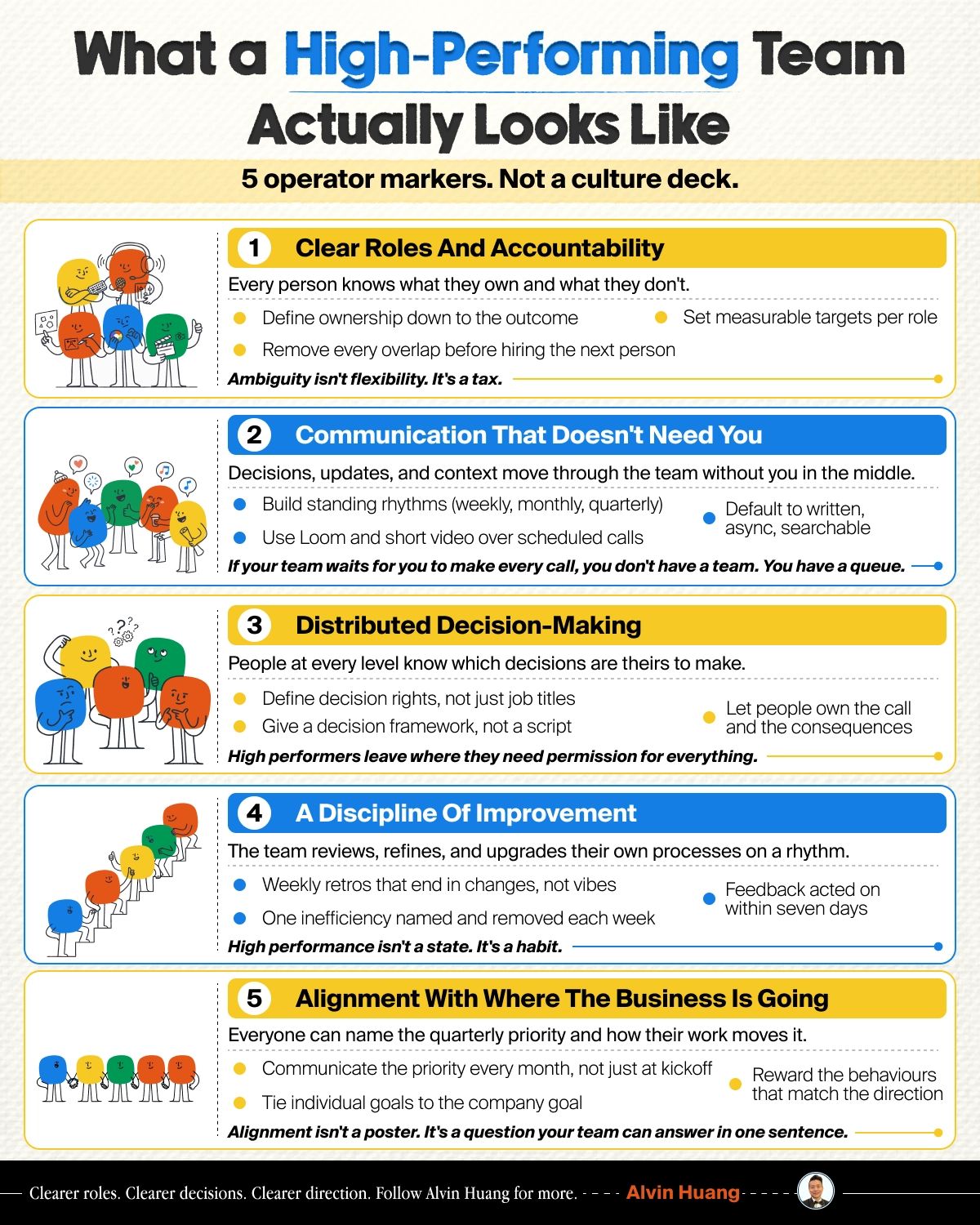
In a recent LinkedIn post, Alvin Huang challenges the common misconception that a busy team is necessarily a high-performing one. He argues that many teams appear productive but fail to move the business forward, often due to a lack of clarity and effective systems. Huang emphasizes that true performance stems from ingrained habits and clear structures, rather than superficial displays of activity or polished presentations.
Huang begins by asserting a stark reality for many organizations: “Your team isn’t high-performing. It’s just busy.” This provocative statement sets the stage for his analysis, highlighting a critical distinction that leaders often overlook. He posits that teams with impressive “culture decks” can paradoxically underperform compared to those with more robust operational foundations.
“The hardest thing to diagnose is a productive-looking team that isn’t actually moving the business forward.”
The core of Huang’s message revolves around identifying the tangible markers of genuine team performance. He outlines five key indicators that distinguish truly effective teams from those merely appearing busy.
The Five Pillars of High Performance
Alvin Huang identifies five critical components that contribute to a team’s actual performance, moving beyond mere busyness.
1. Clear Roles and Accountability
Huang stresses the foundational importance of well-defined responsibilities. As he notes, “Every person knows exactly what they own and what they don’t.” This clarity prevents the common pitfalls of overlapping duties leading to excessive meetings and gaps resulting in missed deadlines. He advises leaders to solidify ownership before considering new hires, stating, “Tighten ownership before you hire the next person, not after.”
2. Communication That Doesn’t Require You
A hallmark of a high-performing team, according to Huang, is its ability to function and disseminate information without constant managerial intervention. He explains that if a team relies on the leader for every decision, it creates a bottleneck. “If your team waits for you to make every call, you have a queue,” Huang points out. The goal, he suggests, is to “Build the systems that let information move without you.”
3. Distributed Decision-Making
Huang advocates for empowering individuals at all levels to make decisions within their purview. He observes that top talent often leaves environments where they constantly need permission for actions. “High performers don’t stay where they need permission for everything,” he writes. His recommendation is to “Give decisions away faster than feels comfortable and train through the mistakes.”
4. A Discipline of Improvement
Proactive refinement of processes is crucial, rather than waiting for failures. Huang argues that “High performance is a habit.” Teams that consistently review and adjust their methods are the ones that achieve sustained growth. He highlights that “The teams that grow are the ones reviewing what slowed them down last week.”
5. Alignment With Where the Business Is Going
Ultimately, a team’s work must directly contribute to overarching business objectives. Huang emphasizes that this alignment is more than just a slogan. “Alignment isn’t a poster on the wall. It’s a question your team can answer in one sentence,” he states. If team members cannot articulate how their work impacts quarterly priorities, they are, in his view, operating on guesswork.
“Every high-performing team I’ve seen has had one thing in common: Absolute clarity on roles, decisions, and direction.”
In conclusion, Alvin Huang asserts that providing this absolute clarity across roles, decisions, and direction is the key to unlocking genuine team performance. “Give your team that, and the results follow,” he encourages.
📝 About This Content
This article is based on insights shared by Alvin Huang on LinkedIn.
📅 Originally posted on June 20, 2026 | View original post on LinkedIn →