
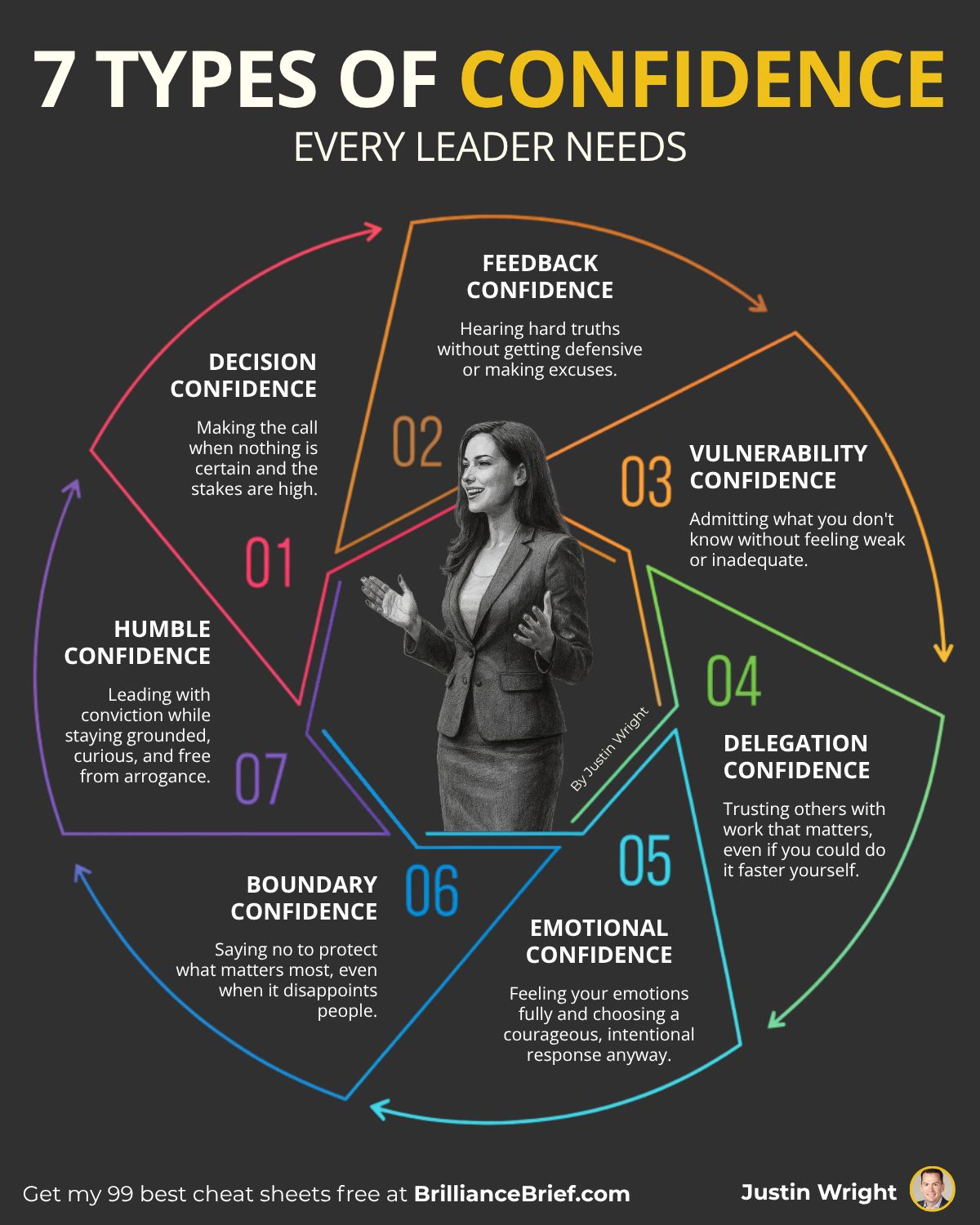
Many aspiring leaders mistakenly equate confidence with possessing all the answers. This perception, however, is not true confidence but rather a thinly veiled form of arrogance. Genuine leadership confidence is far more nuanced and manifests itself in several distinct behaviors that foster trust, growth, and resilience within a team.
The True Manifestations of Leadership Confidence
Justin Wright, in a recent insightful post, breaks down real leadership confidence into seven crucial pillars. These are not about projecting an image of infallibility, but about demonstrating strength through action, integrity, and a commitment to growth.
1. Decision Confidence
This is the ability to make sound decisions even when faced with incomplete information. True confidence allows leaders to move forward decisively, overcoming the inertia of analysis paralysis that can often paralyze teams.
2. Feedback Confidence
Effective leaders are confident in their ability to deliver constructive criticism. This means providing honest, direct feedback that facilitates professional development, rather than resorting to sugar-coating or avoidance of uncomfortable conversations. It’s about prioritizing growth over temporary comfort.
3. Vulnerability Confidence
A powerful aspect of leadership confidence is the ability to admit when you don’t know something or to own up to mistakes without diminishing your authority or respect. Paradoxically, this honesty builds deeper trust with your team, as they see you as more human and relatable.
4. Delegation Confidence
This involves trusting your team enough to delegate tasks, even if you could complete them more quickly yourself. It’s about empowering others, fostering their development, and allowing them the space to step up and shine.
5. Emotional Confidence
In times of crisis, emotional confidence is paramount. It’s the leader’s ability to remain calm and composed amidst chaos, providing a steadying presence that reassures and anchors their team. This composure is a critical source of stability for everyone.
6. Boundary Confidence
Leaders must be confident in setting and maintaining boundaries to protect what is most important. This means having the courage to say ‘no’ when necessary, even if it might disappoint others. Not every request aligns with strategic priorities or personal capacity.
7. Humble Confidence
This pillar combines conviction with a persistent curiosity. It’s about having a strong belief in your values and direction while remaining open to learning and new perspectives. This is confidence rooted in self-awareness, not ego.
The Follower’s Perspective
Ultimately, Wright emphasizes that leaders who openly acknowledge their ongoing learning journey are the ones who truly inspire loyalty and dedication. People are more inclined to follow those who are authentic, continually growing, and not afraid to show their humanity.
This perspective, originally shared by Justin Wright on LinkedIn, offers a valuable framework for leaders looking to cultivate genuine confidence and build more effective, trusting teams.
📝 About This Content
This article is based on insights shared by Justin Wright on LinkedIn.
📅 Originally posted on October 21, 2025 | View original post on LinkedIn →