
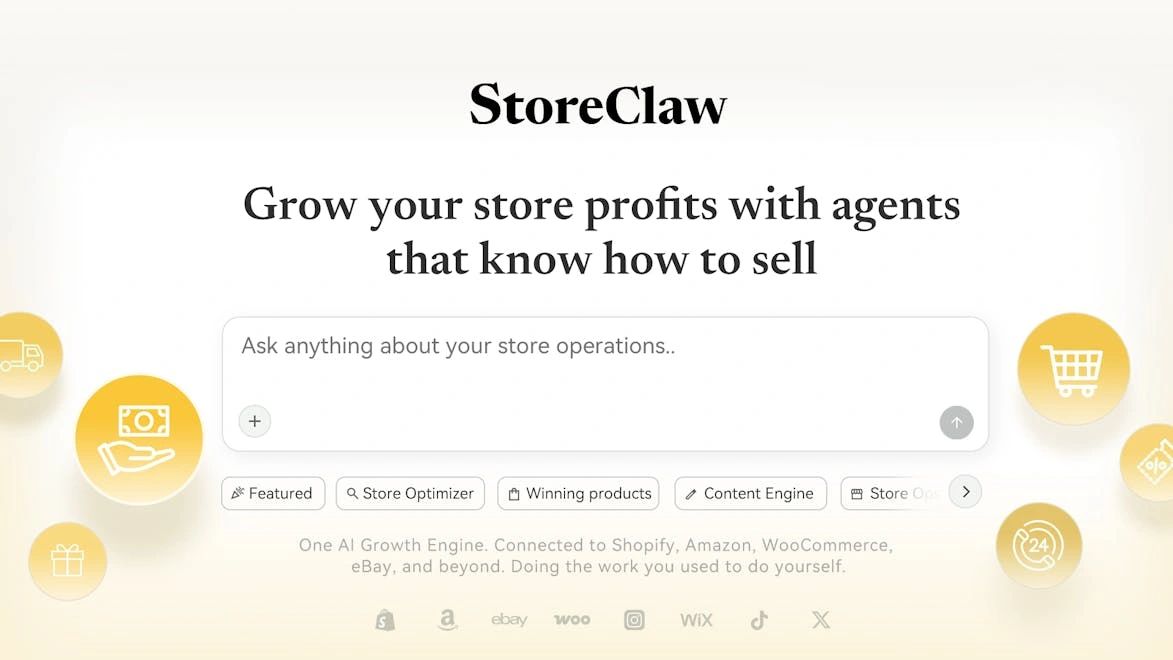
In a recent LinkedIn post, Rahul Kumar discusses a significant shift in how businesses are leveraging artificial intelligence, moving beyond basic chatbot functionalities to integrating AI as a core operational component. Kumar highlights the emergence of AI agents designed not just to answer questions, but to actively drive business outcomes and understand the nuances of sales.
The Evolution from AI Assistants to AI Employees
Kumar posits that many companies are still treating AI as a simple conversational tool, akin to a chatbot. However, the true potential, he argues, lies in viewing and utilizing AI as an integral part of the business workforce. This perspective is exemplified by platforms like StoreClaw, which Kumar recently discovered. He notes that such platforms represent the next frontier in commerce, moving away from overloaded analytics dashboards and towards AI that can genuinely sell.
“Most people are still using AI like a chatbot. The smartest businesses are starting to use AI like an employee. That’s the shift.”
This fundamental change, according to Kumar, redefines the role of AI in business operations. It’s about adopting AI that can proactively identify growth opportunities, study store data, understand sales patterns, and even execute tasks after receiving approval.
Driving Business Outcomes with AI Agents
The core of Kumar’s argument centers on the transition from AI that merely answers questions to AI that delivers tangible business results. He emphasizes that this evolution is happening faster than many organizations realize.
“We’re moving from: AI that answers questions → AI that drives business outcomes.”
Kumar forecasts that in the coming years, a company’s competitive advantage will not solely depend on possessing AI tools, but rather on its ability to adapt quickly, integrate AI seamlessly into existing workflows, and foster effective collaboration between human teams and AI agents. He points out that the companies poised for success tomorrow are those actively experimenting with these advanced AI applications today.
The Impact on Startups and Operations
Kumar further elaborates on the implications for the startup ecosystem and operational efficiency. He suggests that AI-native startups are becoming increasingly crucial in this evolving landscape. The integration of AI agents promises significant benefits, including faster scaling for small teams, leaner operations for founders, and a higher degree of automation in business execution.
“The companies winning tomorrow are experimenting today. Small teams will scale faster. Founders will operate leaner. Execution will become more automated than ever before.”
He concludes by stating that the race in AI-driven e-commerce is just beginning and poses a critical question to founders and operators: whether they would trust AI agents to make operational decisions for their businesses, indicating a significant cultural and operational hurdle that still needs to be addressed.
Kumar’s insights suggest a future where AI is not just a supplementary tool but a fundamental driver of business strategy and execution, reshaping the competitive landscape for businesses of all sizes.
📝 About This Content
This article is based on insights shared by Rahul Kumar on LinkedIn.
📅 Originally posted on May 20, 2026 | View original post on LinkedIn →