
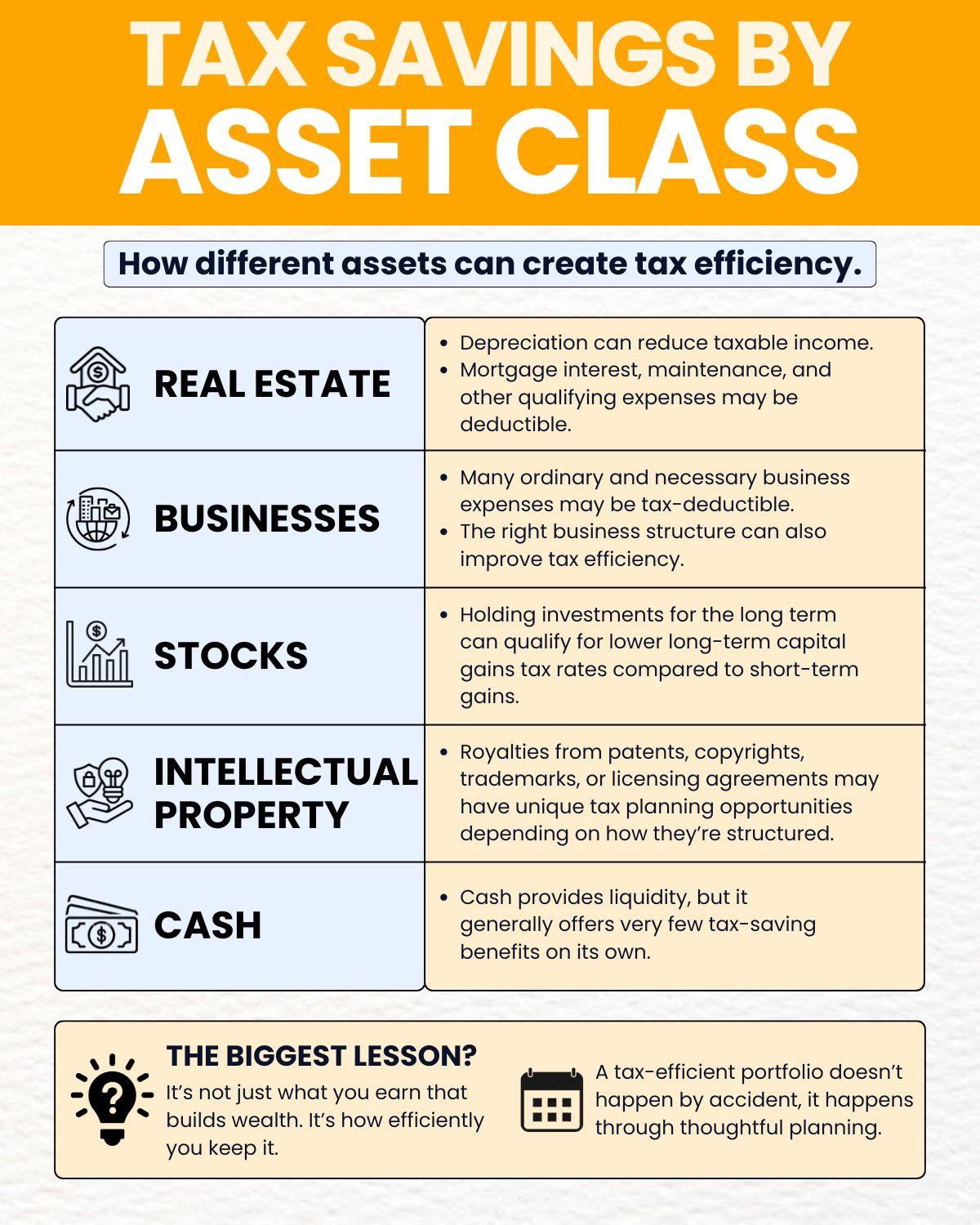
In a recent LinkedIn post, Marc Henn explores the crucial, yet often overlooked, aspect of wealth building: tax efficiency. Henn emphasizes that accumulating wealth is only one piece of the financial puzzle, with retaining that wealth being equally, if not more, important for long-term financial success. He highlights how different asset classes are subject to varying tax treatments, and understanding these nuances, coupled with strategic planning, can significantly enhance financial outcomes.
Henn points out the fundamental truth that earning is just the start. “Keeping more of what you earn matters too,” he states, underscoring the need to focus on tax implications. This focus, according to Henn, is not about avoidance but about intelligent planning to maximize the growth potential of invested capital.
Understanding Tax Efficiency Across Asset Classes
The core of Henn’s analysis lies in dissecting how various asset classes can be leveraged for tax efficiency. He breaks down several key areas:
Real Estate
According to Henn, real estate offers notable tax advantages. He notes that elements like depreciation and eligible property expenses can serve to reduce an individual’s taxable income, making it an attractive component of a tax-efficient portfolio.
Businesses
For business owners, Henn suggests that the right entity structure and the ability to deduct qualifying business expenses are key levers for improving tax efficiency. This allows for more capital to be reinvested or retained within the business.
Stocks and Long-Term Investing
Henn draws a distinction between short-term trading and long-term investing in the stock market. “Long-term investing may qualify for lower capital gains tax rates than short-term trading,” he explains, advocating for a patient approach to maximize tax benefits.
Intellectual Property
Intellectual property, including patents, copyrights, and trademarks, presents unique planning opportunities. Henn highlights that income generated from licensing these assets can be structured in ways that offer tax advantages, depending on the specific arrangement.
The Role of Cash and Diversification
While acknowledging the necessity of cash for liquidity and flexibility, Henn points out its limited standalone tax advantages. Therefore, he advocates for diversification as a strategy to not only enhance tax efficiency but also bolster long-term financial resilience. “Diversification,” he writes, “combining different asset types can improve both tax efficiency and long-term resilience.”
The Importance of Strategic, Proactive Planning
Henn strongly advocates for a proactive approach to tax planning. He argues that tax-efficient investing is the result of foresight, not a last-minute scramble. “Tax-efficient investing comes from planning ahead, not reacting at year-end,” Henn emphasizes. This strategic mindset ensures that tax considerations are integrated into investment decisions from the outset, rather than being an afterthought.
Ultimately, Marc Henn’s insights on LinkedIn serve as a valuable reminder that true wealth building encompasses both accumulation and preservation. By understanding and strategically utilizing the tax treatments of various assets, individuals can significantly improve their long-term financial trajectory. As Henn concludes, “Building wealth is only part of the equation. Protecting wealth matters too.” Smart tax planning, in his view, is the mechanism that allows more of one’s hard-earned money to remain invested and continue its growth journey.
📝 About This Content
This article is based on insights shared by Marc Henn on LinkedIn.
📅 Originally posted on August 17, 2026 | View original post on LinkedIn →