
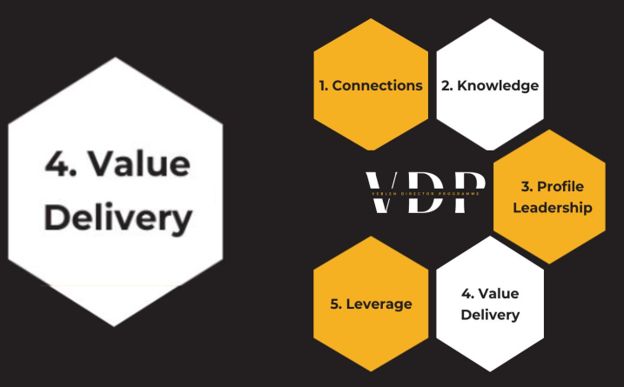
The Shifting Role of Value Creation: Employee vs. Board Member
The way value is added within an organization fundamentally changes as one moves from an employee role to a board member position, particularly for non-executive directors. While employees are often tasked with problem-solving through direct execution and leveraging their past experiences, board members operate on a different plane, focusing on strategic guidance and leveraging their network.
Employee Execution: The “Nose In, Fingers In” Approach
As an employee, the expectation is to be hands-on. You encounter a problem, draw upon your expertise, formulate a solution, and implement it. This is the essence of execution – being directly involved in the day-to-day operations and problem-solving activities that keep the business running. Your value is often measured by your ability to deliver tangible results and overcome immediate challenges.
Board Member Contribution: The “Nose In, Fingers Out” Philosophy
The role of a board member, especially a non-executive director, requires a distinct approach. The adage “your nose is in but your fingers are out” perfectly encapsulates this. Board members are not expected to jump into the operational fray and fix problems directly. Instead, their value is derived from a more indirect, yet profoundly impactful, set of contributions:
1. Asking Better Questions: The Power of Perspective
When you are deeply embedded within a company’s daily operations, it can be challenging to maintain a broad perspective. The proximity to problems can obscure the bigger picture. A skilled board member brings invaluable external perspective by posing insightful questions that might not occur to those on the inside. These questions challenge assumptions, uncover blind spots, and encourage strategic thinking, prompting the executive team to re-evaluate their approach and consider alternative solutions.
2. Opening Doors: Leveraging Networks for Strategic Advantage
Rather than providing direct answers, the most effective board members act as conduits to solutions. They leverage their professional networks to connect the company with the right people and resources. For instance, if a CEO is contemplating international expansion but lacks the necessary expertise, a board member’s ability to introduce them to someone with proven experience in that specific market can be far more valuable than any direct advice they might offer. Such introductions can be pivotal, potentially altering the company’s growth trajectory.
The Compounding Effect of Value Addition
The more effectively a board member contributes through insightful questioning and strategic network utilization, the more indispensable they become. This enhanced value not only strengthens their position on the current board but also increases their likelihood of being sought after for opportunities on larger and more prestigious boards in the future. It’s a cycle where strategic contribution leads to greater influence and opportunity.
Call to Action and Further Learning
This discussion is part of a broader series exploring effective board membership. For those interested in understanding how to secure a board seat and maximize their impact, Callum Laing is hosting a free masterclass. You can find more details and register here: https://lnkd.in/gP9V97hq.
Originally posted by Callum Laing on LinkedIn.
📝 About This Content
This article is based on insights shared by Callum Laing on LinkedIn.
📅 Originally posted on September 22, 2025 | View original post on LinkedIn →