
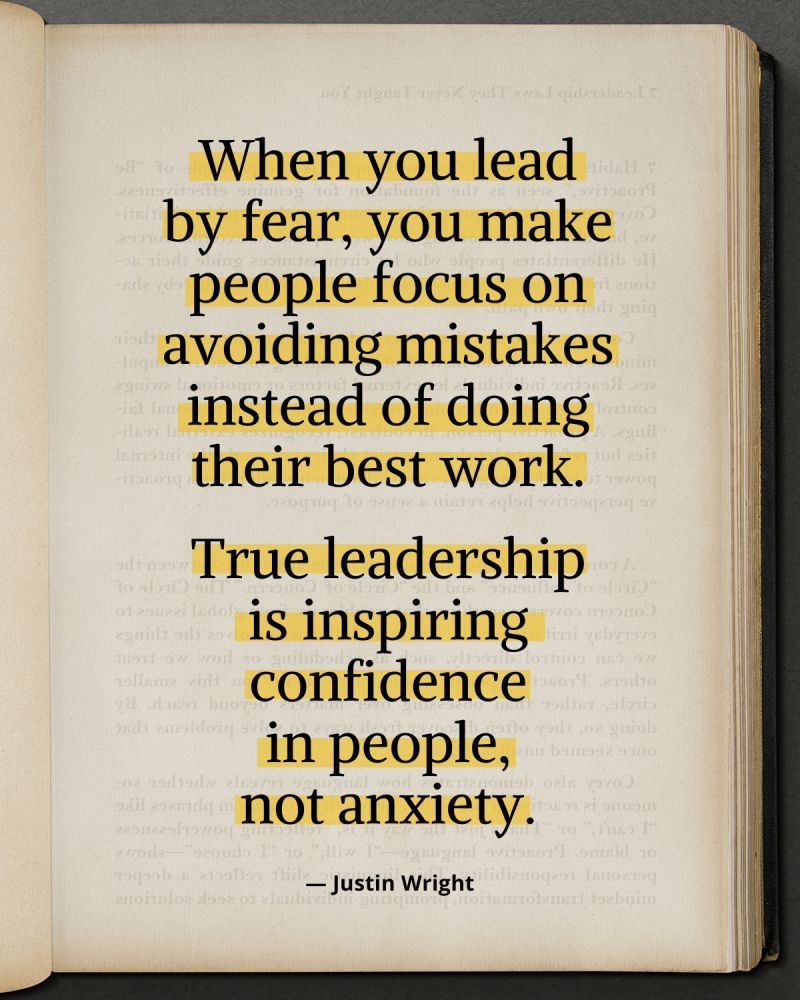
The impact of leadership style on team performance is profound. While some may believe that a fear-based approach can drive results, the reality is often far more damaging. Justin Wright, in a recent post, highlights a critical distinction: fear drives self-preservation, not genuine performance. This approach, while yielding compliance, ultimately breaks down the very elements that lead to true innovation and success.
Teams managed by fear often become shadows of their potential. The underlying message is clear: avoid mistakes at all costs. This creates an environment where:
- New ideas are stifled, deemed too risky for potential repercussions.
- Speaking up or offering dissenting opinions is seen as career suicide.
- Bold initiatives are avoided due to the perceived pain of failure.
This is not a recipe for high performance; it’s a strategy for survival. When individuals are primarily focused on not getting in trouble, their cognitive energy shifts away from problem-solving and innovation towards risk mitigation.
The Alternative: Leadership Rooted in Trust and Psychological Safety
Wright contrasts this with the approach of an exceptional leader he once worked with. This leader achieved remarkable results not through intimidation, but through fostering an environment of trust and psychological safety. Her methods were characterized by:
Asking Questions, Not Making Accusations
Instead of interrogating or blaming, she sought understanding. This encouraged open dialogue and made individuals feel heard.
Facilitating Learning from Mistakes
Errors were viewed as opportunities for growth, not reasons for punishment. This empowered the team to experiment and learn without crippling fear.
Creating a Safe Space for Truth
Honesty and transparency were valued, allowing for constructive feedback and genuine problem-solving.
The Impact of Trust on Team Performance
The results of this trust-based leadership were undeniable. The team consistently:
- Generated a steady stream of innovative ideas.
- Tackled complex problems that others couldn’t solve.
- Exceeded all performance targets and KPIs.
This success wasn’t born from a fear of failure, but from the freedom to try, to innovate, and to push boundaries. Wright emphasizes that true leaders don’t command fear; they inspire belief and empower their teams to achieve their best.
Compliance vs. Excellence: A Fundamental Choice
The choice for leaders is stark: pursue compliance through fear, or strive for excellence through trust. As Wright eloquently puts it, you cannot achieve both simultaneously. A culture built on fear may ensure tasks are completed, but it erodes the spirit, creativity, and long-term potential of the workforce. Conversely, a culture built on trust unlocks potential, fosters innovation, and drives sustainable high performance.
This insight, originally shared by Justin Wright on LinkedIn, serves as a powerful reminder of the foundational elements of effective leadership in today’s business landscape.
📝 About This Content
This article is based on insights shared by Justin Wright on LinkedIn.
📅 Originally posted on October 19, 2025 | View original post on LinkedIn →