
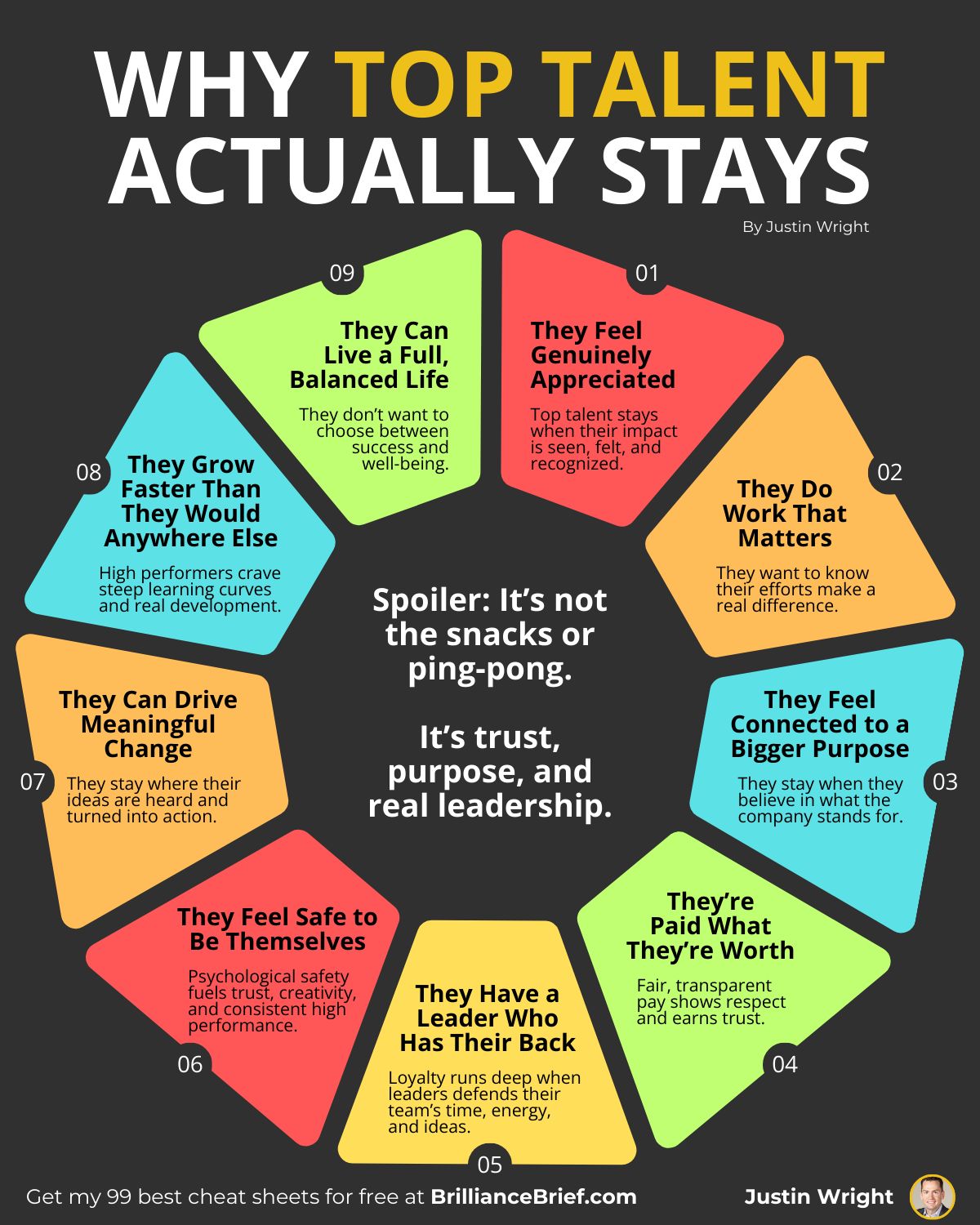
In a recent LinkedIn post, Justin Wright delves into the critical factors that drive top performers to stay with an organization, arguing that superficial perks often fall short of addressing the core needs of high-achievers. Wright emphasizes that while many companies focus on amenities like free lunches or happy hours, these do little to retain employees whose potential is being underutilized.
“Top performers leave when you waste their potential.”
Wright outlines nine key elements that genuinely contribute to employee retention, moving beyond the common, often ineffective, perks. He asserts that genuine appreciation, meaningful work, and a sense of purpose are far more impactful than surface-level benefits.
The Pillars of High-Performer Retention
Wright’s analysis highlights that true retention strategies must focus on the intrinsic motivations of top talent. He details several core areas that leaders should prioritize:
1. Meaningful Recognition and Work
According to Wright, empty praise is insufficient; employees need to feel that their contributions are genuinely recognized and valued. This involves celebrating their impact and ensuring they are engaged in work that is significant.
“Problems worth solving, not just tasks to complete Autonomy to make meaningful decisions”
As Justin Wright notes, providing employees with autonomy and engaging them in solving meaningful problems is crucial. This sense of purpose and the ability to make impactful decisions are significant drivers of job satisfaction.
2. Purpose, Compensation, and Leadership Support
Wright argues that connecting employees to a larger company mission can foster a sense of pride and belonging. He also stresses the importance of fair compensation that rewards impact, not just market rates, and a clear path for growth.
“Leaders Who Fight For Them Protecting their time like it’s precious (it is) Having their back when it matters most”
Furthermore, Wright points out that leaders play a pivotal role in retaining top talent by actively supporting their teams, protecting their time, and advocating for them. This leadership support is vital for fostering trust and loyalty.
3. Growth and Well-being
The post also emphasizes the need for psychological safety, allowing employees the freedom to take risks and learn from experimentation. Rapid growth, through challenging assignments that stretch capabilities and compound value, is another key factor.
Finally, Wright underscores the importance of supporting employees’ lives outside of work, ensuring that professional success does not necessitate personal sacrifice. He concludes:
“Great talent stays where their potential is unleashed. Not contained. They stay where their impact is clear. Not confused. They stay where leadership gets this right. Do you?”
In Justin Wright’s view, organizations that fail to address these fundamental needs risk losing their most valuable employees. The message is clear: retaining top performers requires a strategic focus on their development, recognition, and overall well-being, rather than relying on superficial perks.
📝 About This Content
This article is based on insights shared by Justin Wright on LinkedIn.
📅 Originally posted on May 6, 2026 | View original post on LinkedIn →