
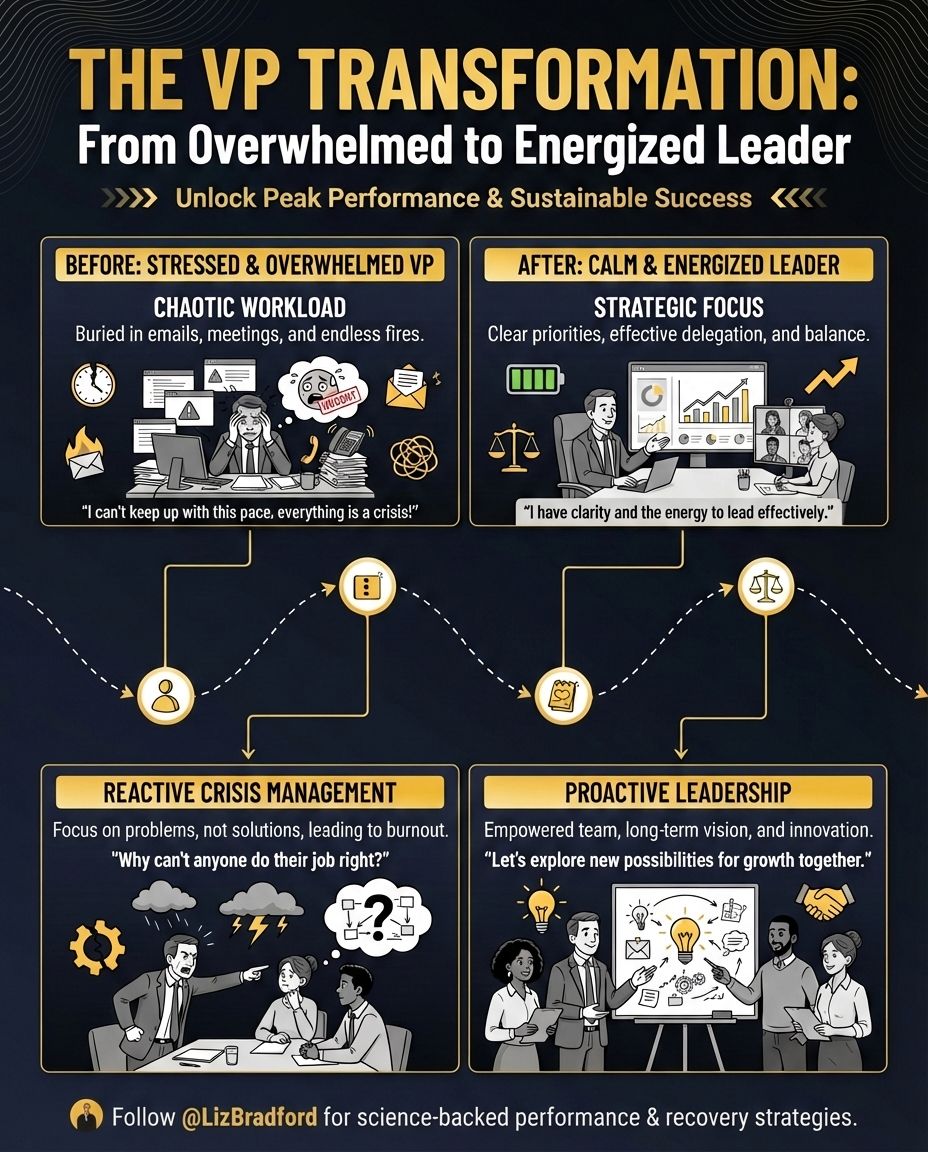
In a recent LinkedIn post, Liz Bradford explores the critical distinction between optimizing existing systems and diagnosing underlying biological issues, particularly for high-achieving executives. Bradford highlights a common scenario where individuals, despite adhering to standard wellness advice, continue to struggle with exhaustion and poor sleep. She posits that this disconnect often arises from applying generic solutions that don’t account for individual biological variations.
The Pitfalls of One-Size-Fits-All Executive Wellness
Bradford opens by detailing the case of a respected tech VP who was diligently following established sleep protocols. “His sleep protocol: Magnesium, sleep mask, white noise, blue light blockers. All the standard recommendations. None of it worked,” she writes, illustrating the core problem. The executive was adhering to what is typically considered best practice for sleep hygiene, yet saw no improvement.
“I’m doing everything right. Why am I still tired?”
According to Bradford, the reason these standard recommendations failed was that the executive’s biology was fundamentally misaligned with the advice. She explains that his cortisol pattern was inverted – low in the morning and high in the evening, the opposite of the typical pattern. This inversion meant that conventional sleep advice, designed for a different hormonal rhythm, was ineffective.
Diagnostics Over Optimization for Biological Systems
Bradford argues that the executive’s issue wasn’t a lack of effort or adherence to good habits, but a need for accurate diagnostics. The solution, as she outlines, involved a targeted approach to correct his specific hormonal imbalance rather than simply optimizing his existing sleep routine. This included:
- Morning sunlight exposure and a high-protein breakfast to stabilize blood sugar and influence cortisol patterns.
- Afternoon resistance training to manage the evening cortisol spike.
- A tailored supplement stack, including ashwagandha and phosphatidylserine, instead of magnesium.
The results, Bradford notes, were significant, with the executive sleeping through the night for the first time in two years after implementing these personalized strategies.
The Executive’s Dilemma: Optimization vs. Diagnosis
Bradford emphasizes that this situation is emblematic of a broader challenge faced by many executives. “Most executives are trying to optimise systems that are fundamentally misaligned,” she states. This means that instead of improving performance, they are often expending energy on strategies that are not suited to their unique physiology. She stresses the importance of data-driven insights over generic advice.
“One-size-fits-all doesn’t work at this level. You need data, not generic advice.”
The implications for executive performance are profound. Bradford suggests that true breakthroughs in energy, focus, and overall well-being come not from following popular wellness trends, but from understanding one’s own biological data. Her post serves as a call for a more personalized, diagnostic approach to health and performance for leaders.
Bradford also promotes upcoming resources, including a masterclass on hormones and executive performance, and an Energy Executive Assessment, encouraging leaders to seek out tailored solutions.
📝 About This Content
This article is based on insights shared by Liz Bradford on LinkedIn.
📅 Originally posted on January 20, 2026 | View original post on LinkedIn →