
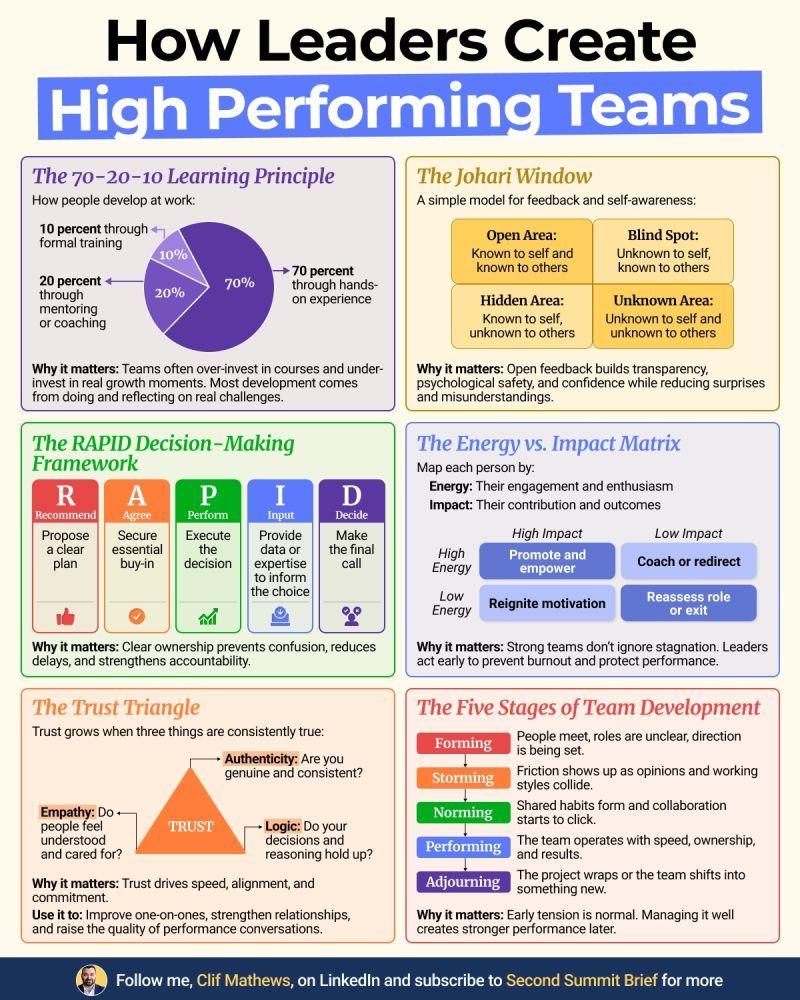
In a recent LinkedIn post, Alvin Huang delves into a common yet often overlooked challenge faced by leaders: the difficulty of integrating highly talented individuals into a cohesive, high-performing team. Huang argues that while hiring exceptional talent is crucial, it’s only half the battle. The other, often neglected, half involves establishing a shared language and structure for effective collaboration.
Huang highlights the paradox that emerges when bringing together top performers: “Individually, they deliver. But put them together without the right structure and you get misalignment, unclear ownership, and trust that never quite gets off the ground.” This, he suggests, is a direct consequence of leaders failing to provide their teams with the necessary frameworks for working together.
“The thing nobody warns you about when you start hiring really good people: The more talented your team, the harder it is to work together.”
The Importance of Shared Frameworks for Team Cohesion
According to Alvin Huang, the absence of agreed-upon working methodologies can lead to significant friction within teams, even those composed of highly skilled individuals. He emphasizes that simply assembling a group of talented people does not automatically translate into collective success. Instead, leaders must actively cultivate an environment where collaboration is structured and understood.
Huang points out that many leaders “skip that part entirely,” referring to the process of defining how a team will operate. This oversight, he contends, is a primary reason why potential high-performing teams falter, experiencing issues such as unclear responsibilities and a lack of foundational trust.
Alvin Huang’s Recommended Frameworks for High Performance
To address these challenges, Alvin Huang presents six distinct frameworks designed to help leaders build and sustain high-performing teams. These tools offer practical approaches to enhance self-awareness, learning, decision-making, impact assessment, team development, and trust-building.
1. The Johari Window
Huang introduces the Johari Window as a model for increasing self-awareness and improving feedback mechanisms within a team. This framework helps individuals understand how they are perceived by others and identify areas for personal and professional growth.
2. The 70-20-10 Learning Principle
Discussing professional development, Huang cites the 70-20-10 principle, which posits that learning is most effective when 70% comes from hands-on experience, 20% from feedback and coaching, and 10% from formal training. He notes that “Most companies have this completely backwards,” often overemphasizing formal training at the expense of practical application and mentorship.
3. The RAPID Decision-Making Framework
Addressing the common issue of unclear ownership, Huang advocates for the RAPID framework. This model clarifies roles in decision-making: Recommend, Agree, Perform, Input, and Decide. Huang argues that “Confusion about who owns what kills momentum faster than almost anything else,” and RAPID provides a clear structure to prevent this.
“Hiring well is only half of it. The other half is giving your team a shared language for how to actually work together…”
4. The Energy vs. Impact Matrix
Huang suggests using an Energy vs. Impact Matrix to tailor interventions for team members. This matrix categorizes individuals based on their energy levels and their impact on the team’s goals, guiding leaders on how to best support, coach, or address performance issues.
5. The Five Stages of Team Development
Drawing on established team dynamics theory, Huang outlines the five stages teams typically experience: Forming, Storming, Norming, Performing, and Adjourning. Understanding these phases, as Huang explains, “stops you from panicking when friction shows up” during inevitable periods of conflict or adjustment.
6. The Trust Triangle
Finally, Huang emphasizes the foundational role of trust, which he breaks down into three components: Authenticity, Empathy, and Logic. He posits that trust is built “through three things done consistently,” urging leaders to embody these qualities to foster a secure and reliable team environment.
In conclusion, Alvin Huang’s insights on LinkedIn underscore the critical need for leaders to move beyond mere recruitment and focus on building robust collaborative structures. By implementing shared frameworks, as Huang details, organizations can unlock the full potential of their talented individuals and cultivate truly high-performing teams.
📝 About This Content
This article is based on insights shared by Alvin Huang on LinkedIn.
📅 Originally posted on March 19, 2026 | View original post on LinkedIn →