
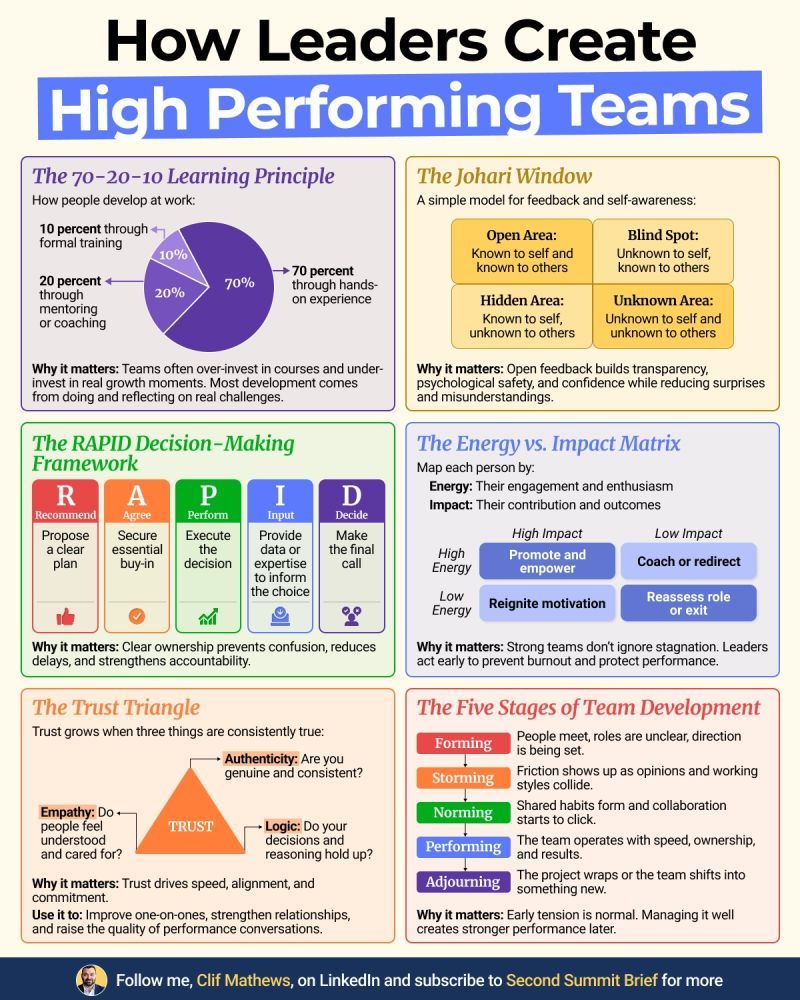
In a recent LinkedIn post, Ben Sands delves into the common challenge faced by many organizations: assembling a team of high-performing individuals who struggle to collaborate effectively. Sands highlights that exceptional individual capabilities do not automatically translate into collective success, emphasizing that the solution lies not in acquiring more talent, but in implementing robust structures.
He states:
“Putting high performers together doesn’t create a high-performing team.”
According to Sands, when teams are composed of talented individuals who are nevertheless unable to work cohesively, it often manifests as delayed decisions, conflicting priorities, and stalled progress. This situation, he argues, is a direct signal of a leadership deficit rather than a deficiency in individual talent.
The Crucial Role of Structure in Team Performance
Ben Sands asserts that the key to transforming a group of skilled individuals into a cohesive and productive unit is intentional structural design. He outlines six frameworks designed to foster better teamwork, clarity, and alignment.
Frameworks for Building Cohesive Teams
Sands introduces several models that leaders can employ to address team dysfunctions:
- The 70-20-10 Learning Principle: This model posits that true growth stems from a blend of practical experience (70%), coaching and feedback (20%), and formal learning (10%).
- The Johari Window: As Ben Sands explains, this framework focuses on self-awareness and feedback as pillars of trust, categorizing aspects of self into Open, Blind, Hidden, and Unknown.
- The RAPID Decision-Making Framework: Sands points out that slow decision-making often stems from unclear roles. RAPID clarifies these by defining who Recommends, Agrees, Performs, provides Input, and Decides.
- The Energy vs. Impact Matrix: This tool helps leaders assess team members’ effectiveness by evaluating their energy levels against their impact, guiding actions from empowerment to reassessment.
- The Trust Triangle: Ben Sands identifies authenticity, empathy, and logic as the core components of trust, noting that its breakdown often occurs when one of these elements is absent.
- The Five Stages of Team Development: This model, as outlined by Sands, suggests that conflict is a natural part of team progression through Forming, Storming, Norming, Performing, and Adjourning phases.
Sands advises leaders to select the framework that best addresses their team’s most pressing issue, rather than attempting to implement all six simultaneously. He reiterates that persistent team struggles are rarely solely ‘people problems’ but are indicative of underlying structural or leadership challenges.
“When a team lacks trust, clarity, or alignment… it’s rarely just a people problem. It’s a leadership signal.”
To aid leaders in diagnosing their team’s specific needs, Ben Sands also offers a diagnostic tool linked in his post. He concludes by prompting readers to consider which of these frameworks could yield the most significant improvement for their own teams.
📝 About This Content
This article is based on insights shared by Ben Sands on LinkedIn.
📅 Originally posted on April 19, 2026 | View original post on LinkedIn →