
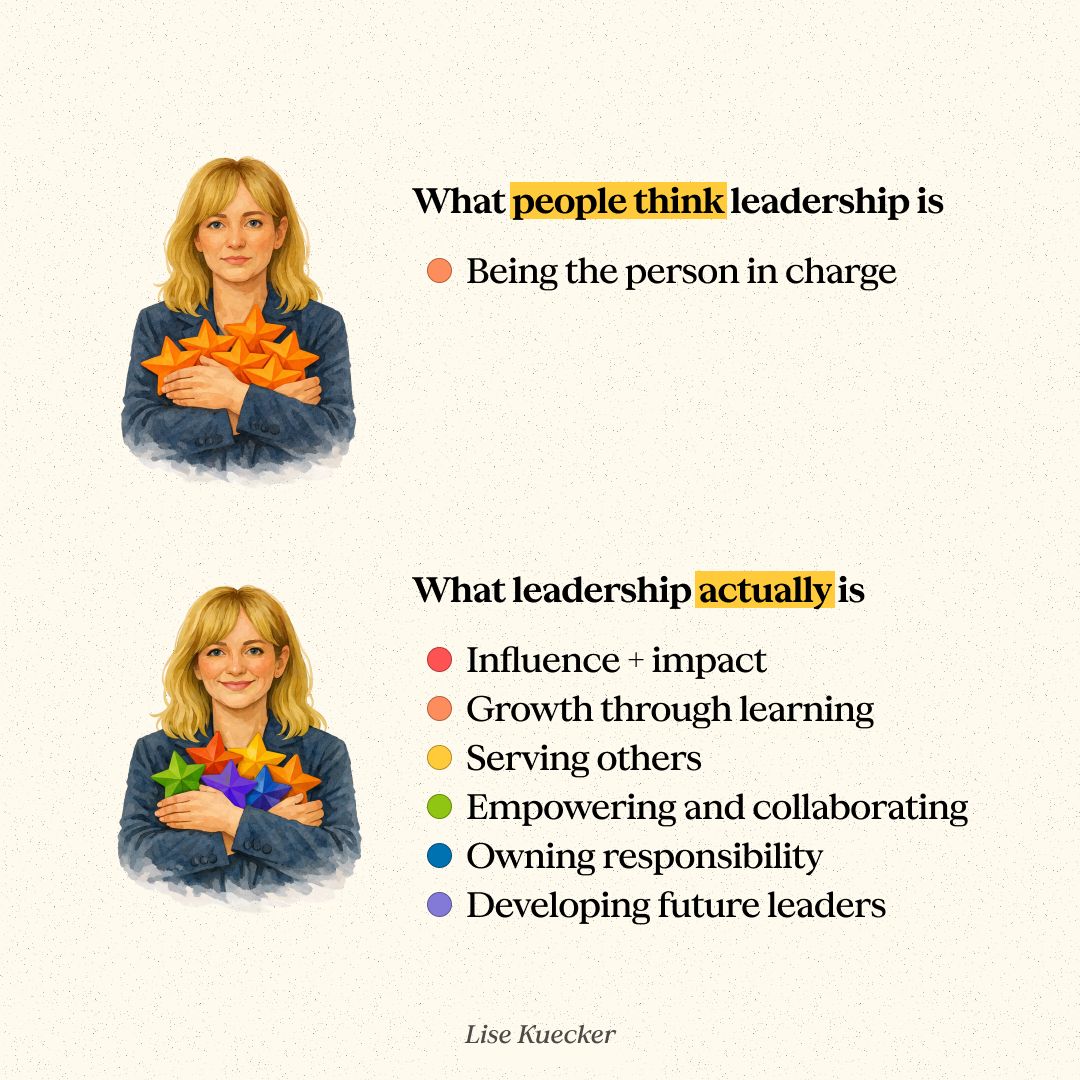
In a recent LinkedIn post, Lise Kuecker offers a compelling perspective on the true nature of leadership, distinguishing between building a team of followers and cultivating a team of leaders. Kuecker argues that sustainable business success hinges on the latter, emphasizing a shift from command-and-control to empowering and developing individuals within an organization.
Kuecker challenges the common misconception that leadership solely involves directing others. “Most people think ‘leadership’ means being the person who sits back and tells everyone what to do,” she writes. “Founders figure out pretty quickly that it’s a lot more than that.” The post posits that while early-stage value might stem from personal output, long-term success is deeply tied to fostering team member growth.
The Core Principles of Empowering Leadership
Kuecker outlines six key principles that define a leadership style focused on development and empowerment. These principles move beyond traditional management to create an environment where team members can thrive and grow into leaders themselves.
1. Align Actions with Impact
This principle centers on authenticity and inclusivity in decision-making. Kuecker advises leaders to involve their teams in significant choices and to filter decisions through core values. Crucially, she advocates for allowing team members to find their own solutions rather than resorting to micromanagement. As Kuecker notes, this involves:
“Let people solve problems their way instead of micromanaging.”
2. Prioritize Learning
Recognizing that continuous learning is vital for growth, Kuecker suggests leaders actively create space for skill development. This includes scheduling dedicated learning time, understanding individual skill aspirations, and providing resources like learning budgets or recommended materials.
3. Serve Others
This aspect of leadership focuses on removing barriers and providing support. Kuecker emphasizes proactively checking in with team members to identify obstacles and then actively working to clear them. The key, she suggests, is asking team members what they need rather than making assumptions.
4. Empower Your Team
True empowerment, according to Kuecker, involves granting genuine ownership of projects and the autonomy to make decisions. She advises leaders to step back once team members demonstrate capability, allowing them the space to lead their own initiatives.
“Give people real ownership over their projects. Let them make decisions without running everything by you first.”
5. Own Responsibility
Kuecker stresses the importance of accountability, particularly when things go wrong. She advocates for taking personal responsibility for mistakes, framing them as “I made a mistake” rather than a collective “we had a problem.” This approach focuses on solutions and transparency.
6. Develop Future Leaders
The ultimate goal of this leadership philosophy is to cultivate the next generation of leaders. Kuecker suggests this is achieved by assigning challenging tasks that stretch abilities, creating clear development plans, and celebrating when individuals outgrow their current roles.
By adopting these leadership practices, Kuecker asserts that organizations can foster a stronger, more confident team that takes initiative and leads without constant direction. “That impact becomes far more powerful than anything you could have done alone,” she concludes.
Kuecker’s insights provide a valuable framework for leaders looking to move beyond traditional management and build truly impactful, self-sufficient teams.
📝 About This Content
This article is based on insights shared by Lise Kuecker on LinkedIn.
📅 Originally posted on February 18, 2026 | View original post on LinkedIn →