
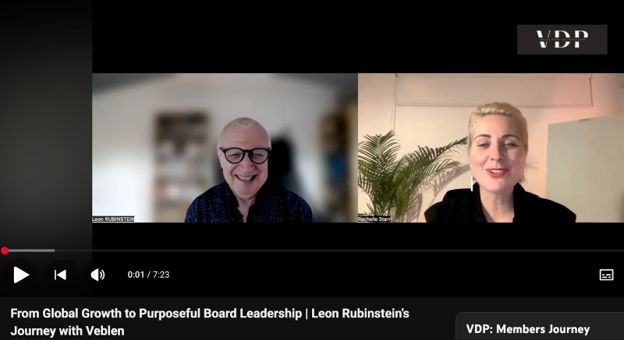
In a recent LinkedIn post, Callum Laing explores the often-overlooked transition from corporate life to board service, highlighting how seasoned executives can find continued purpose and value. Laing uses the example of Leon Rubinstein to illustrate a common post-retirement dilemma: the feeling of being “done yet” despite having achieved traditional markers of success.
The Misconception of Board Work
Callum Laing challenges the notion that board positions are merely a different title for consulting. He emphasizes that the core function of a board member is distinct from operational involvement. As Laing relays from Rubinstein’s experience:
The “Nose In, Fingers Out” principle You’re not there to do the work. You’re there to help CEOs see what they can’t see from the trenches. Strategic altitude beats operational involvement every time.
This principle, as highlighted by Laing, suggests that the value a director brings is in their ability to provide high-level strategic guidance and identify blind spots, rather than executing day-to-day tasks. Laing points out that a director’s role is to facilitate better decision-making, not to be involved in the minutiae of operations.
Asking Better Questions and Leveraging Networks
A key takeaway from Laing’s post is the emphasis on inquiry over expertise. He notes that many first-time directors mistakenly believe they need to have all the answers. Instead, Laing, drawing on Rubinstein’s insights, argues for the power of asking incisive questions.
Your job? Ask better questions. Point to blind spots. Then leverage your network to bring in the real experts. Value comes from connections, not just knowledge.
This perspective, according to Laing, shifts the focus from individual knowledge to the ability to connect resources and facilitate solutions. He suggests that a director’s network is a critical asset, enabling them to bring in the right expertise when needed.
The Value of a Fresh Perspective
Callum Laing also touches upon the often-underrated benefit of diverse perspectives in the boardroom. He recounts an anecdote where an executive was offered a board seat in an unfamiliar industry, with the simple rationale, “Why not.” Laing uses this to support the idea that:
Industry expertise is overrated When Leon was offered a board seat in an industry he knew nothing about, he asked “why would you want me?” The response? “Why not.” Fresh perspective often beats insider thinking.
This suggests that bringing an outsider’s viewpoint can be more valuable than deep industry knowledge, offering new approaches and challenging established norms. Laing implies that companies may seek directors who can offer a strategic overview and challenge assumptions, rather than simply reinforcing existing practices.
Community and Action in Board Governance
Finally, Laing underscores the importance of action and community in translating knowledge into tangible progress. He writes that theoretical knowledge, while important, is insufficient without practical application and support.
Knowledge without action is just theory. You can read every book on board governance (including my Boardroom Blueprint!). But real progress happens through community. The accountability. The introductions. The spark that comes from meeting people across continents and industries who push you forward.
Laing concludes by encouraging executives to recognize the enduring value of their experience and to actively pursue board opportunities. He prompts readers to consider what might be hindering their own pursuit of such roles, whether it’s clarity on the director’s function, access to networks, or other barriers.
📝 About This Content
This article is based on insights shared by Callum Laing on LinkedIn.
📅 Originally posted on November 28, 2025 | View original post on LinkedIn →