
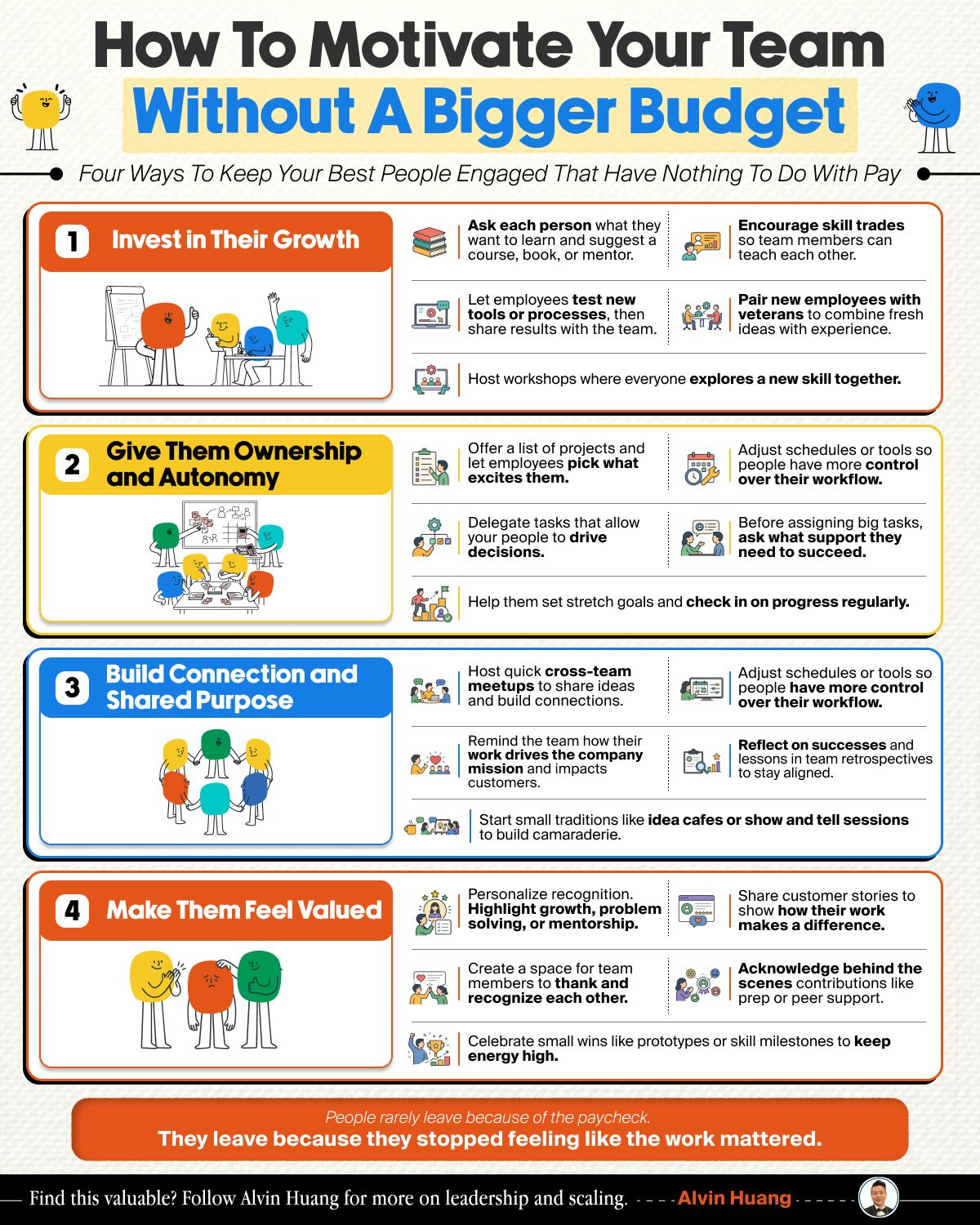
In a recent LinkedIn post, Alvin Huang discusses the often-overlooked factors that contribute to employee retention and high performance, arguing that salary is rarely the primary driver for long-term commitment or exceptional work.
Huang, a recognized leader in team building, shared his perspective on what truly motivates professionals, highlighting that while compensation can attract talent, it’s other elements that foster loyalty and dedication. He writes:
Pay gets people in the door. But it’s rarely why they stay, and it’s seldom why they do their best work.
Huang identifies four key areas that reliably boost employee engagement, none of which are directly tied to monetary compensation. These ‘levers,’ as he terms them, focus on investing in people and creating a work environment where they feel valued and motivated.
Investing in Growth and Development
Huang emphasizes that employees are more likely to remain with a company if they see opportunities for personal and professional development. This can manifest in various ways, such as allowing individuals to experiment with new tools or processes, pairing experienced employees with newer ones for mutual learning, or facilitating skill-sharing sessions.
People stay where they’re getting better, not just paid.
As Alvin Huang notes, this continuous learning environment fosters a sense of progress that salary alone cannot replicate. He suggests practical applications like letting team members test new technologies or organizing internal workshops where colleagues can teach each other skills outside their primary roles.
The Power of Ownership and Autonomy
Another critical factor highlighted by Huang is the importance of granting employees a sense of ownership over their work. He argues that autonomy is a powerful motivator that many managers underestimate.
According to Alvin Huang, empowering individuals to have a say in their projects, or in how they approach tasks, can significantly increase their investment in the outcome. He advises managers to step back after delegating to allow employees the space to own their responsibilities.
Step back once you’ve delegated. Checking in constantly undoes the ownership.
This approach, Huang suggests, cultivates a sense of trust and responsibility, leading to greater job satisfaction and a higher quality of work.
Cultivating Real Connections
Huang also points to the significance of building genuine connections within the workplace. He believes that employees work harder when their work is connected to something more meaningful than just a to-do list or a deadline.
This connection can be forged by linking projects to an employee’s personal interests or values, or by taking time as a team to acknowledge and celebrate successes. As Alvin Huang puts it:
Know one thing about each person’s life outside work. Ask about it.
These interpersonal elements, he argues, create a more cohesive and supportive team dynamic, where individuals feel a stronger sense of belonging and purpose.
Ensuring Employees Feel Valued
Finally, Huang stresses the importance of making employees feel genuinely valued through specific and meaningful recognition. He cautions against generic praise, stating that it often fails to resonate.
Instead, Huang advocates for specific acknowledgments that pinpoint exactly what an individual did well. Celebrating smaller achievements, not just major milestones, and tailoring recognition to individual preferences are key strategies. In Alvin Huang’s view:
Call out exactly what someone did well, not just that they “did a great job.”
This tailored approach to appreciation, Huang suggests, is far more impactful than broad statements and reinforces desired behaviors and contributions. Ultimately, Huang concludes that these engagement strategies require attention and care from leadership, rather than additional budget, and can lead to teams that outperform even those with higher salaries because they are genuinely invested in their work and the organization.
📝 About This Content
This article is based on insights shared by Alvin Huang on LinkedIn.
📅 Originally posted on July 18, 2026 | View original post on LinkedIn →