
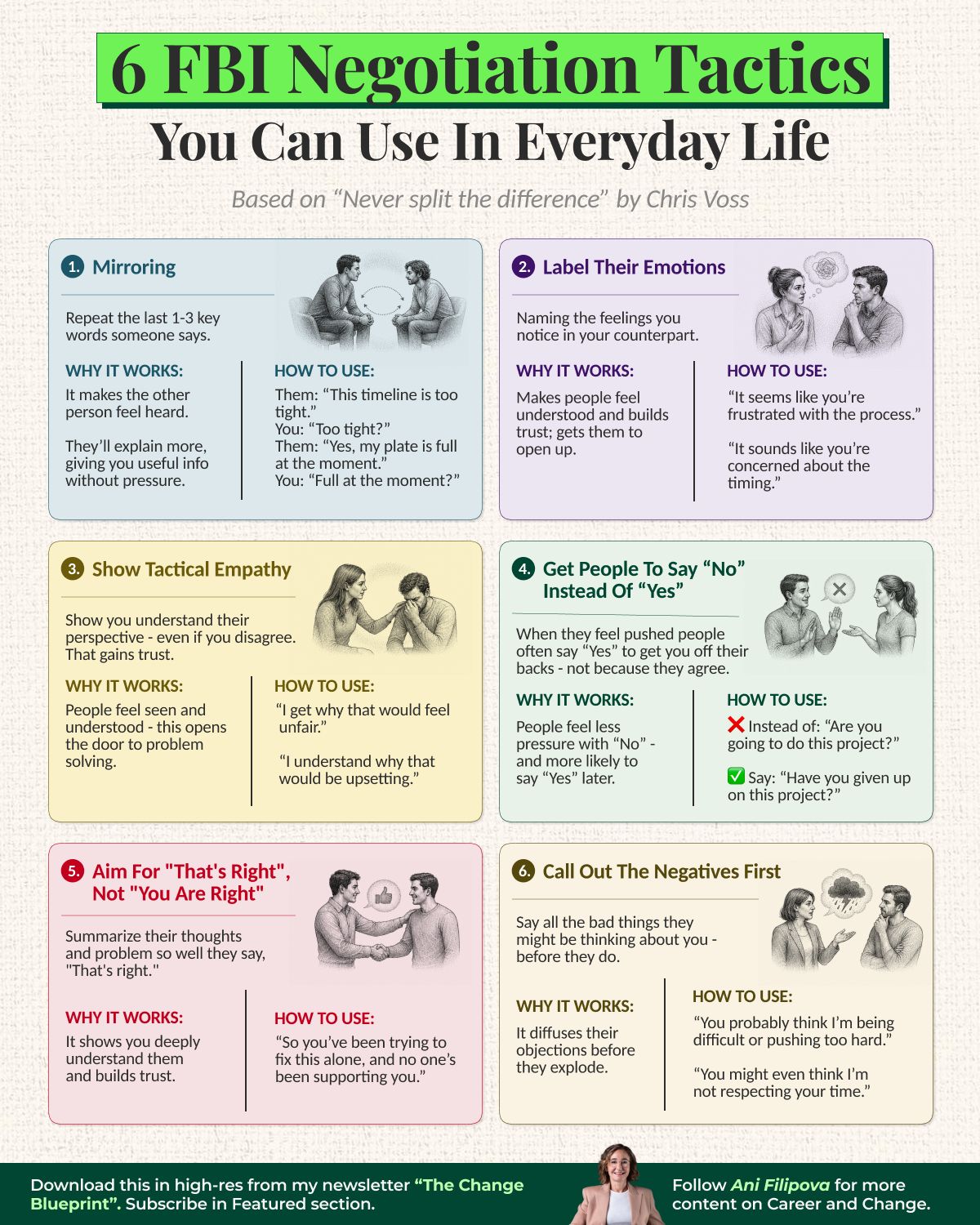
In a recent LinkedIn post, Ani Filipova delves into the pervasive nature of negotiation, arguing that it extends far beyond formal business dealings into the fabric of daily life. Filipova, drawing on over two decades of corporate experience and her entrepreneurial journey, highlights that effective negotiation is less about assertiveness and more about keen observation and empathy.
Filipova begins by broadening the definition of negotiation, stating:
Negotiation happens more often than we realise. Not only when discussing salaries, contracts or deals. You negotiate when you ask for more time on a project. When you disagree with your boss. When a colleague has different priorities. When you need to say no without damaging a relationship.
This perspective challenges the common perception of negotiation as solely a high-stakes business transaction. According to Filipova, these everyday interactions, whether with children, spouses, or friends, are also significant arenas for negotiation.
The Power of Observation in Negotiation
A central theme in Filipova’s post is the critical role of observation in successful negotiation. She suggests that the most adept negotiators are not necessarily the loudest or most forceful individuals. Instead, they are those who possess a high degree of perceptiveness.
As Ani Filipova notes:
They were often the most observant. They listened carefully. They noticed what wasn’t being said. They understood the other person’s concerns before trying to change their mind.
This emphasis on active listening and understanding underlying concerns, rather than simply pushing one’s own agenda, is presented as a key differentiator. Filipova points out that demonstrating understanding does not equate to conceding ground, a subtle but crucial distinction in building trust and rapport.
Leveraging Negotiation Techniques Beyond the Boardroom
Filipova further illuminates her points by referencing the work of Chris Voss, author of “Never Split the Difference.” She highlights how Voss’s techniques, honed during his time as an FBI hostage negotiator, are remarkably applicable to everyday situations.
According to Filipova, many of Voss’s strategies are accessible and effective without resorting to aggression:
Mirroring someone’s words. Naming the emotion you’re noticing. Making it easier for someone to say “no.” Getting to “that’s right” rather than settling for “you’re right.” Addressing the uncomfortable issue before the other person has to. None of these requires you to be loud or tough.
Filipova underscores that these methods require attentiveness and emotional intelligence rather than brute force. The goal, as she articulates, is not necessarily to win an argument but to foster a deeper understanding that facilitates progress.
Understanding as a Catalyst for Progress
In her analysis, Filipova concludes that the often-underestimated aspect of negotiation is its potential to foster understanding. The ultimate aim, in her view, is not just to achieve a specific outcome but to gain sufficient insight into the other party to move the conversation constructively.
This perspective encourages a more collaborative and less adversarial approach to negotiation, applicable across all facets of professional and personal life. Filipova’s insights offer a valuable framework for anyone looking to improve their communication and influence skills.
📝 About This Content
This article is based on insights shared by Ani Filipova on LinkedIn.
📅 Originally posted on August 12, 2026 | View original post on LinkedIn →