
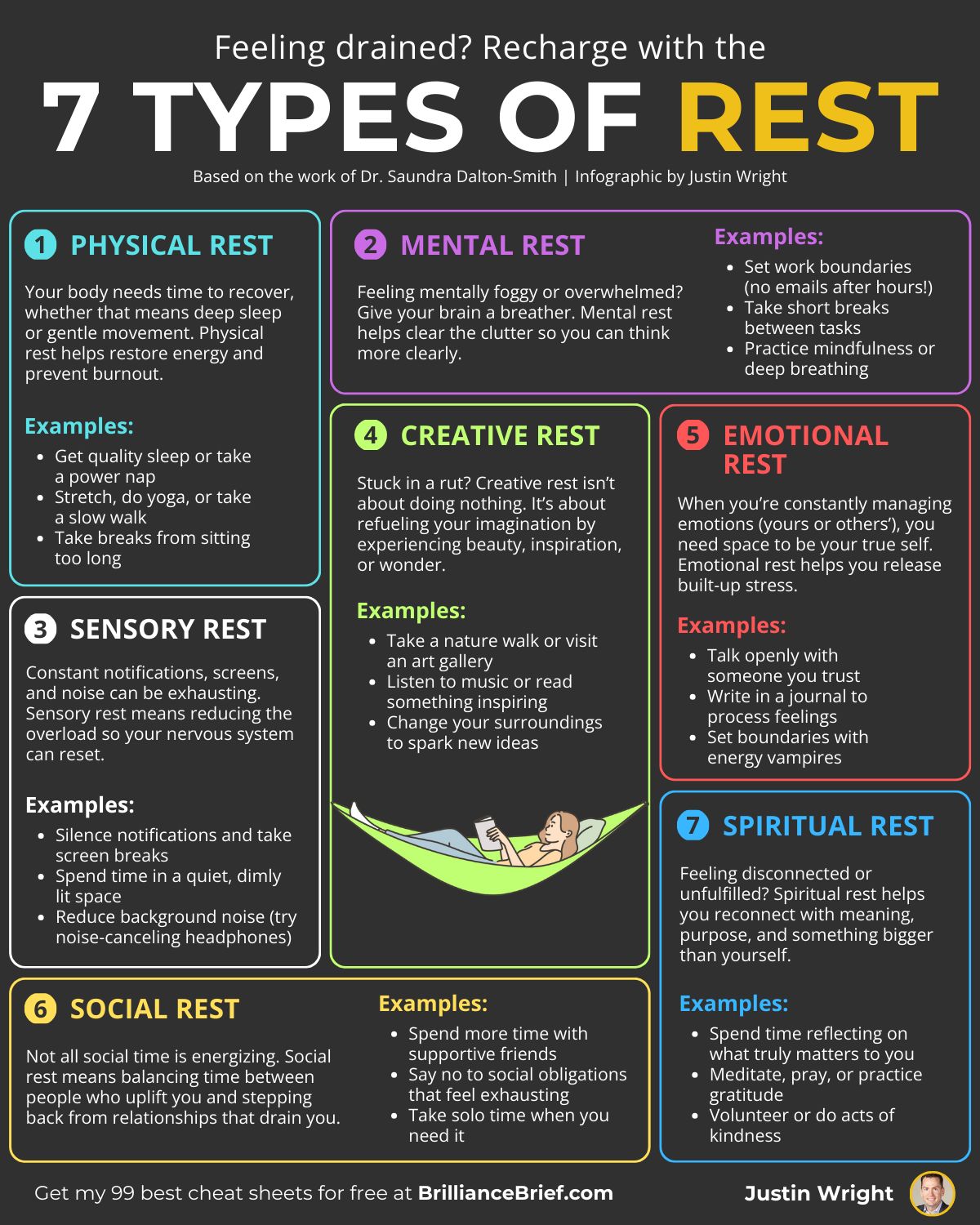
In a recent LinkedIn post, Justin Wright explores the multifaceted nature of rest, arguing that a single night’s sleep is insufficient to combat pervasive burnout. Wright highlights research by Dr. Saundra Dalton-Smith, which identifies seven distinct types of rest crucial for overall well-being and sustained productivity.
The Seven Pillars of Rest
Wright emphasizes that modern life, with its constant demands and digital stimuli, often leaves individuals feeling depleted despite adequate sleep. He introduces Dr. Dalton-Smith’s framework, detailing each type of rest and its importance:
“Physical rest – when your body whispers before it starts to scream”
This foundational rest addresses the body’s basic need for recovery from physical exertion. Wright posits that ignoring these signals can lead to more severe issues.
Mental and Sensory Recharge
The post further delves into the cognitive and sensory aspects of rest. Wright points out the necessity of mental rest, suggesting that the mind requires pauses between intense cognitive tasks.
“Mental rest – because your mind needs space to breathe between thoughts”
Complementing this is sensory rest, a crucial antidote to the constant barrage of information and stimuli in today’s world.
“Sensory rest – in a world that never stops beeping, pinging, and glowing”
As Wright notes, this type of rest involves intentionally creating environments free from overwhelming sensory input.
Deeper Forms of Restoration
Beyond the physical and mental, Wright’s post addresses deeper, often overlooked, forms of rest. Creative rest is presented as vital for refilling one’s inspiration, while emotional rest is framed as necessary for processing and releasing emotional burdens.
“Emotional rest – because carrying everyone’s weight gets heavy”
Wright argues that neglecting emotional rest can lead to significant personal and professional strain. Similarly, social rest involves stepping back from interactions that deplete energy, allowing for a rebalancing of social connections.
Spiritual Connection and the Dangers of Glorifying the Grind
The seventh type, spiritual rest, is described as a reconnection with one’s sense of meaning and purpose. Wright advocates for a shift away from the culture of overwork, urging readers to prioritize their needs.
“It’s okay to stop glorifying the grind. And start honoring your needs,” Wright writes. He asserts that self-care is not selfish but essential, enabling individuals to be more present and effective in their personal and professional lives. The post concludes with a powerful statement: “The world doesn’t need another burnt-out hero. It needs you at your best.” This sentiment underscores Wright’s core message that sustainable contribution stems from a foundation of holistic rest.
📝 About This Content
This article is based on insights shared by Justin Wright on LinkedIn.
📅 Originally posted on December 31, 2025 | View original post on LinkedIn →