
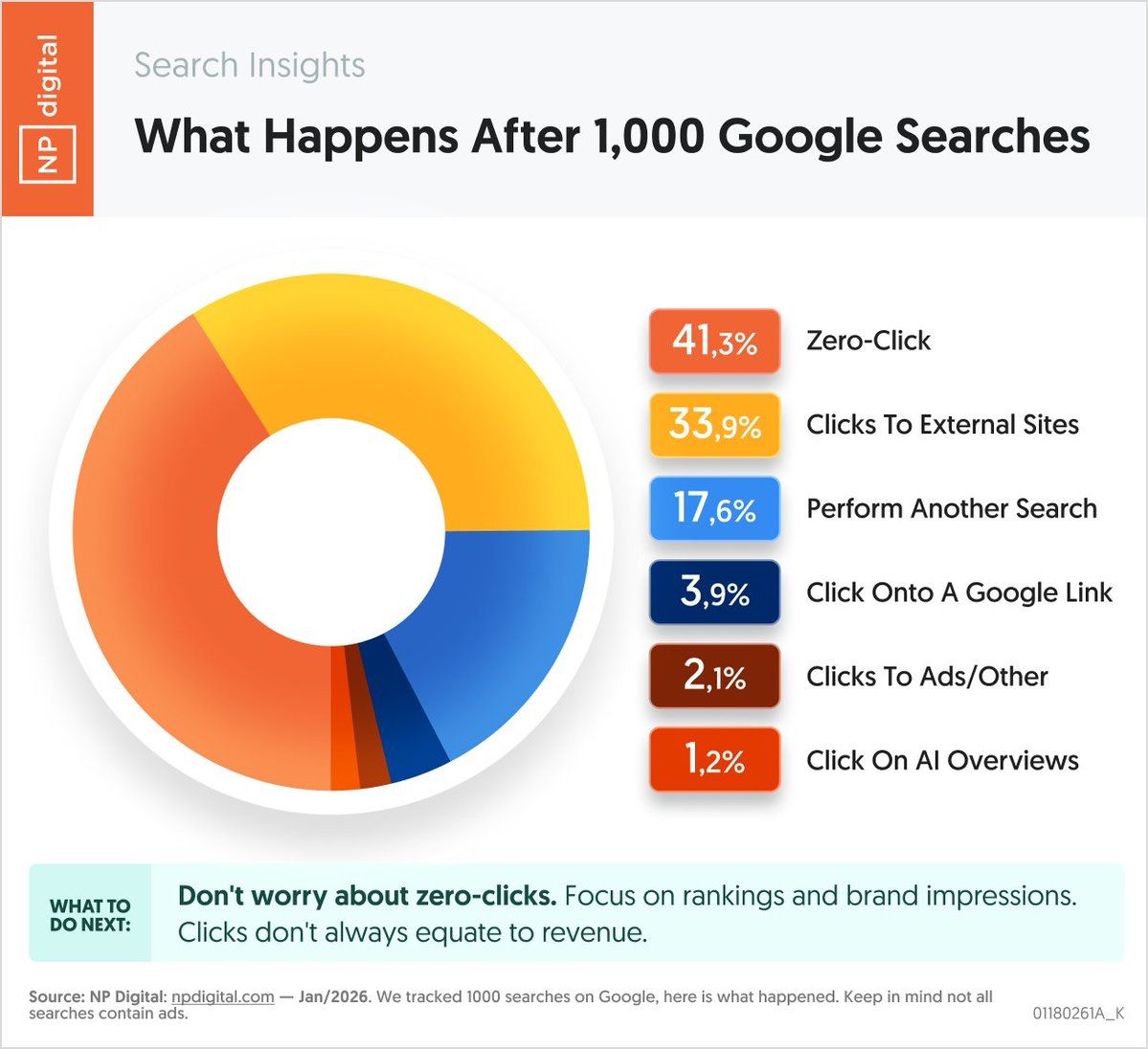
In a recent LinkedIn post, Neil Patel delves into what users *actually* do after they perform a Google search, challenging the prevalent narrative around “zero-click” searches. Patel highlights that while the concept of zero-click searches is frequently discussed, his team undertook a direct investigation to understand real user behavior.
To gain empirical data, Patel’s team tracked 1000 Google searches to observe the actions taken by users immediately following their search queries. This hands-on approach aimed to move beyond speculation and provide concrete insights into post-search user journeys.
“What do you think people are really doing after they perform a Google search?”
This question, posed by Patel, sets the stage for his analysis, emphasizing the need to understand user intent and actions beyond the initial click or lack thereof. He points out a crucial nuance: “Keep in mind, not all searches have ads.” This caveat is significant, as the presence or absence of ads can directly influence user behavior and the subsequent steps they take.
Analyzing User Actions Beyond the Search Result Page
Patel’s investigation seeks to quantify the extent to which users engage with search results versus other actions. While the specifics of the 1000 tracked searches and their outcomes are not fully detailed in the post, the initiative itself underscores a commitment to data-driven insights in the ever-evolving digital marketing landscape.
The Implications of “Zero-Click” and Beyond
The concept of “zero-click” searches suggests that users find the answer they need directly within the search engine results page (SERP), often through featured snippets or knowledge panels, and therefore do not need to click through to a website. However, Patel’s research implies that the reality might be more complex.
As Neil Patel notes, understanding these post-search behaviors is critical for businesses, particularly those experiencing fluctuations in their organic traffic. He suggests that a decline in organic traffic might be linked to shifts in how users interact with search results, potentially influenced by factors like the prominence of ads or the effectiveness of SERP features in satisfying user queries.
“If you seen your organic traffic decline, check out this webinar that teaches you how to get back some of your traffic.”
This call to action within Patel’s post points towards a potential solution or strategy for marketers facing traffic challenges. The implication is that by understanding and adapting to user behavior beyond the initial search, businesses can potentially recover lost organic visibility. Patel’s work consistently emphasizes the importance of adapting SEO and content strategies to align with current search engine algorithms and user expectations, and this post is no exception.
The Importance of Empirical Data in SEO
Neil Patel’s approach highlights a fundamental principle in digital marketing: the need to validate assumptions with real-world data. Relying solely on theoretical models or anecdotal evidence can lead to flawed strategies.
By tracking actual user actions after 1000 searches, Patel aims to provide a more accurate picture than generalized discussions about “zero-click” might offer. This empirical approach is vital for SEO professionals and business owners who need to make informed decisions about their online presence and marketing efforts.
In essence, Patel’s LinkedIn post serves as a prompt for deeper consideration of user journeys in the post-search environment. It encourages a move from assumption to observation, providing a foundation for more effective digital marketing strategies in an increasingly competitive online space.
📝 About This Content
This article is based on insights shared by Neil Patel on LinkedIn.
📅 Originally posted on January 25, 2026 | View original post on LinkedIn →