
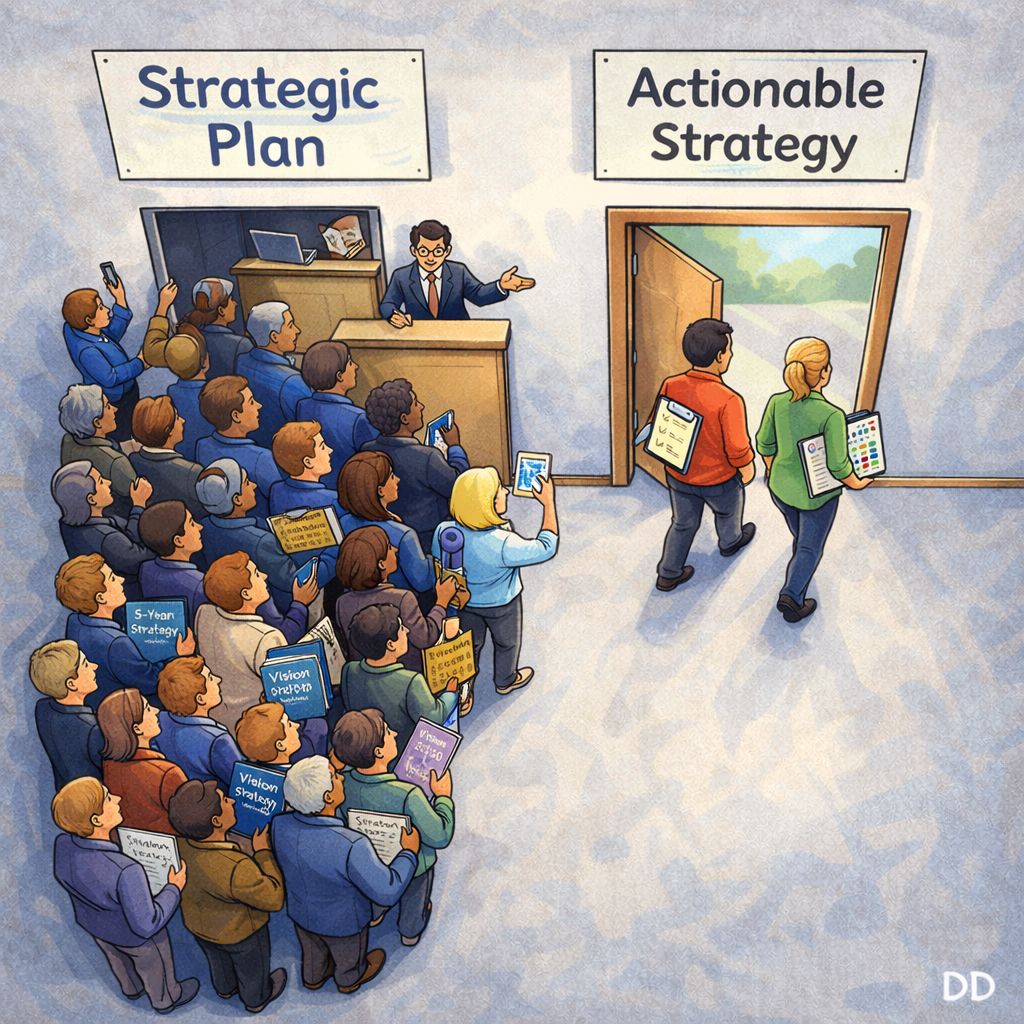
In a recent LinkedIn post, Daniel O. Livvarcin, PhD discusses a critical gap he observes in the nonprofit sector: the disconnect between strategic planning and its actual execution. He contends that while organizations invest heavily in creating strategic plans, they often fall short in the disciplined implementation required to achieve meaningful impact.
Livvarcin highlights the common tendency to celebrate the strategic document itself rather than the consistent effort needed to bring it to life. He points out the imbalance in resources and focus, noting that months can be dedicated to planning, while significantly less attention is paid to crucial elements like alignment, accountability, and measurement.
“A strategic plan without execution is just organized intention.”
The Pitfalls of ‘Organized Intention’
Daniel O. Livvarcin, PhD argues that the nonprofit sector frequently conflates the existence of a strategy with its successful implementation. This, he suggests, leads to a superficial engagement with strategic goals, where the planning phase is seen as the end product rather than the beginning of a continuous process.
He elaborates on this point, stating:
“In the nonprofit sector, we often confuse having a strategy with implementing one. We celebrate the document instead of the discipline. We invest months in planning — and far less in alignment, accountability, and measurement.”
This focus on the plan as a deliverable, rather than a dynamic roadmap, can result in initiatives that look good on paper but fail to translate into tangible outcomes for the organizations they are meant to serve.
Introducing a Framework for Actionable Strategy
To address this challenge, Livvarcin introduces the Executive Strategic Evaluation Process (E-SEP) and the ViStA Strategic Management Framework. These methodologies are designed to ensure that strategic plans move beyond aspirational statements to become practical tools for organizational advancement.
Key Components of Effective Strategy Implementation
According to Daniel O. Livvarcin, PhD, a truly effective strategic plan must be:
- Actionable: This means having clear priorities, defined ownership for tasks, and a strong focus on the practical steps of execution.
- Measurable: Livvarcin emphasizes the need for Key Performance Indicators (KPIs) that track progress not just in terms of activities undertaken, but in terms of real, measurable impact.
- Inclusive: He stresses the importance of aligning leadership, the board, and the broader team from the outset to foster buy-in and collective responsibility.
In Livvarcin’s view, a strategy’s true value is not in its creation, but in its integration into the daily operations and decision-making processes of an organization.
“Strategy should not sit on a shelf. It should shape daily decisions.”
He concludes with a powerful assertion that underscores the essence of his message:
“Because strategy doesn’t create impact. Execution does.”
Daniel O. Livvarcin, PhD’s insights serve as a crucial reminder for nonprofit leaders and organizations everywhere that the most brilliant strategic plan is only as valuable as its diligent and sustained execution.
📝 About This Content
This article is based on insights shared by Daniel O. Livvarcin, PhD on LinkedIn.
📅 Originally posted on February 25, 2026 | View original post on LinkedIn →