
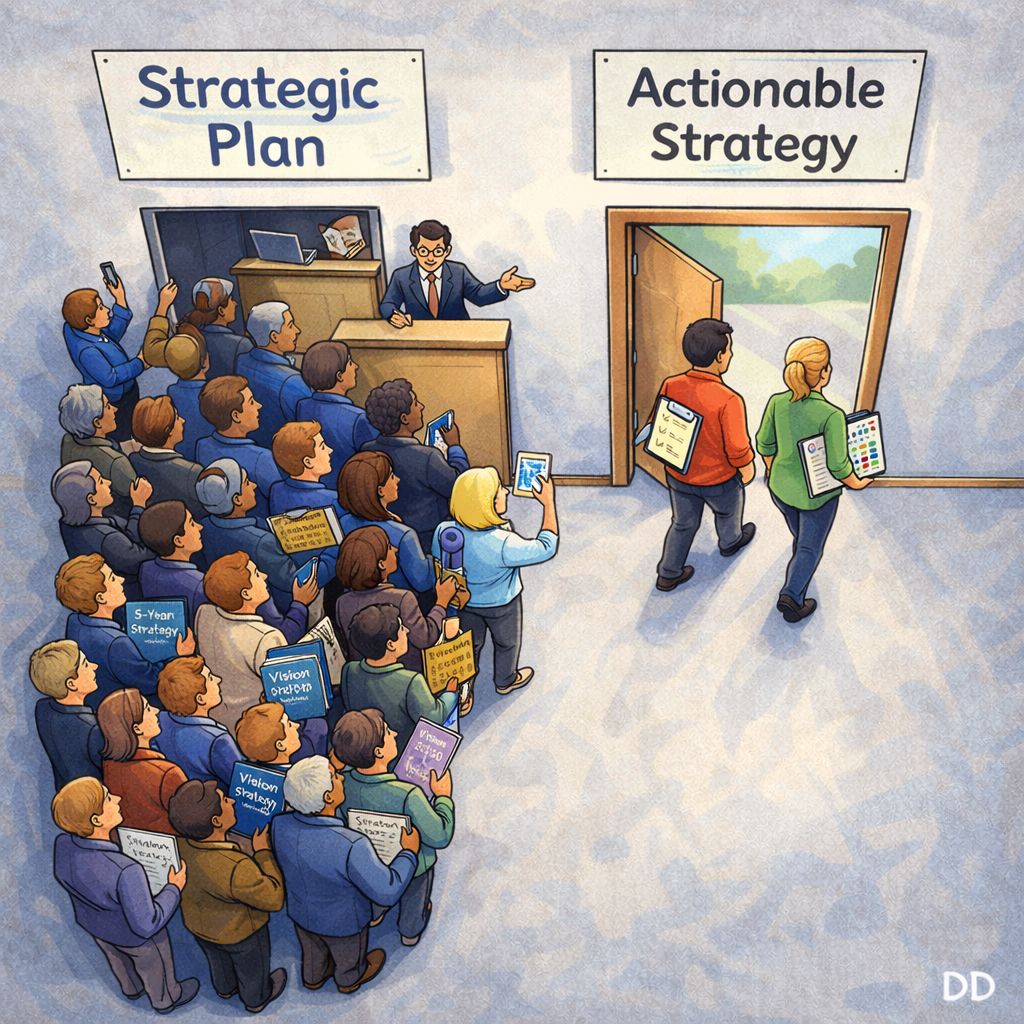
In a recent LinkedIn post, Daniel O. Livvarcin, PhD discusses a common pitfall in the nonprofit sector: the overemphasis on strategic planning documents at the expense of actual execution. He highlights the tendency for organizations to invest heavily in creating beautiful, well-presented strategic plans, only for them to become shelf-ware rather than actionable guides for daily decision-making.
Livvarcin, PhD points out the disconnect between the effort put into planning and the discipline required for implementation. He writes:
“A strategic plan without execution is just organized intention.”
This statement underscores a critical challenge many organizations face, where the creation of a strategy is celebrated as the achievement, rather than the subsequent, often more difficult, process of bringing it to life.
The Pitfall of ‘Organized Intention’
Daniel O. Livvarcin, PhD argues that the nonprofit sector often confuses the act of having a strategy with the act of implementing one. This can lead to a situation where organizations become adept at producing polished strategy documents and hosting planning retreats, but fail to foster the necessary organizational alignment, accountability, and measurement systems to drive real impact.
He elaborates on this by stating:
“We celebrate the document instead of the discipline. We invest months in planning — and far less in alignment, accountability, and measurement.”
In Livvarcin, PhD’s view, this imbalance is a significant barrier to achieving meaningful outcomes. The focus on the planning phase, while important, needs to be matched, if not exceeded, by a commitment to the execution phase.
Introducing the E-SEP and ViStA Frameworks
To address these challenges, Daniel O. Livvarcin, PhD and his colleagues have developed specific methodologies. He introduces the Executive Strategic Evaluation Process (E-SEP) and the ViStA Strategic Management Framework as tools designed to bridge the gap between planning and execution.
According to Livvarcin, PhD, these frameworks are designed to ensure that strategic plans are not merely visionary but also:
- Actionable: Characterized by clear priorities, defined ownership, and a strong execution focus.
- Measurable: Featuring Key Performance Indicators (KPIs) that assess real impact beyond just tracking activities.
- Inclusive: Promoting alignment among leadership, the board, and the broader team from the outset.
The emphasis here is on creating strategies that are integrated into the fabric of the organization and guide everyday operations.
Strategy as a Daily Driver, Not a Document
Daniel O. Livvarcin, PhD concludes his post by reinforcing the idea that strategy’s true value lies in its application. He asserts:
“Strategy should not sit on a shelf. It should shape daily decisions.”
This perspective shifts the understanding of strategy from a static, long-term document to a dynamic, living framework that informs moment-to-moment choices. The ultimate impact, as Livvarcin, PhD points out, comes not from the existence of a plan, but from its diligent execution.
“Because strategy doesn’t create impact. Execution does.”
This final thought serves as a powerful reminder for nonprofit leaders and organizations to prioritize the systems and culture necessary for effective implementation, ensuring their strategic intentions translate into tangible results.
📝 About This Content
This article is based on insights shared by Daniel O. Livvarcin, PhD on LinkedIn.
📅 Originally posted on February 25, 2026 | View original post on LinkedIn →